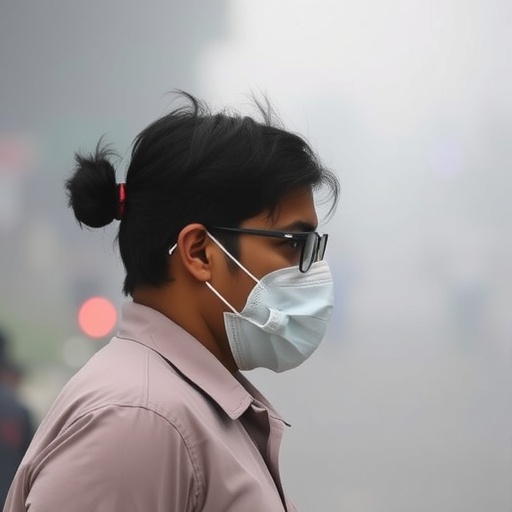
In recent years, the global health community has increasingly recognized ambient fine particulate matter, or PM2.5, as a paramount environmental risk factor contributing to non-communicable diseases (NCDs). These microscopic particles, measuring less than 2.5 micrometers in diameter, penetrate deep into the respiratory tract and enter the bloodstream, triggering a cascade of adverse physiological effects. While the relationship between PM2.5 and health outcomes is well established, a new study sheds critical light on the nuanced disparities in the burden of PM2.5-linked diseases among adult population subgroups within India—a country grappling with some of the highest pollution levels in the world.
This novel research, published in the Journal of Exposure Science and Environmental Epidemiology, by a team of scientists led by D. Sarkar, A. Kumar, and F. Imam, provides an in-depth analysis of how PM2.5 exposure disproportionately affects different demographic groups across India’s vast and heterogeneous adult population. Their findings underscore a troubling imbalance, revealing that socio-economic, geographic, and behavioral factors exacerbate vulnerability to pollution-induced non-communicable diseases, such as cardiovascular disorders, chronic respiratory conditions, and metabolic dysfunctions.
India’s ambient air pollution crisis has been well documented, with much attention given to urban centers like Delhi and Mumbai, notorious for their hazardous air quality indices. However, this study goes beyond aggregate national statistics, dissecting exposure patterns and health ramifications among rural versus urban dwellers, men versus women, and across age brackets. The results point to greater PM2.5-related disease burdens among economically disadvantaged groups, highlighting entrenched environmental inequities that compound existing health disparities.
Technically, PM2.5 particles originate from various sources including vehicular emissions, industrial activities, biomass burning, and secondary particle formation in the atmosphere. Their size allows them to bypass the body’s natural defense mechanisms, lodging deep within alveolar regions of the lungs. Chronic exposure initiates systemic inflammation, oxidative stress, and endothelial dysfunction, which are well-documented pathways linked with the pathogenesis of stroke, ischemic heart disease, chronic obstructive pulmonary disease, and diabetes mellitus. Importantly, the study illuminates how these mechanisms manifest differently depending on individual and contextual variables, thereby influencing disease occurrence and progression in the Indian population.
Advanced modeling techniques deployed by the researchers incorporated high-resolution satellite data, ground-based monitoring, and demographic health surveys, enabling precise estimation of PM2.5 exposure at the subnational level. Furthermore, integration with disease burden metrics and risk attribution models allowed the quantification of population-attributable fractions of NCDs attributable to PM2.5 exposure. The spatially resolved risk estimates revealed alarming hotspots predominantly clustered within regions marked by intense industrial activity, biomass fuel use for cooking, and poor ventilation.
Of particular concern is the heightened vulnerability observed among women, who often face disproportionate exposure due to indoor air pollution coupled with ambient air quality degradation in many Indian households. This dual exposure paradigm exacerbates their risk, particularly for chronic respiratory diseases, which often go underdiagnosed or untreated due to socio-cultural and healthcare access barriers. Additionally, elderly adults bear a markedly higher burden owing to diminished physiological resilience and cumulative lifetime exposure effects.
The authors’ rigorous analysis further disentangles the contributions of behavioral factors such as tobacco use, occupational hazards, and nutritional status, which modulate susceptibility to PM2.5-induced pathologies. Their work advocates for nuanced public health policies that address these intersecting determinants rather than isolated pollutant mitigation strategies. Tailored interventions might include promoting cleaner cooking technologies, reducing vehicular emissions, and enhancing healthcare infrastructure in vulnerable districts to mitigate the exacerbation of NCDs driven by ambient particulate exposure.
Importantly, this study challenges the prevailing generalized narratives about air pollution impacts and calls for an equity-focused lens in environmental health research and policy-making. By pinpointing which subgroups suffer the greatest disease burdens due to PM2.5, decision-makers can allocate resources more effectively and design targeted prevention initiatives. This evidence-based approach is crucial for India, where rapid urbanization, climate change, and socio-economic disparities intersect to compound health risks.
The implications extend beyond India’s borders, offering a blueprint for other low- and middle-income countries facing similar pollution crises compounded by social inequities. The increasing urban sprawl and reliance on polluting energy sources in developing regions underscore the urgent need to integrate environmental justice considerations into NCD prevention strategies worldwide. Translating these findings into action requires collaboration across sectors, from urban planners and energy policymakers to healthcare providers and community advocates.
Moreover, the synergy between environmental exposure data and epidemiological modeling demonstrated in this study illustrates the power of interdisciplinary research in unveiling complex health-environment relationships. Future investigations may build on this work by examining long-term trends and potentially integrating genetic susceptibility markers to refine risk prediction. There’s also scope for exploring mitigation effects of emerging clean energy technologies and urban design improvements on reducing population-wide disease burdens.
In conclusion, the comprehensive insights garnered by Sarkar, Kumar, Imam, and colleagues accentuate the often-overlooked disparities in PM2.5-related non-communicable disease burdens among India’s adult subpopulations. Their study provides a clarion call for more nuanced, subgroup-specific environmental health interventions and policy reforms. Tackling ambient particulate matter pollution is not merely an environmental imperative but a profound public health challenge intertwined with social justice, especially in rapidly evolving societies like India. As global efforts intensify to curb air pollution and its health impacts, this research stands as a critical guidepost emphasizing the need to look beyond averages and understand who is most at risk and why.
By shedding light on these disparities, the study paves the way for more equitable health outcomes and underscores a transformative vision: cleaner air as a shared right rather than a privilege. The path forward demands innovation, inclusivity, and commitment to protect the vulnerable from the insidious harms of invisible particles floating in the environment—a challenge that India and the world must confront head-on.
Subject of Research: Disparities in non-communicable disease burden attributable to ambient PM2.5 exposure among adult population subgroups in India.
Article Title: Disparity in non-communicable disease burden attributable to ambient PM2.5 exposure among adult population subgroups in India.
Article References:
Sarkar, D., Kumar, A., Imam, F. et al. Disparity in non-communicable disease burden attributable to ambient PM2.5 exposure among adult population subgroups in India. J Expo Sci Environ Epidemiol (2026). https://doi.org/10.1038/s41370-026-00927-x
Image Credits: AI Generated
DOI: 29 May 2026
Tags: air pollution and non-communicable diseasescardiovascular diseases linked to air pollutionchronic respiratory diseases from PM2.5environmental health inequalities Indiaexposure science in Indian adultsfine particulate matter health impactgeographic variation in air pollution riskmetabolic disorders and air qualityPM2.5 health effects in Indiapollution-induced health disparitiessocioeconomic disparities in pollution exposureurban air pollution in Indian megacities