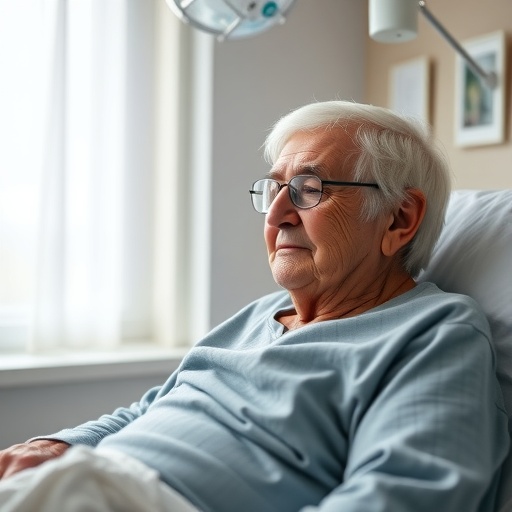
In a groundbreaking new study poised to redefine geriatric emergency care protocols, researchers have explored the critical outcomes associated with emergency department (ED) return visits within 72 hours that lead to hospital admissions among older adults. This investigation, drawing from a nationally representative dataset, sheds light on a phenomenon that has long perplexed healthcare professionals: why some elderly patients swiftly return to acute care facilities shortly after discharge, often with worsening conditions necessitating inpatient treatment.
As global populations age, the burden on emergency medical systems intensifies. Older adults, who commonly contend with multiple comorbidities and complex medication regimens, represent a unique cohort in emergency care settings. Their physiological heterogeneity challenges clinicians striving to discharge individuals safely while avoiding premature returns that complicate prognoses and inflate healthcare costs. The present analysis integrates extensive clinical data to decipher patterns in 72-hour ED revisits resulting in hospital admission, providing vital insights into patient trajectories and systemic shortcomings.
Central to the study is the recognition that a revisit within a short timeframe after emergency department discharge signals potential shortcomings in initial diagnosis, treatment adequacy, or follow-up care coordination. Unlike younger populations, older adults may present with atypical symptoms, subtle declines, or multifaceted health issues, complicating the initial assessment and management. By focusing on those who returned to the ED and required admission, the researchers emphasized cases with pronounced clinical deterioration, thereby identifying subgroups most vulnerable to severe adverse outcomes post-discharge.
Intriguingly, the study’s analytic framework utilized nationally representative electronic health records complemented by sophisticated statistical modeling. This approach allowed for risk stratification based on demographic factors, comorbidity burden, presenting complaints, and initial ED disposition. Among the variables examined were polypharmacy prevalence, cognitive impairment presence, and the degree of social support. The researchers meticulously accounted for confounders, enhancing the reliability and generalizability of the findings across diverse healthcare settings.
One major revelation was the disproportionate impact of specific chronic conditions—such as congestive heart failure, chronic obstructive pulmonary disease, and diabetes mellitus—on the likelihood of early ED return with subsequent admission. These illnesses, notorious for episodic exacerbations, demand nuanced outpatient management and vigilant monitoring. The study posits that optimized discharge planning incorporating tailored education, medication reconciliation, and scheduled follow-ups could mitigate some of these risky returns.
Moreover, the data revealed that older adults discharged with relatively mild symptoms or stable vital signs sometimes harbored underlying insidious pathologies that only manifested fully within hours or days. This underscores the limitations of current triage and observation protocols in catching subclinical deterioration, highlighting a need for enhanced diagnostic technologies and biomarkers specifically validated for geriatric populations in the ED.
The researchers also examined the role of social determinants of health, emphasizing how factors like inadequate caregiver support, socio-economic hardship, and limited access to outpatient resources significantly contribute to unfavorable outcomes. These findings align with a growing consensus that effective emergency care for the elderly must transcend traditional medical interventions and integrate holistic approaches addressing psychosocial vulnerabilities.
Beyond individual patient factors, systemic contributors to early ED return visits emerged prominently. Staffing shortages, fragmented communication between emergency and primary care teams, and variable adherence to clinical guidelines were implicated as facilitators of suboptimal discharge decisions. The study advocates for implementing integrated care pathways and strengthening interdisciplinary collaboration to enhance continuity and safety of care transitions.
Technology also figures prominently in proposed solutions. The authors suggest leveraging telemedicine for post-discharge monitoring and employing machine learning algorithms to predict high-risk patients in real-time. Such innovations could enable proactive interventions before acute deterioration necessitates readmission, ultimately improving quality of life and reducing healthcare expenditure.
Importantly, this research challenges the conventional notion that rapid ED revisits are purely indicators of poor patient compliance or frailty. Instead, it calls for multifaceted strategies involving patient-centered assessments, system-level reforms, and technological advancements. This paradigm shift could stimulate policy changes, including reimbursement models that reward comprehensive transitional care and penalize avoidable readmissions.
In the context of burgeoning healthcare demands, particularly in aging societies, understanding the predictors and outcomes of early ED returns requiring admission is crucial. The study’s findings serve not only clinicians but also healthcare administrators and policymakers aiming to optimize emergency care delivery and resource allocation.
The implications for emergency medicine training are significant as well. Medical education must increasingly incorporate geriatric principles, emphasizing the subtle clinical presentations and complex psychosocial realities facing older adults. Enhanced competencies in this domain could reduce misdiagnoses and improve disposition decisions.
In conclusion, this nationally representative analysis exposes critical gaps in the emergency care continuum for elderly patients, particularly those leading to rapid hospital readmissions. By identifying key clinical, social, and systemic factors underpinning these events, the study paves the way for innovations that could transform geriatric emergency care. As populations worldwide continue to age, such research is indispensable to crafting resilient, responsive healthcare systems able to meet the intricate needs of older adults and reduce the human and economic toll of preventable hospitalizations.
Subject of Research: Outcomes and predictors of 72-hour emergency department return visits requiring hospital admission among older adults.
Article Title: Outcomes of 72-hour emergency department return visits requiring hospital admission in older adults: a nationally representative analysis.
Article References: Steel, P.A.D., Hancock, D., Han, J.H. et al. Outcomes of 72-hour emergency department return visits requiring hospital admission in older adults: a nationally representative analysis. BMC Geriatr (2026). https://doi.org/10.1186/s12877-026-07570-z
Image Credits: AI Generated
DOI: 10.1186/s12877-026-07570-z
Keywords: emergency department, geriatrics, hospital readmission, 72-hour revisit, older adults, comorbidities, discharge planning, healthcare outcomes, transitional care, polypharmacy, social determinants of health
Tags: 72-hour emergency room returnsacute care in older adultschallenges in elderly patient dischargecomorbidities in elderly emergency visitsemergency care for aging populationsemergency department revisit outcomesfollow-up care coordination in elderlygeriatric emergency care protocolshealthcare costs in geriatric carehospital admissions elderly patientsinpatient treatment after ED dischargemedication management in geriatric patients