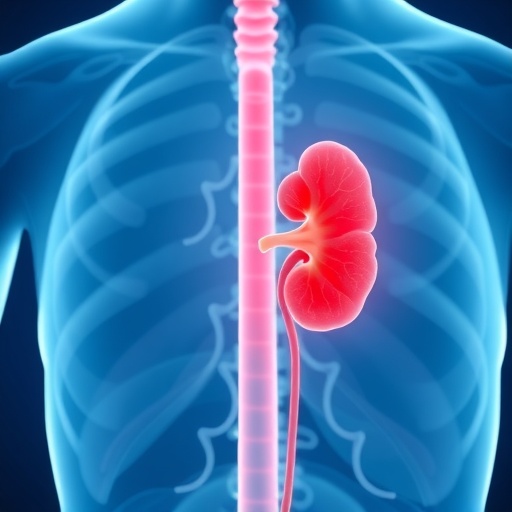
In a groundbreaking retrospective cohort study poised to transform our understanding of acute kidney injury (AKI) prognosis, researchers have unveiled a compelling link between the HALP score and in-hospital outcomes among AKI patients. This association highlights the potential of the HALP score—a composite biomarker index derived from hemoglobin, albumin, lymphocyte, and platelet counts—to serve as a powerful prognostic tool that could revolutionize clinical decision-making and patient management in nephrology.
Acute kidney injury, a complex condition characterized by sudden loss of kidney function, presents a significant clinical challenge due to its heterogeneous etiology and variable prognosis. Current prognostic markers often fail to capture the multifaceted inflammatory and nutritional status of patients, limiting their predictive value. The HALP score, initially proposed as a marker integrating inflammation and nutritional status, emerges from this research as a highly relevant indicator for stratifying risk among patients experiencing this acute renal insult.
The study meticulously analyzed a robust patient cohort, retrospectively examining medical records to correlate HALP scores calculated at admission with various clinically significant outcomes. These outcomes included the duration of hospitalization, incidences of complications, need for renal replacement therapy, and overall in-hospital mortality. The findings indicate a strong inverse relationship between HALP score and adverse outcomes, with lower scores correlating to poorer prognoses and higher mortality risks.
Underlying the HALP score’s significance is its reflection of the intricate balance between systemic inflammation, immune competency, and nutritional status. Hemoglobin and albumin levels serve as proxies for oxygen-carrying capacity and nutritional reserves, respectively, while lymphocyte and platelet counts provide insight into immune function and inflammatory status. AKI, often precipitated or exacerbated by systemic inflammatory responses, may thus be more accurately characterized by this integrative biomarker than by isolated parameters.
The study’s retrospective design enabled comprehensive data mining across diverse patient demographics, lending robustness to its conclusions. Hospitalized AKI patients with markedly diminished HALP scores were observed to have extended hospital stays, increased rates of intensive care unit admission, and greater dependence on dialysis, underscoring the score’s utility as a predictor not only of mortality but also of resource allocation and clinical trajectory.
Moreover, the research illuminates potential pathophysiological mechanisms linking these hematological and nutritional parameters to kidney injury outcomes. Chronic inflammation and malnutrition, both embedded within the HALP score components, have been implicated in impairing renal repair processes and promoting fibrosis, which may explain the observed correlations. This mechanistic insight opens avenues for targeted therapeutic interventions aiming to modulate these underlying factors and improve patient prognoses.
Importantly, this study suggests that HALP scoring could augment existing AKI staging systems such as KDIGO by introducing a multi-dimensional biomarker that encompasses immune and nutritional profiles. This enhancement could facilitate earlier identification of patients at high risk for deterioration, prompting timely therapeutic strategies and potentially curbing morbidity and mortality associated with AKI.
The implications extend beyond immediate clinical management. Utilization of HALP scores for risk stratification presents a cost-effective, readily accessible approach that leverages routine laboratory measurements, making it feasible for widespread adoption across varied healthcare settings, including resource-limited environments where advanced diagnostic tools are scarce.
Furthermore, the findings could catalyze a paradigm shift in AKI research, encouraging deeper exploration into the role of systemic inflammation and nutrition on renal injury and recovery. Future prospective studies leveraging the HALP score might focus on investigating longitudinal changes and therapeutic interventions modulating these parameters to mitigate AKI progression.
Given the global burden of AKI, with its substantial contribution to morbidity and mortality especially in hospitalized and critically ill patients, the integration of HALP scoring could have far-reaching impacts on patient outcomes and healthcare systems. This study sets a new benchmark in clinical nephrology research, underscoring the necessity for holistic biomarkers that transcend traditional singular metrics.
The authors also stress the need for multicenter validation studies to confirm the generalizability of their findings across different populations and etiologies of AKI. Such endeavors will be crucial to standardize HALP score utilization and establish clinical guidelines embracing this prognostic index.
Beyond prognosis, the study hints at the potential for HALP score-guided personalized medicine approaches. Tailoring nutritional and immunomodulatory therapies according to HALP score assessments could optimize recovery trajectories, emphasizing precision medicine in nephrology.
In summary, the retrospective cohort analysis by Lin, Chen, Zhou, and colleagues heralds the HALP score as a transformative biomarker in acute kidney injury management. By bridging gaps between inflammation, nutrition, and clinical outcomes, this study propels the HALP score from a theoretical construct to a practical tool with profound prognostic and therapeutic implications.
As the medical community absorbs these findings, they are likely to inspire further research exploring integrative biomarkers and their roles in other critical illnesses characterized by systemic inflammation and nutritional depletion, broadening the applicability of such multifactorial indices in medicine.
The HALP score, once a novel concept, now appears poised to become a cornerstone in the nephrologist’s armamentarium, offering hope for improved stratification, intervention, and ultimately better survival in patients facing the daunting challenge of acute kidney injury.
Subject of Research: The association between the HALP score and in-hospital outcomes in patients with acute kidney injury.
Article Title: Association between HALP score and in-hospital outcomes in patients with acute kidney injury: a retrospective cohort study.
Article References:
Lin, F., Chen, Z., Zhou, T. et al. Association between HALP score and in-hospital outcomes in patients with acute kidney injury: a retrospective cohort study. Sci Rep (2026). https://doi.org/10.1038/s41598-026-55184-7
Image Credits: AI Generated
Tags: acute renal failure prognosis toolsAKI in-hospital mortality predictorsAKI patient risk stratificationclinical decision-making in nephrologyHALP score in acute kidney injuryhemoglobin albumin lymphocyte platelet indexinflammation and nutrition in kidney injuryinflammatory markers in kidney diseasenephrology patient management strategiesnutritional status and kidney injury outcomesprognostic biomarkers for AKI outcomesrenal replacement therapy necessity indicators