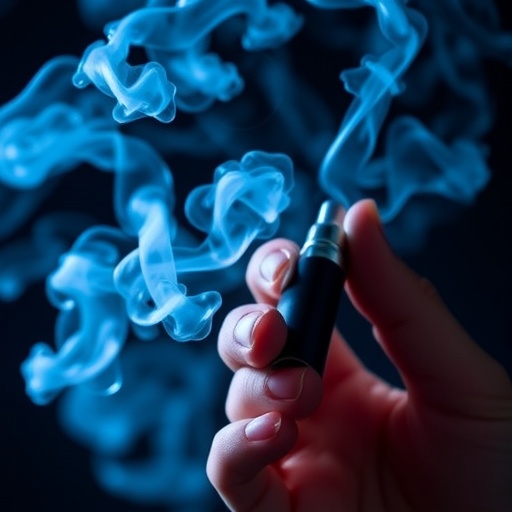
A groundbreaking study led by researchers at the University of California, Riverside, reveals critical concerns about the chemical safety of high-puff disposable electronic cigarettes (ECs), commonly known as vapes. These devices, designed to deliver thousands of inhalations before disposal, may harbor increasing levels of toxic compounds as users approach the end of the device’s life cycle. This research uncovers how prolonged use results in the unexpected accumulation of harmful aldehydes in the leftover e-liquid, raising alarms about potential health risks.
Electronic cigarettes function by heating a liquid solution, commonly referred to as e-liquid, which typically contains solvents, flavorants, and nicotine. When heated, these components undergo complex chemical transformations. In this study, researchers focused particularly on aldehydes—a class of compounds produced via thermal degradation—that includes known toxicants such as formaldehyde, methylglyoxal (MGO), and glyoxal (GO). The team analyzed liquid from both fresh and extensively vaped devices to ascertain how the chemical profile evolves during use.
The findings were striking. Leftover fluid in high-puff disposable vapes showed a significant increase in aldehyde concentrations compared to unused e-liquid. This suggests that repetitive heating cycles accelerate chemical breakdown, concentrating harmful byproducts in the device’s reservoir. The accumulation reached milligrams per milliliter levels for MGO and GO—amounts far beyond trace quantities. Given that formaldehyde is a recognized human carcinogen, the elevated presence of these aldehydes in used devices poses a serious toxicological concern.
The team extended their analysis by exposing cultured human lung cells to MGO and acetaldehyde to gauge cytotoxic effects. Results demonstrated that MGO inflicted pronounced cellular damage, disrupted the structural integrity of the cells, interfered with mitochondrial energy production, and induced oxidative stress—a cellular state strongly linked to inflammation and chronic diseases. Significantly, MGO exhibited toxicity levels 10 to 100 times higher than acetaldehyde, underlining the severity of exposure risk from these compounds.
Senior author Professor Prue Talbot emphasized the differential exposure risk depending on device usage. “Our data show that the chemical environment inside an e-cigarette dramatically changes over time,” Talbot explained. “Users vaping near the end of the device’s life may be inhaling considerably more toxic aldehydes than those using fresh devices. This issue is compounded by the widespread marketing of high-puff devices, designed for extended use without sufficient understanding of evolving chemical profiles.”
The researchers employed sophisticated analytical chemistry techniques to quantify aldehyde concentrations, thereby illuminating complex chemical dynamics within disposable ECs. The thermal decomposition of solvents and flavorants during repeated puff cycles generates reactive carbonyl species like MGO and GO. These highly reactive molecules are capable of modifying proteins and DNA, potentiating cellular dysfunction and carcinogenesis. This mechanistic insight bridges chemical analysis with observed cytotoxic effects.
While e-cigarettes have been widely adopted as an alternative to traditional tobacco smoking since their introduction around 2007, regulatory frameworks have not kept pace with device innovation. Disposable high-puff vapes, capable of delivering thousands of hits, have surged in popularity but lack rigorous safety testing for their full usage lifespan. The study underscores the urgent need for regulatory standards that consider the entire puff lifecycle rather than just initial chemical compositions.
From the consumer perspective, the researchers advise heightened caution when using high-puff disposables, particularly as devices approach depletion. Without clear guidelines or information about chemical accumulation, users remain vulnerable to unknowingly inhaling elevated concentrations of toxic aldehydes. The public health implications are particularly salient given the prevalence of teenage and young adult vaping.
The study contributes a compelling argument for incorporating usage-dependent variables such as puff count into product safety assessments. Chemical exposure is dynamic, influenced by factors extending beyond just advertised ingredients. Regulators and manufacturers alike must acknowledge this dimension to protect public health effectively.
This pioneering research was conducted in collaboration with experts at Portland State University and supported by grants from the National Institutes of Health, the FDA Center for Tobacco Products, and California’s Tobacco-Related Disease Research Program. It sets a clear precedent for future investigations into how sustained device use impacts chemical formation and user exposure risks.
Looking ahead, the authors call for comprehensive studies assessing a wider range of vaping devices, flavor formulations, and real-world usage patterns. Understanding the complex chemistry of aerosolized e-liquids will be critical for developing evidence-based regulations and safer product designs. Until that time, consumers are urged to exercise caution and remain informed about the evolving science surrounding vaping safety.
The full research article, titled “Methylglyoxal and Glyoxal in High-Puff Disposable Electronic Cigarette Liquids: Unexpected Accumulation and Enhanced Cytotoxicity,” is published in ACS Omega and offers detailed experimental data elucidating these critical findings.
Subject of Research: Cells
Article Title: Methylglyoxal and Glyoxal in High-Puff Disposable Electronic Cigarette Liquids: Unexpected Accumulation and Enhanced Cytotoxicity
News Publication Date: 28-May-2026
Web References:
DOI: 10.1021/acsomega.5c13033
References:
Omaiye, E., Talbot, P., Wong, M., Luo, W., McWhirter, K. J. (2026). Methylglyoxal and Glyoxal in High-Puff Disposable Electronic Cigarette Liquids: Unexpected Accumulation and Enhanced Cytotoxicity. ACS Omega. https://doi.org/10.1021/acsomega.5c13033
Keywords: electronic cigarettes, vaping, aldehydes, methylglyoxal, glyoxal, formaldehyde, cytotoxicity, chemical exposure, high-puff devices, thermal degradation, oxidative stress, inhalation risk
Tags: aldehyde toxicity in vapeschemical changes in vaped e-liquidchemical safety of e-liquidformaldehyde in electronic cigarettesglyoxal buildup in e-cigaretteshealth risks of prolonged vape usehigh-puff disposable electronic cigarettesinhalation toxicity of electronic cigarettesmethylglyoxal accumulation in vapesthermal degradation of vape liquidstoxic compounds in leftover e-liquidUniversity of California Riverside vape study