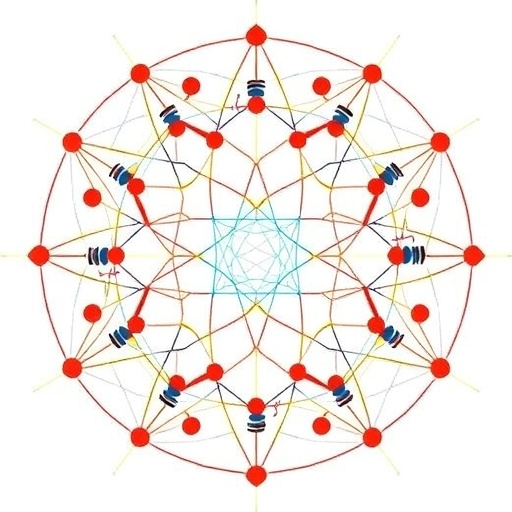
In a groundbreaking advance that reshapes our understanding of chemical bonding, physicists at Ludwig-Maximilians-Universität München (LMU) have introduced an innovative quantum information-based framework revealing how chemical bonds emerge naturally from the phenomenon of quantum entanglement. This pioneering approach promises to transform theoretical chemistry and molecular physics by providing an unprecedented quantitative description of chemical bonding, transcending classical models and offering profound insights into the microscopic mechanisms that govern matter.
Chemical bonding, the fundamental process by which atoms combine to form molecules and extended materials, is a cornerstone of chemistry and physics. Traditional conceptualizations, widely taught even in high school, rely on simplified pictures such as Lewis structures or valence bond theory. Yet these classical descriptions, while useful, lack a rigorous quantum mechanical underpinning and often fall short when dealing with complex bonding scenarios. Despite chemical bonds being central to the structural integrity and properties of matter, they remain elusive “emergent” phenomena rather than direct observables in quantum mechanics, complicating efforts to develop a unified theoretical framework.
Addressing this intellectual challenge, the LMU team led by Christian Schilling, a physicist and member of the Munich Center for Quantum Science and Technology (MCQST), has leveraged cutting-edge concepts from quantum information theory — specifically quantum entanglement — to redefine chemical bonding itself. Building on their prior expertise exploring orbital entanglement in quantum chemistry, Schilling and his collaborators, doctoral researcher Lexin Ding, now a fellow at ETH Zurich, and Eduard Matito from the Donostia International Physics Center, have concocted a novel conceptual framework hingeing on the idea of “maximally entangled atomic orbitals” (MEAOs).
MEAOs represent atomic orbitals that exhibit the highest degree of quantum entanglement with other molecular orbitals, thereby encoding the fundamental bonding interactions in a molecule. By analyzing the entanglement patterns among these orbitals, the researchers demonstrated that complex bonding motifs can be systematically uncovered and classified. This formalism does not merely recapitulate conventional two-center bonds—long the domain of valence bond and molecular orbital theories—but also captures intricate bonding phenomena such as multicenter bonds, aromaticity as seen in benzene rings, and the transient bonding patterns that emerge dynamically during chemical reactions.
What distinguishes the MEAO framework is its ability to unify a wide spectrum of bonding types within a single, ab initio quantum mechanical description. Where traditional chemical bonding theories bifurcate depending on the system—Lewis structures for molecules, band theory for solids, resonance structures for aromatic compounds—this new approach provides a universal language grounded in the fundamental quantum correlations encoded by entanglement. Such unification not only deepens conceptual understanding but also has significant implications for computational chemistry, where predictive accuracy and the ability to capture subtle bonding nuances are essential.
The implications of reconceptualizing bonds as patterns of entangled orbitals extend beyond theoretical elegance. By quantifying bonding through entanglement measures, chemists and physicists gain a powerful diagnostic tool for probing the electronic structure of complex molecular systems that confound classical approaches. Transient species formed during reactions, elusive intermediates, and unconventional bonding arrangements—longstanding challenges in synthetic and physical chemistry—may now be analyzed with greater clarity and precision. This could enable breakthroughs in designing novel materials, catalysts, and pharmaceuticals by revealing subtle electronic effects previously inaccessible to standard bonding models.
Schilling emphasized the transformative potential of the approach, stating that “the framework could become a powerful tool for studying complex molecular systems, chemical reactions, and unconventional bonding mechanisms for which traditional approaches often fail.” The method’s strong grounding in quantum information science also heralds exciting interdisciplinary crossover, as concepts like entanglement—originally developed for quantum computing and communication—are shown to offer profound insights into fundamental chemical phenomena. This convergence highlights the broad applicability of quantum technologies in elucidating nature’s most intricate processes.
Notably, the LMU team’s work provides practitioners with a quantitative measure of bond character encoded in the strength and distribution of entanglement among orbitals. This contrasts sharply with the qualitative and often heuristic nature of classical chemical bonding representations. By anchoring bonding concepts in computable quantum information metrics, the approach paves the way for algorithmic and automated analyses suitable for high-throughput computations, an increasingly important arena in materials science and drug discovery.
Moreover, the formalism’s robustness allows mapping dynamic bond formation and breaking processes in real time, offering an unprecedented window into reaction mechanisms at the quantum scale. This capability could revolutionize theoretical and computational mechanistic studies, providing insights into how electronic correlations evolve during complex chemical transformations. Such insights are vital for rational catalyst design, the development of energy conversion technologies, and understanding biochemical pathways.
The underlying theoretical framework developed by Schilling and colleagues relies on constructing quantum states of molecules and decomposing them into atomic orbital contributions while quantifying their entanglement with one another. This represents a profound shift from viewing orbitals as mere mathematical constructs to recognizing them as physical carriers of quantum information crucial to bonding. The maximally entangled atomic orbitals are identified through rigorous optimization procedures and entanglement entropy calculations, defining those atomic orbitals that most effectively capture the bonding pattern intrinsic to the molecular electronic structure.
The research team’s findings were published in Nature Communications on May 27, 2026, under the title “Chemical bonding concepts emerge naturally from maximally entangled atomic orbitals.” This peer-reviewed article presents the theoretical foundations, computational methods, and exemplary applications demonstrating the explanatory power and practicality of the new bonding framework. As this approach gains traction, it is expected to catalyze a paradigm shift in both fundamental quantum chemistry and applied molecular sciences.
In conclusion, this innovative quantum entanglement framework developed by physicists at LMU represents a landmark advance in our conceptual and computational understanding of chemical bonding. It bridges longstanding gaps between abstract quantum theory and tangible chemical concepts, offering a unified, quantitative, and deeply insightful paradigm. As quantum information science continues to permeate diverse scientific disciplines, the union with chemistry illustrated by this work exemplifies how fundamental physics can unlock new frontiers of knowledge and technological progress.
Subject of Research: Quantum entanglement as a basis for chemical bonding
Article Title: Chemical bonding concepts emerge naturally from maximally entangled atomic orbitals
News Publication Date: 27-May-2026
Web References: https://doi.org/10.1038/s41467-026-73527-w
Keywords
Quantum entanglement, chemical bonding, atomic orbitals, maximally entangled atomic orbitals, LMU Munich, quantum information theory, molecular orbitals, multicenter bonding, aromaticity, computational chemistry, quantum chemistry, ab initio methods, molecular reactions