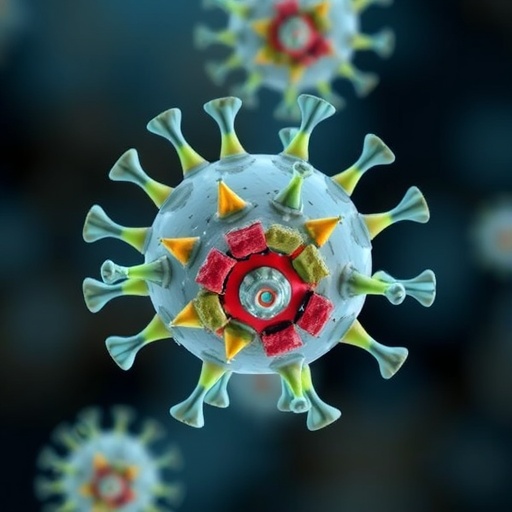
In an era where antibiotic resistance poses one of the most daunting challenges to global health, innovative strategies to combat drug-resistant bacterial infections are urgently needed. A groundbreaking study published in Nature Communications by Zhang, X., Yu, H., Zhu, K. and colleagues introduces a revolutionary approach using self-adaptive nanozymes with superior multi-enzyme capabilities to treat wounds infected with drug-resistant bacteria. These nanozymes provide a sophisticated sequential multimodal therapeutic strategy, signaling a remarkable advancement in nanomedicine and antimicrobial therapy.
Drug-resistant bacteria have rendered many traditional antibiotic regimens ineffective, complicating the management of wound infections and prolonging healing processes. The research team tackled this issue head-on by engineering nanozymes—artificial enzymes fabricated at the nanoscale—with enhanced catalytic activities resembling multiple natural enzymes. These nanozymes can dynamically adjust their enzymatic functions in response to the microenvironment of infected wounds, ensuring targeted and efficient pathogen eradication.
The core of this innovation lies in the intricate nanozyme design, which integrates various enzyme-mimicking activities—including peroxidase, oxidase, and catalase-like functions—within a single nanostructure. This integration allows the nanozymes to facilitate a cascade of biochemical reactions, sequentially producing reactive oxygen species (ROS) and modulating the local oxidative environment. Such sequential modulation is vital because it not only attacks bacterial cells directly but also mitigates excessive tissue damage, promoting faster wound healing.
Central to the mechanism is the self-adaptability of these nanozymes; their catalytic profiles dynamically shift depending on the local pH, presence of bacterial metabolites, and oxidative stress level. For example, in an acidic and hypoxic infected wound microenvironment, the nanozymes predominantly act as oxidases to generate ROS, which puncture bacterial membranes and disrupt DNA replication. Upon sensing shifts in the wound environment during therapy, the nanozymes switch roles to catalase-like enzymes, scavenging excessive ROS to avoid harm to healthy tissue. This smart feedback-driven adjustment is unprecedented in nanozyme technology.
The team meticulously characterized the physicochemical properties of these nanozymes, verifying their stability, catalytic efficiency, and biocompatibility using an array of advanced spectroscopic and microscopic techniques. Their results demonstrated significantly enhanced catalytic turnover rates compared to traditional nanozymes, underscoring the potential for more potent antimicrobial action at lower dosages, thereby reducing cytotoxicity risks.
In vivo studies conducted on drug-resistant bacteria-infected rodent wound models provided compelling evidence of the therapeutic efficacy and safety of this nanozyme-based approach. The treated wounds not only exhibited accelerated closure rates but also markedly reduced bacterial loads without signs of inflammation or systemic toxicity. Histological analyses confirmed regeneration of skin architecture and reduced fibrotic scarring, highlighting the dual benefits of effective infection control and facilitated tissue repair.
Besides direct bactericidal effects, the sequential multimodal therapy exploits the nanozymes’ ability to modulate immune responses. By intelligently balancing ROS generation and scavenging, these nanozymes avoid excessive oxidative stress that typically exacerbates inflammation. This immune modulation creates a favorable microenvironment that encourages endogenous repair mechanisms, including angiogenesis and collagen deposition, crucial for restoring tissue integrity.
Moreover, the study explored the nanozymes’ interaction dynamics with bacterial biofilms, a notorious barrier that protects pathogens and contributes to antibiotic resistance. The nanozymes exhibited effective penetration and disruption of mature biofilms, a feat rarely achieved by conventional antibiotics. This biofilm-disrupting capability is attributed to the combined oxidative assaults facilitated by the multi-enzyme activities, breaking down the extracellular polymeric substances that safeguard bacterial colonies.
From a materials science perspective, the synthesis of these self-adaptive nanozymes employed a modular strategy using robust inorganic frameworks functionalized with enzyme-mimetic active sites. The modularity allows customization for targeting diverse bacterial strains and wound types, offering a versatile platform adaptable to various clinical scenarios. The researchers also demonstrated scalability, indicating the potential for cost-effective mass production.
The implications of this study for clinical translation are profound. The nanozyme platform could potentially be integrated into wound dressings or topical formulations, providing onsite, sustained antimicrobial activity without the side effects associated with systemic antibiotic use. This localized treatment paradigm reduces the risk of developing further resistance by delivering precise, on-demand therapy targeted specifically at infected tissues.
This research also paves the way for future exploration of self-adaptive therapeutics in combating infections beyond wounds, such as respiratory, gastrointestinal, or implant-associated biofilm infections. The concept of dynamic enzyme mimicry tailored to pathological microenvironments may revolutionize treatment modalities where static therapeutics fail due to environmental heterogeneity or evolving pathogen resistance.
Despite these promising findings, the authors caution that further investigation is needed to fully understand long-term biocompatibility, potential immunogenicity, and clearance mechanisms of these nanozymes in vivo. Clinical trials will be essential to confirm efficacy and safety in human subjects, as well as to optimize dosing and delivery formats.
Nonetheless, the study by Zhang et al. marks a significant milestone in nanobiotechnology and infection medicine, offering a powerful weapon in the arsenal against multidrug-resistant bacterial infections. By harnessing the sophisticated enzymatic functions mimicked and modulated by self-adaptive nanozymes, this innovative therapy holds the promise to transform wound care and curb the growing threat of antibiotic resistance worldwide.
As the global scientific community intensifies the hunt for solutions addressing antimicrobial resistance, advances like these illustrate the potential of interdisciplinary nanotechnology to overcome biological challenges that have stymied conventional approaches. With continued research and development, self-adaptive multi-enzyme nanozymes could become a mainstay in modern infection control, ultimately saving lives, reducing healthcare costs, and improving patient outcomes on a global scale.
In summary, this exciting development introduces a paradigm-shifting approach by combining nanotechnology, enzymology, and responsive biomaterials design to create next-generation therapeutics. The sequential multimodal strategy exemplifies how understanding and manipulating microenvironmental cues can yield smart, efficient, and biocompatible antimicrobial interventions. Such innovations will undoubtedly shape the future landscape of medicine in an era increasingly threatened by resilient pathogens.
Subject of Research: Development of self-adaptive nanozymes with enhanced multi-enzyme activities for sequential multimodal therapy targeting drug-resistant bacteria-infected wounds.
Article Title: Self-adaptive nanozymes with enhanced multi-enzyme activities for sequential multimodal therapy of drug-resistant bacteria-infected wounds.
Article References:
Zhang, X., Yu, H., Zhu, K. et al. Self-adaptive nanozymes with enhanced multi-enzyme activities for sequential multimodal therapy of drug-resistant bacteria-infected wounds. Nat Commun (2026). https://doi.org/10.1038/s41467-026-73672-2
Image Credits: AI Generated
Tags: advanced nanotechnology for infection controlantimicrobial therapy with nanozymescombating drug-resistant wound infectionsenzyme-mimicking nanostructuresmulti-enzyme catalytic nanozymesnanomedicine for wound healingnanozyme-based antibacterial mechanismsoxidative environment modulation in infected woundsreactive oxygen species generation in wound treatmentself-adaptive nanozymes for drug-resistant infectionssequential multimodal therapeutic strategiestreatment of antibiotic-resistant bacterial infections