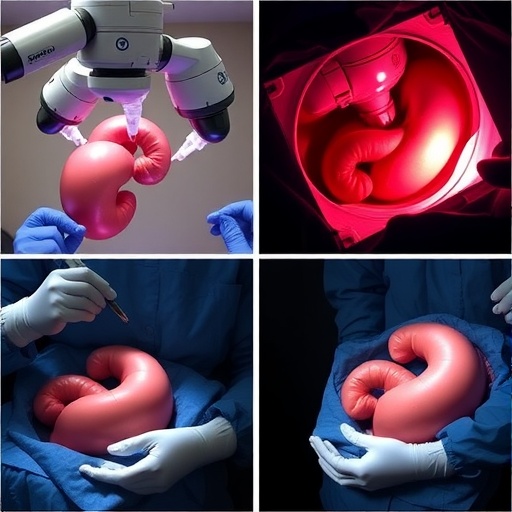
In a sweeping analysis encompassing Medicare beneficiaries who underwent cholecystectomy surgery from 2020 through 2023, new evidence has surfaced regarding the evolving role of robotic-assisted techniques within this common abdominal procedure. The investigation reveals not only a marked increase in the adoption of robotic-assisted cholecystectomy but also raises critical questions about the safety profile of this innovative surgical approach when compared to traditional laparoscopic methods. As the landscape of minimally invasive surgery rapidly transforms with advancing technology, these findings hold profound implications for clinical practice, patient outcomes, and surgical training paradigms.
Robotic-assisted cholecystectomy represents a cutting-edge evolution in gallbladder removal procedures, leveraging sophisticated robotic platforms to enhance the surgeon’s dexterity, vision, and precision. These systems provide articulated instruments and three-dimensional high-definition visualization, theoretically offering superior access and maneuverability within the confined spaces of the upper abdomen. This technological sophistication has driven a notable surge in its usage nationwide, as reported in the analysis covering a wide spectrum of Medicare patients, reflecting broader trends toward automation and computer-assisted interventions in surgery.
Despite the enthusiasm surrounding this technological innovation, the study’s comprehensive data analysis paints a nuanced picture of the risk-benefit balance associated with robotic assistance in cholecystectomy. While overall complication rates between the robotic-assisted and conventional laparoscopic approaches appear comparable, a discerning examination of bile duct injury rates reveals a concerning elevation in risk tied to robotic techniques. Bile duct injury, a severe and potentially life-altering complication, critically impacts patient morbidity and adds substantial complexity to postoperative management. The risk-adjusted data indicate that robotic-assisted cholecystectomy patients face a statistically significant increase in such injuries.
This elevated risk may arise from unique challenges inherent to robotic surgery, including learning curves associated with the operation of complex robotic systems, variations in tactile feedback compared to manual laparoscopy, and differences in surgeon experience levels with robotic platforms. Although robotic systems offer enhanced visualization, the absence of haptic feedback might impede the surgeon’s ability to detect subtle tactile cues critical for safe dissection near delicate biliary structures. Furthermore, the rapid adoption of robotic systems may outpace adequate training, contributing to higher adverse event rates during the initial phase of implementation in clinical settings.
The methodology of the study incorporated rigorous risk adjustment to control for confounding variables, ensuring that comparisons between robotic and laparoscopic outcomes reflected intrinsic procedural differences rather than patient selection biases. Through sophisticated statistical modeling and extensive data review, the investigators isolated the contribution of the surgical technique itself to the observed disparities in bile duct injury rates. This analytic rigor underscores the validity and clinical relevance of the findings, providing a foundation for informed decision-making amid evolving surgical options.
Beyond safety considerations, this study sheds light on broader healthcare trends, particularly the intersection of surgical innovation and health insurance coverage dynamics. Medicare beneficiaries comprise a diverse cohort with complex medical backgrounds, making them an ideal population to assess real-world outcomes across surgical modalities. As robotic platforms often entail higher procedural costs due to equipment and maintenance, these findings also prompt reflection on cost-effectiveness and value-based care in the context of emerging surgical technologies.
Moreover, the data provide impetus for ongoing refinement of surgical training programs and credentialing processes tailored to robotic surgery. Ensuring that surgeons possess both theoretical knowledge and hands-on expertise is paramount to maximizing the benefits of robotic assistance while minimizing its risks. Simulation-based training, proctored cases, and competency assessments may serve as vital components in bridging the gap between technological capability and patient safety.
The study’s temporal scope, spanning four years, captures an important transition period during which robotic-assisted cholecystectomy moved from a relatively novel approach to a more widely accepted technique. Tracking usage trends alongside outcome metrics offers a real-time glimpse into how surgical practice evolves in response to technological advances, market forces, and clinical outcomes data. The observed substantial increase in robotic utilization signifies enthusiasm and confidence among surgeons and institutions, yet it simultaneously underscores the urgency for vigilant monitoring of associated complications.
Interestingly, overall complication rates did not differ markedly between robotic and laparoscopic approaches, suggesting that robotic surgery does not inherently elevate general surgical risks. However, the specific rise in bile duct injuries highlights a procedure-specific vulnerability that demands targeted interventions. These findings advocate for heightened awareness of anatomic variations, meticulous intraoperative technique, and possibly adjunctive measures such as intraoperative cholangiography to mitigate bile duct injury risk during robotic procedures.
In the context of gastrointestinal surgery and minimally invasive techniques, this analysis contributes to the growing corpus of evidence guiding clinical protocols and surgical innovation adoption. It exemplifies how large-scale data analytics can illuminate subtle yet critical safety signals that might evade detection in smaller cohorts or single-institution studies. The insights derived herein are vital for surgeons, healthcare administrators, patients, and policymakers striving to balance innovation with patient safety and quality outcomes.
This study also serves as a catalyst for further research aimed at unraveling the mechanistic underpinnings of increased bile duct injury with robotic assistance. Detailed exploration of intraoperative factors, surgeon proficiency metrics, and adjunct technology utilization could propel strategies that enhance the safety profile of robotic cholecystectomy. Collaborative efforts integrating surgical expertise, engineering advancements, and data science hold promise for refining robotic platforms and optimizing procedural protocols.
As robotic-assisted surgery continues its trajectory of expansion, integrating these clinical insights into practice guidelines is essential. Multidisciplinary initiatives, encompassing surgeons, educators, technologists, and patient advocates, are critical to establishing standards that safeguard patient outcomes while embracing technological progress. Ultimately, this balancing act will define the future landscape of cholecystectomy and other minimally invasive surgical interventions.
The findings reported by Cody Lendon Mullens, MD, MPH, MS, and colleagues underscore the dual reality facing robotic surgery: its undeniable growth and innovative potential paired with specific procedural risks that warrant vigilance. The dialogue between technology and medicine is complex, driving continual reassessment and evolution. As healthcare systems worldwide grapple with integrating cutting-edge techniques, studies like this pave the way for data-driven, patient-centered surgical care.
For those invested in the future of surgical practice, this analysis offers a compelling narrative about harnessing robotic technology responsibly. It challenges the surgical community to transcend enthusiasm and critically appraise outcomes, fostering a culture where innovation and safety coalesce to enhance patient care quality and success.
Subject of Research: National analysis of Medicare beneficiaries undergoing cholecystectomy with focus on robotic-assisted versus laparoscopic approaches and associated complication rates.
Article Title: Not provided.
News Publication Date: Not provided.
Web References: Not provided.
References: (doi:10.1001/jamasurg.2026.1585)
Image Credits: Not provided.
Keywords
Surgery, Robotic-assisted surgery, Laparoscopic surgery, Cholecystectomy, Bile duct injury, Minimally invasive surgery, Surgical complications, Medicare, Health insurance, Data analysis, Gastrointestinal disorders, Surgical risk factors.
Tags: advanced surgical robotics technologycholecystectomy patient outcomesgallbladder removal innovationslaparoscopic cholecystectomy outcomesMedicare surgical data analysisminimally invasive gallbladder surgeryprecision surgery with roboticsrobotic surgery complication ratesrobotic versus laparoscopic comparisonrobotic-assisted cholecystectomy safetysurgical training in robotic techniquestrends in robotic-assisted surgery