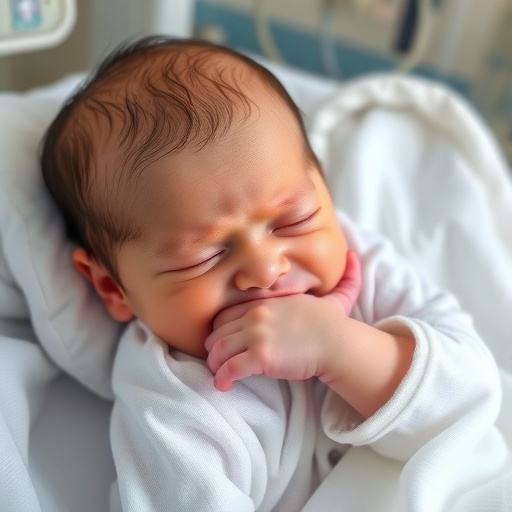
In a groundbreaking study that sheds new light on the delicate early life experiences of preterm infants, researchers have revealed a compelling association between exposure to stress and the level of discomfort these vulnerable newborns endure. The investigation, carried out by Koning, Bos, Kooi, and colleagues, delves into the nuanced relationship between stressors in neonatal intensive care environments and the physiological and behavioral manifestations of distress in infants born prematurely. This work, published in Pediatric Research on May 22, 2026, offers profound insights that could revolutionize neonatal care practices worldwide.
Preterm infants, defined as those born before 37 weeks of gestation, face a spectrum of health challenges beyond their early arrival. Their neurological and physiological systems are still maturing, rendering them uniquely sensitive to environmental stimuli, including stress. Within neonatal intensive care units (NICUs), preterm infants are subjected to numerous unavoidable stressors ranging from invasive medical procedures to fluctuating sensory inputs such as noise and light. Understanding how these stressors contribute to experienced discomfort is paramount for optimizing care strategies that promote healthier developmental trajectories.
The study by Koning and colleagues meticulously quantified stress exposure using a combination of objective clinical metrics and continuous physiological monitoring. This multi-dimensional approach allowed them to correlate the number and intensity of stress events with detailed assessments of discomfort expressed by the infants. Discomfort was measured by analyzing vital sign variability, facial expression coding, and behavioral state changes, creating a robust, nuanced portrait of the infant’s real-time response to their environment.
One of the study’s pivotal findings is the clear dose-response relationship between cumulative stress exposure and the magnitude of experienced discomfort. Infants subjected to higher frequencies and intensities of stressful stimuli exhibited markedly increased signs of distress. This correlation held true even after adjusting for confounding variables such as gestational age, birth weight, and underlying medical conditions, underscoring the independent impact of stress on neonatal comfort levels.
The implications of these findings extend beyond mere identification of associations. They prompt a reevaluation of current NICU protocols, prioritizing the mitigation of stress through innovative interventions. For instance, the study encourages the adoption of noise-reduction techniques, gentle handling practices, and developmentally supportive environmental modifications like controlled lighting and temperature. These practices aim to create a sanctuary that minimizes adverse sensory input and promotes optimal physiological stability.
Intriguingly, the research team also explored the temporal dynamics of stress and discomfort. They uncovered that repeated stress exposures have a cumulative effect, intensifying discomfort over time rather than allowing for adaptation or habituation. This challenges previous assumptions that preterm infants might gradually acclimate to their surroundings and instead highlights their heightened vulnerability to ongoing stressors. The findings advocate for continuous, vigilant monitoring and proactive management of stress rather than reactive approaches.
From a neurological perspective, this work illuminates how stress-induced discomfort potentially disrupts neurodevelopment during a critical window. Chronic stress in early life is known to interfere with synaptic pruning, neural circuit formation, and myelination processes. The elevated discomfort observed likely reflects underlying neuroinflammatory responses triggered by repeated stress, which, if unabated, could culminate in longer-term developmental impairments. Thus, the study not only addresses immediate clinical concerns but also gestures toward future neurodevelopmental outcomes.
Further advancing the field, Koning et al. incorporated advanced machine learning algorithms to analyze complex, multivariate data sets encompassing physiological signals and behavioral markers. This innovative methodology enabled the identification of subtle patterns predictive of discomfort that might otherwise evade traditional analytic techniques. By leveraging artificial intelligence, the researchers set a new standard for precision in neonatal stress research and pave the way for personalized care protocols tailored to individual infant responses.
A particularly striking aspect of this research is the holistic understanding of discomfort it reveals. Discomfort is conceptualized not merely as a physical phenomenon but as a multidimensional experience involving autonomic dysregulation, emotional distress, and neurochemical imbalance. This paradigm shift elevates the importance of empathic caregiving and psychosocial support within NICUs, integrating humanistic elements with technological advances to ameliorate infant suffering.
The translational potential of these findings is immense. Clinicians can apply the study’s insights to refine sedation and analgesia protocols, balancing necessary interventions with the imperative to avoid excess pharmacological burden. Family-centered care models may also benefit, as reducing environmental stress could enable closer parent-infant bonding, which itself mitigates discomfort and supports neurodevelopment. The research underscores that addressing preterm infant discomfort demands collaborative, interdisciplinary approaches bridging neonatology, nursing, psychology, and biomedical engineering.
Notably, the study acknowledges limitations that warrant further inquiry. While establishing a strong association between stress exposure and discomfort, causality remains an open question deserving exploration via longitudinal designs and experimental interventions. Additionally, cultural and institutional variability in NICU environments might influence stress and discomfort dynamics, suggesting a need for multicenter studies to validate and expand upon these results.
In conclusion, the work by Koning and colleagues represents a seminal advance in neonatal research, uncovering the intricacies of how stress correlates with experienced discomfort in preterm infants. This knowledge not only enriches scientific understanding but also carries profound ethical and practical consequences for the care of the most vulnerable patients. As neonatal medicine continues to evolve, integrating these findings promises to enhance the quality of life and developmental outcomes for preterm infants globally.
Looking forward, this research beckons a new era where technology-driven precision medicine converges with compassionate caregiving, transforming NICUs into environments optimized not only for survival but for thriving. The detailed mapping of stress and discomfort pathways offers a roadmap for innovation in monitoring systems, therapeutic interventions, and family engagement strategies. It is a clarion call for researchers, clinicians, and policymakers to prioritize the minimization of neonatal stress as a cornerstone of neonatal intensive care.
Ultimately, the value of this study lies in its affirmation that every moment, every stimulus within the neonatal environment can significantly influence the lived experience of preterm infants. By illuminating the profound impact of stress on neonatal discomfort, Koning et al. provide a vital foundation for future efforts aimed at building gentler, more nurturing care paradigms. As this work garners attention across the medical and scientific communities, it sets the stage for a paradigm shift towards truly humane neonatology, where science and empathy are inseparably intertwined.
Subject of Research: Association between stress exposure and experienced discomfort in preterm infants
Article Title: Association between exposure to stress and experienced discomfort in preterm infants
Article References:
Koning, E., Bos, A.F., Kooi, E.M.W. et al. Association between exposure to stress and experienced discomfort in preterm infants. Pediatr Res (2026). https://doi.org/10.1038/s41390-026-05114-0
Image Credits: AI Generated
DOI: 22 May 2026
Tags: behavioral distress in preterm infantscontinuous monitoring of infant stressdiscomfort in premature newbornsearly life sensory impacts on infantsimproving outcomes for preterm infantsinvasive medical procedures in NICUneonatal intensive care unit stressorsneurodevelopmental vulnerability in preemiesNICU environmental stress factorsoptimizing neonatal care practicesphysiological effects of neonatal stresspreterm infant stress exposure