• HOME
  • NEWS
  • EXPLORE
    • CAREER
      • Companies
      • Jobs
    • EVENTS
    • iGEM
      • News
      • Team
    • PHOTOS
    • VIDEO
    • WIKI
  • BLOG
  • COMMUNITY
    • FACEBOOK
    • INSTAGRAM
    • TWITTER
Wednesday, April 1, 2026
BIOENGINEER.ORG
No Result
View All Result
  • Login
  • HOME
  • NEWS
  • EXPLORE
    • CAREER
      • Companies
      • Jobs
        • Lecturer
        • PhD Studentship
        • Postdoc
        • Research Assistant
    • EVENTS
    • iGEM
      • News
      • Team
    • PHOTOS
    • VIDEO
    • WIKI
  • BLOG
  • COMMUNITY
    • FACEBOOK
    • INSTAGRAM
    • TWITTER
  • HOME
  • NEWS
  • EXPLORE
    • CAREER
      • Companies
      • Jobs
        • Lecturer
        • PhD Studentship
        • Postdoc
        • Research Assistant
    • EVENTS
    • iGEM
      • News
      • Team
    • PHOTOS
    • VIDEO
    • WIKI
  • BLOG
  • COMMUNITY
    • FACEBOOK
    • INSTAGRAM
    • TWITTER
No Result
View All Result
Bioengineer.org
No Result
View All Result
Home NEWS Science News

‘Quantum leap’ for Liverpool

Bioengineer by Bioengineer
May 30, 2017
in Science News
Reading Time: 2 mins read
0
Share on FacebookShare on TwitterShare on LinkedinShare on RedditShare on Telegram
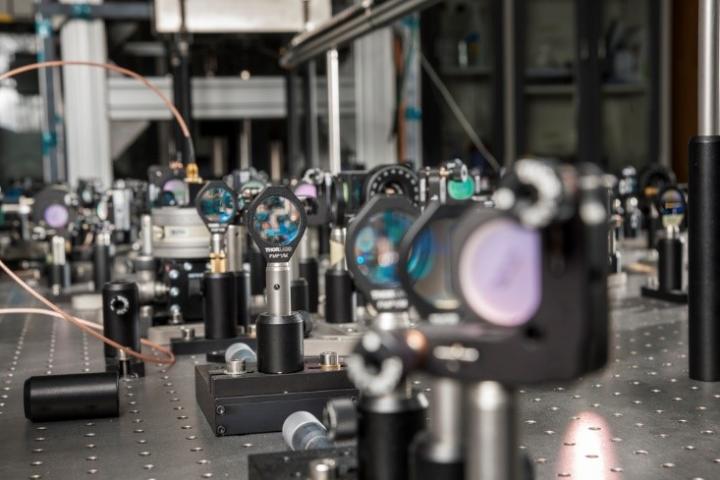
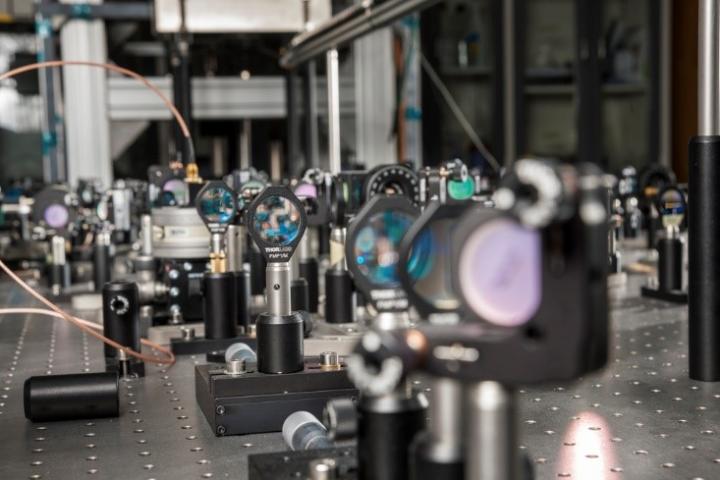
IMAGE

Credit: University of Liverpool

Physicists from the University of Liverpool have made a huge step forwards towards building a novel experiment to probe the "dark contents" of the vacuum. What we see, normal matter and light, only accounts for a about 5% of the universe. Understanding the remaining 95% (the dark content) remains of the greatest challenges for fundamental physics in the 21st Century.

A novel experiment to probe the dark universe was co-initiated by Dr Jon Coleman, a Royal Society Research Fellow in the University's Department of Physics, together with Nobel Laureate Martin Perl (a visiting Professor at the University of Liverpool from 2011, until his passing in 2014). The unique experiment relies on "quantum interferometry" using ultra cold atoms. This is based on one of the most challenging modern experimental techniques of cold atoms (itself awarded a Nobel prize in 1997), called atom interferometry.

In a paper released to ArXiv, the research group present their results demonstrating interference, using low cost equipment and sophisticated control systems which are a synthesis of their work at Stanford, electronics expertise from the T2K neutrino experiment in Japan, and motivated by a vision for a new way to probe the universe.

There are only a handful of working atom interferometers in Europe and none configured to probe the dark universe. This marks a great advance in the university's ability to use the quantum nature of atoms.

Liverpool Physicist, Dr Jon Coleman, said: "This is certainly one of the most difficult things that I have attempted and has taken years of dedication. This would never have been possible without the fantastic team of staff and graduate students that are involved in the project, and the encouragement from my colleagues. We are excited because this apparatus can be used for so many things as well as probing for dark energy. Potential applications range from navigation to gravity scanning."

Professor Themis Bowcock, Head of the University's Particle Physics group, commented: "This is a critical new addition to way that fundamental physics will be done in the next decades. This technique could be as important as utilization of accelerators at CERN.

"We want Liverpool to be at the forefront of developing these technologies for studying the cosmos. We are very proud to be able to have given Jon the intellectual room, and the support, to complete the first stage of his programme."

Quantum Technology is estimated at a £1billion industry for the UK and quantum technologies are expected to have applications across multiple future multi-billion-pound industries in many markets and sectors.

###

Media Contact

Nicola Frost
[email protected]
@livuninews

http://www.liv.ac.uk

############

Story Source: Materials provided by Scienmag

Share12Tweet8Share2ShareShareShare2

Related Posts

KIST-IAE Collaborative Team Surpasses Performance Limits in Lithium-Air Batteries with Innovative Two-Dimensional Catalyst

KIST-IAE Collaborative Team Surpasses Performance Limits in Lithium-Air Batteries with Innovative Two-Dimensional Catalyst

April 1, 2026

Brain Metastases Show Unique Macrophage Spatial Patterns

April 1, 2026

PRSS56 Drives and Treats Human High Myopia

April 1, 2026

Early cfEBV DNA Guides Nasopharyngeal Cancer Treatment

April 1, 2026
Please login to join discussion

POPULAR NEWS

  • blank

    Revolutionary AI Model Enhances Precision in Detecting Food Contamination

    96 shares
    Share 38 Tweet 24
  • Imagine a Social Media Feed That Challenges Your Views Instead of Reinforcing Them

    1006 shares
    Share 398 Tweet 249
  • Promising Outcomes from First Clinical Trials of Gene Regulation in Epilepsy

    51 shares
    Share 20 Tweet 13
  • Popular Anti-Aging Compound Linked to Damage in Corpus Callosum, Study Finds

    43 shares
    Share 17 Tweet 11

About

We bring you the latest biotechnology news from best research centers and universities around the world. Check our website.

Follow us

Recent News

KIST-IAE Collaborative Team Surpasses Performance Limits in Lithium-Air Batteries with Innovative Two-Dimensional Catalyst

Brain Metastases Show Unique Macrophage Spatial Patterns

PRSS56 Drives and Treats Human High Myopia

Subscribe to Blog via Email

Enter your email address to subscribe to this blog and receive notifications of new posts by email.

Join 78 other subscribers
  • Contact Us

Bioengineer.org © Copyright 2023 All Rights Reserved.

Welcome Back!

Login to your account below

Forgotten Password?

Retrieve your password

Please enter your username or email address to reset your password.

Log In
No Result
View All Result
  • Homepages
    • Home Page 1
    • Home Page 2
  • News
  • National
  • Business
  • Health
  • Lifestyle
  • Science

Bioengineer.org © Copyright 2023 All Rights Reserved.