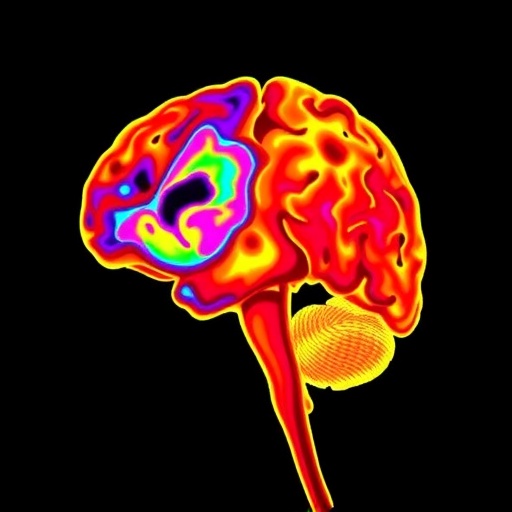
In recent years, the quest to improve neurological outcomes in neonates affected by severe brain injuries has intensified, bringing cutting-edge technologies to the forefront of neonatal intensive care. Among these technologies, cerebral Near-Infrared Spectroscopy (NIRS) has garnered increasing attention for its potential role in the clinical management of post-hemorrhagic ventricular dilation (PHVD), a devastating complication often following intraventricular hemorrhage (IVH) in preterm infants. The latest research by Whittemore, Coccuzo, and Chalak, published in Pediatric Research, dives deep into the possibilities and challenges of integrating cerebral NIRS into therapeutic strategies for PHVD, potentially reshaping neonatal neurocritical care.
Post-hemorrhagic ventricular dilation emerges as a complex pathological state marked by the enlargement of ventricles due to cerebrospinal fluid accumulation after blood injury within the brain’s ventricular system. This condition poses a significant risk of long-term neurodevelopmental impairment, including motor, cognitive, and sensory deficits, which severely impacts infant morbidity and mortality rates worldwide. Traditional monitoring techniques rely heavily on serial cranial ultrasounds and clinical observations, which, although indispensable, offer limited real-time insight into cerebral oxygenation and hemodynamics, essential parameters when assessing cerebral tissue viability.
Cerebral NIRS, a non-invasive method deploying near-infrared light to penetrate biological tissues, offers continuous bedside monitoring of cerebral oxygen saturation, thereby providing an indirect but valuable estimate of cerebral blood flow and oxygen delivery-demand balance. Whittemore and colleagues meticulously outline the physiological basis for cerebral NIRS application in neonates with PHVD, emphasizing its capacity to detect subtle changes in cerebral oxygenation that precede clinical deterioration or radiological progression. This ability could potentially allow clinicians to intervene earlier, tailoring treatments to dynamic cerebral metabolic demands.
The paper underscores the technical nuances of NIRS technology, including the variable penetration depth of near-infrared light, influenced by factors such as skull thickness, scalp edema, and the heterogeneous distribution of cerebral tissues in neonates. Accurate sensor placement and signal interpretation remain pivotal challenges, requiring enhanced standardization and clinician training to ensure data reliability. Furthermore, the authors critically assess current device limitations—such as interference from extracerebral tissues and calibration protocols—to advocate for ongoing technological refinement that could enhance the fidelity of cerebral oxygenation measurements in this vulnerable population.
One of the most compelling aspects discussed is the potential integration of cerebral NIRS into multimodal monitoring algorithms. Combining NIRS data with cerebral ultrasound metrics, amplitude-integrated electroencephalography (aEEG), and clinical indicators could create a robust framework for individualized care. This integration may facilitate not only early detection of worsening ventricular dilation but also guide cerebrospinal fluid drainage procedures, optimizing timing and reducing adverse sequelae associated with delayed intervention or unnecessary invasive procedures.
Whittemore et al. highlight several clinical scenarios where cerebral NIRS could be particularly transformative. For instance, real-time cerebral oxygenation monitoring might help distinguish between compensated and decompensated hydrocephalus states, enabling nuanced decision-making about surgical timing. Additionally, NIRS could monitor cerebral perfusion changes post-lumbar puncture or ventricular taps, providing immediate feedback on procedural efficacy and cerebral hemodynamic stability.
The research also explores the promise of cerebral NIRS as a prognostic tool, whereby trends in cerebral oxygen saturation patterns might correlate with longer-term neurodevelopmental outcomes. The ability to predict which infants are at higher risk of adverse outcomes could spur early rehabilitative interventions, family counseling, and resource allocation, ultimately improving quality of life for affected children.
Despite its promise, the paper does not shy away from the limitations and cautious interpretation required when applying cerebral NIRS clinically. The authors call for larger, multicenter prospective studies to establish standardized thresholds for intervention, improve signal specificity, and validate outcome correlations. They emphasize that cerebral NIRS should complement, not replace, established diagnostic modalities, forming part of a comprehensive clinical picture rather than a solitary metric dictating care decisions.
The article further delves into the bioengineering advances that could enhance cerebral NIRS performance, such as integration with machine learning algorithms to filter noise and detect clinically significant trends automatically. Such technological synergies could reduce the cognitive load on clinicians and enable earlier, more accurate interpretation of cerebral physiological changes, translating to improved patient outcomes.
Importantly, the review also addresses ethical and logistical considerations for implementing NIRS technology in neonatal units, including cost-effectiveness analyses, staff training programs, and parental involvement in monitoring discussions. The authors envision a future where cerebral NIRS becomes a routine part of neonatal intensive care, fostering a culture of precision medicine geared towards minimizing brain injury after PHVD.
Through an engaging synthesis of current evidence and clinical insights, Whittemore, Coccuzo, and Chalak’s study provides a compelling narrative advocating for increased adoption and further research into cerebral NIRS. Their work represents a paradigm shift, positioning advanced optical monitoring technologies at the heart of neurocritical care for premature infants at risk of neurological compromise due to post-hemorrhagic complications.
In conclusion, the evolving landscape of neonatal neurology is on the cusp of transformation through technological innovation. Cerebral NIRS, with its promise of continuous, non-invasive cerebral oxygenation monitoring, stands as a beacon of hope for reducing the neurological burden of post-hemorrhagic ventricular dilation. Future investigative efforts must focus on refining this tool’s application, validating clinical protocols, and ultimately integrating cerebral NIRS into standard neonatal care, potentially ushering in a new era of improved neurodevelopmental outcomes for vulnerable newborns worldwide.
Subject of Research: The utilization and clinical implications of cerebral Near-Infrared Spectroscopy (NIRS) in managing post-hemorrhagic ventricular dilation in neonates.
Article Title: Is there a role for cerebral NIRS in the management of post hemorrhagic ventricular dilation?
Article References:
Whittemore, B., Coccuzo, B. & Chalak, L. Is there a role for cerebral NIRS in the management of post hemorrhagic ventricular dilation?. Pediatr Res (2026). https://doi.org/10.1038/s41390-026-04984-8
Image Credits: AI Generated
DOI: https://doi.org/10.1038/s41390-026-04984-8
Tags: cerebral near-infrared spectroscopy in neonatal carecerebral oxygen saturation in preterm infantschallenges in neonatal intensive carecontinuous cerebral oxygenation assessmentimproving neurodevelopmental outcomes in neonatesintraventricular hemorrhage complications in neonatesmanagement of post-hemorrhagic ventricular dilationneonatal brain injury monitoring techniquesneurocritical care innovations for newbornsnon-invasive brain monitoring technologiesreal-time cerebral hemodynamics monitoringtherapeutic strategies for PHVD