In a remarkable leap forward for neuroscience, researchers at the Max Planck Florida Institute for Neuroscience (MPFI), in collaboration with ZEISS and MetaCell, have developed an innovative imaging pipeline dubbed Neuroplex. This groundbreaking technology enables scientists to simultaneously observe the activity of nine distinct neuronal populations within the brains of freely moving mice, vastly outstripping previous capabilities that were limited to monitoring only two cell types simultaneously. Published in the prestigious journal eLife, Neuroplex promises to revolutionize our understanding of brain function by providing a more holistic and detailed picture of how neural circuits coordinate complex behaviors.
For years, neuroscientists have been grappling with the challenge of linking brain activity to behavior in a precise and cell-type-specific manner. The tiny head-mounted microscopes known as miniscopes have offered a window into neural activity in living, behaving animals, but their capacity to distinguish different neuronal identities was heavily constrained. Researchers could typically differentiate no more than two neural populations in a single experiment, forcing repetitive trials targeting different neuronal groups sequentially. This piecemeal approach not only consumed valuable time and resources but also complicated data interpretation due to animal-to-animal variability and prevented tracking the dynamic changes of neuronal populations over extended periods.
Traditional methods to circumvent this limitation involved post-experimental analysis of brain tissue. Scientists would euthanize the animal, slice the brain into thin sections, and use color-coded fluorescent markers to identify various neuronal subtypes under high-resolution microscopes. While this technique permitted finer cellular distinction, it suffered from critical drawbacks: the difficulty of matching neurons imaged during behavior with their post-mortem counterparts introduced significant data loss and precluded longitudinal studies of neuronal activity, as the living brain’s dynamics were no longer accessible.
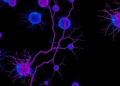
Neuroplex ingeniously bridges these gaps by synergizing miniscope imaging with advanced spectral confocal microscopy in the same living animal. Initially, neuroscientists introduce a set of fluorescent markers designed to label up to nine different neural circuits or cell types, each with a unique color signature. The mice are then implanted with a tiny lens and outfitted with a miniscope that records neural activity in real-time as the animals freely navigate their environment. Although the miniscope itself cannot distinguish the specific fluorescent colors, it captures the functional activity of the entire labeled population.
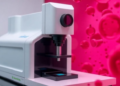
Subsequently, the miniscope is carefully detached, and the mouse is placed under a high-end confocal microscope — in this case, the ZEISS LSM 980. Unlike miniscopes, this confocal system features spectral detection capabilities, allowing precise differentiation of the diverse fluorescent tags associated with each neuronal population. The same neurons observed via miniscope are imaged again through the identical lens, this time revealing their molecular identities according to color labels. These images are then computationally aligned and co-registered using anatomical landmarks and a custom Python-based alignment tool developed through collaboration with MetaCell. This innovative computational framework integrates the functional activity recorded in vivo with the molecular identity of each neuron, providing an unprecedented resolution of brain circuit dynamics.
Dr. Zhe Dong of MetaCell, a co-author on the study, highlights the critical role of computational sophistication in this breakthrough. By crafting a robust workflow for imaging, registration, and data analysis, MetaCell transformed complex, multi-dimensional biological data into interpretable outputs with enhanced accuracy, reproducibility, and researcher confidence. Such computational rigor is essential for making sense of the multifaceted datasets generated by Neuroplex, enabling scientists to simultaneously monitor and analyze multiple neuronal populations over time.
To illustrate the power of Neuroplex, the team focused on nine distinct brain regions receiving projections from the medial prefrontal cortex, a cerebral hub pivotal for decision making and social behavior. Using retrograde labeling techniques, they tagged neurons projecting from the prefrontal cortex to these diverse areas, each with a distinct fluorescent color. As the mice engaged in dynamic social interactions — sniffing, approaching, and following conspecifics — the researchers recorded the simultaneous activity of all nine neuronal circuits. This experiment marked a monumental advance, providing direct comparative insights into how interconnected neuronal networks orchestrate behavior in real time.
Results from these experiments were striking. Approximately 75% of the active neurons were successfully classified into one of the nine specified cell types, with the automated neuron classification algorithm achieving around 90% accuracy and minimal false positives. This high-fidelity mapping of functional data onto cellular identity illustrates Neuroplex’s enormous potential for unraveling the complex choreography of neuronal ensembles underpinning behavior. Moreover, the non-destructive nature of this approach makes it possible to longitudinally trace identified cell populations, opening avenues to study learning, memory, aging, and disease progression across extended timescales in living animals.
One of the most exciting aspects of Neuroplex is its ability to track changes in neuronal activity patterns as animals experience new environments, learn novel tasks, or undergo pathological transformations. These longitudinal studies, which were previously impractical or impossible, may provide vital clues about the mechanisms driving neurodevelopmental and neurodegenerative diseases. Understanding how different neuronal circuits adapt or deteriorate during disease could inform targeted interventions and therapies, propelling translational neuroscience research forward.
Looking ahead, the MPFI team is already pushing the boundaries of this technology. They are refining Neuroplex to further improve the precision and reliability of color code identification, thereby enhancing the resolution and robustness of circuit-specific data. Recognizing the importance of accessibility, they are also working to democratize this approach so that laboratories without access to expensive spectral confocal systems can adopt it. By developing variations compatible with standard filter-based widefield microscopes, their goal is to bring the core advantages of Neuroplex to a broader scientific community worldwide.
The potential ramifications of these advancements cannot be overstated. Neuroplex dramatically accelerates data collection efficiency for cell-type-specific functional studies, which will significantly deepen our understanding of how neural computations give rise to behavior. Beyond basic research insights, this technology holds promise for accelerating discoveries in disease modeling, especially where circuit-level dysfunction evolves over time. Early and precise observation of such changes could revolutionize the way we study neurological and psychiatric disorders.
To facilitate widespread dissemination of their breakthrough, the team has developed comprehensive tutorials available to scientists aiming to incorporate Neuroplex into their own research endeavors. Furthermore, upcoming webinars hosted by ZEISS, featuring Dr. Mary Phillips, aim to share practical knowledge and resources with the broader neuroscience community. These educational efforts underscore the team’s commitment to fostering collaboration and innovation across the field.
In summary, Neuroplex represents a transformative step in systems neuroscience. By overcoming longstanding technical barriers through a harmonious blend of cutting-edge imaging technology and sophisticated computational tools, this approach enables unprecedented insights into the intricate neural orchestra directing behavior. As Neuroplex continues to evolve and become more accessible, it promises to unlock new frontiers in brain research, ultimately enriching our understanding of the mind and its myriad functions.
Subject of Research: Animals
Article Title: Functional imaging of nine distinct neuronal populations under a miniscope in freely behaving animals
News Publication Date: 12-May-2026
Web References:
Original publication in eLife
Neuroplex tutorials by ZEISS
ZEISS Webinar Registration
References:
Mary L. Phillips, Nicolai T. Urban, Taddeo Salemi, Zhe Dong, Ryohei Yasuda (2026) Functional imaging of nine distinct neuronal populations under a miniscope in freely behaving animals. eLife 15:RP110277. DOI: 10.7554/eLife.110277.3
Image Credits: Mary Phillips
Keywords: Neuroscience, Microscopy, Imaging, Ethology, Neural Circuits, Miniscope, Confocal Microscopy, Spectral Imaging, Neural Activity, Cell Type Specificity, In Vivo Imaging, Computational Neuroscience
Tags: advanced neural imaging technologybrain function and behavior linkcell-type-specific neurosciencefreely moving mice brain studyhigh-resolution neuronal monitoringMax Planck Florida Institute researchminiscope limitations in neurosciencemulti-neuronal activity observationneural circuit coordinationneuronal population imagingneuroplex imaging techniquesimultaneous brain activity mapping