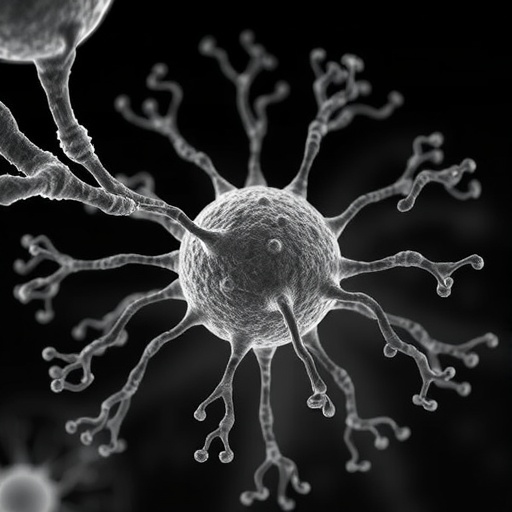
The mammalian nucleolus, long known as the cellular hub for ribosomal RNA (rRNA) synthesis and ribosome assembly, is now drawing unprecedented scientific attention thanks to groundbreaking advancements in imaging technologies and next-generation sequencing. These recent developments have peeled back layers of mystery surrounding the nucleolus, revealing a complex and dynamically organized structure whose intricate architecture is vital to cellular function and health. This resurgence of interest offers a new lens through which to view the nucleolus not merely as a static factory of ribosomes but as a multifaceted, highly regulated organelle with its own spatial and functional hierarchies.
At the heart of this cellular command center lies the orchestration of rRNA transcription, processing, and ribosome assembly—a process that is both precise and continuously adaptive. High-resolution imaging technologies such as super-resolution microscopy and cryo-electron tomography have provided a window into the spatial compartmentalization within the nucleolus, exposing a multilayered organization that was previously obscured. These observations underscore that the nucleolus functions through discrete but interdependent compartments, each harboring specific steps in ribosome biogenesis. This compartmentalization is crucial for ensuring the efficiency and fidelity of ribosome production.
Notably, recent studies have begun to elucidate the physical principles underlying nucleolar assembly and maintenance, concepts which hinge on the properties of phase separation. The nucleolus behaves as a biomolecular condensate, driven by multivalent interactions between nucleolar proteins and rRNA transcripts. This phase separation facilitates the formation of distinct yet fluid separations within the nucleolar space, creating dynamic environments where ribosomal components can be processed and assembled without interference. This dynamic organization allows the nucleolus to respond rapidly to cellular cues and stresses, maintaining homeostasis even under changing conditions.
This dynamic fluidity and organization have profound implications for understanding the cascading effects of nucleolar dysfunction. Disruptions in nucleolar structure—arising from genetic mutations, stress responses, or disease states—can derail ribosome production, triggering a cellular crisis that feeds into broader pathophysiological conditions. Such nucleolar perturbations are increasingly recognized as central players in the onset and progression of various diseases, including cancer, neurodegenerative disorders, and viral infections. This opens a promising therapeutic frontier aimed at targeting nucleolar integrity and function to restore cellular balance or selectively eliminate diseased cells.
Comparative analyses between mammalian nucleoli and those of other model organisms have enriched our understanding of both conserved and unique nucleolar traits. While the fundamental principles of rRNA synthesis and ribosome assembly are preserved evolutionarily, variations in size, structure, and compartmentalization underscore species-specific adaptations. Exploration of these differences reveals how the nucleolus accommodates the varying demands of cell size, metabolic rate, and gene expression profiles across organisms, offering insights into evolutionary pressures shaping ribosome biogenesis.
Moreover, the interplay among the nucleolus and other nuclear bodies suggests a broader functional network that integrates ribosome biogenesis with genome stability, cell cycle regulation, and stress responses. The nucleolus acts as a sensor and coordinator within this network, modulating its activity according to intracellular and extracellular signals. This integrative role adds a layer of complexity to nucleolar biology and hints at systemic regulatory mechanisms that govern cellular growth and survival.
Elevating this discussion, recent next-generation sequencing approaches have mapped transcriptional activity within nucleolar organizer regions (NORs) with unprecedented detail. These studies show that rRNA gene transcription is a tightly regulated event, influenced by epigenetic modifications, chromatin topology, and noncoding RNAs. This regulation ensures that rRNA synthesis matches cellular demands while preventing aberrant activation that could compromise nucleolar architecture and function.
The nucleolus’s ability to dynamically tune rRNA processing steps further illustrates its sophistication. Sequential processing of pre-rRNA transcripts through coordinated molecular cascades enables the generation of mature rRNA species critical for functional ribosome assembly. Advances in transcriptomic profiling have pinpointed novel processing intermediates and associated factors, highlighting a complex choreography that maintains the delicate balance required for ribosome output.
Importantly, the nucleolus also plays a vital role in monitoring and repairing ribosomal components, ensuring quality control within the ribosome biogenesis pathway. Misassembled ribosomal units are recognized and targeted for degradation or repair, preventing the accumulation of faulty ribosomes that could perturb proteome fidelity. This quality control capacity is essential for cellular viability and resilience, particularly in rapidly dividing cells with high ribosomal demand.
The integration of biophysical and molecular biology approaches has been instrumental in bridging our understanding of nucleolar form and function. By combining live-cell imaging with biochemical assays, researchers have begun to capture nucleolar dynamics across temporal and spatial scales, revealing how nucleolar compartments reorganize in response to metabolic or stress signals. Such insights provide a framework for manipulating nucleolar function for therapeutic benefit in diseases marked by nucleolar dysregulation.
Furthermore, the nucleolus’s architectural plasticity is highlighted by its remarkable responsiveness to cellular stress. Under conditions such as nutrient deprivation, DNA damage, or oncogenic signaling, nucleolar morphology and activity undergo rapid remodeling. This adaptive remodeling modulates ribosome production and influences broader cellular stress responses, demonstrating the nucleolus’s central role in maintaining cellular homeostasis under challenge.
The therapeutic implications of these advances are profound. Targeting nucleolar components or their regulatory pathways opens new avenues for precision medicine, especially in oncology, where nucleolar hypertrophy and elevated ribosome production are hallmarks of aggressive tumors. Drugs aimed at disrupting nucleolar assembly or its functional compartments could selectively impair cancer cell growth while sparing normal cells, presenting a potent anti-cancer strategy.
Finally, ongoing research continues to reveal unexpected roles of the nucleolus beyond ribosome production, including regulation of cell senescence, viral replication, and even neuroprotection. This expanding landscape underscores the nucleolus as a multifunctional organelle integral not only to basic cellular machinery but also to complex physiological and pathological processes.
As we deepen our knowledge of mammalian nucleolar biology, it becomes clear that this ancient organelle holds secrets crucial for understanding life at its most fundamental level. Harnessing state-of-the-art technologies to unravel nucleolar structure-function relationships promises to illuminate new biological paradigms and inspire novel therapeutic concepts. The coming years in nucleolar research are poised to transform our comprehension of cellular organization and disease mechanisms in remarkable ways.
Subject of Research: Mammalian nucleolus structure–function relationships and ribosome biogenesis
Article Title: Elucidating structure–function relationships in the mammalian nucleolus
Article References:
Shan, L., Sun, Y., Woodson, S.A. et al. Elucidating structure–function relationships in the mammalian nucleolus. Nat Rev Mol Cell Biol (2026). https://doi.org/10.1038/s41580-026-00975-z
Image Credits: AI Generated
DOI: https://doi.org/10.1038/s41580-026-00975-z
Keywords: nucleolus, ribosomal RNA synthesis, ribosome biogenesis, phase separation, nucleolar compartments, ribosome assembly, cellular stress, biomolecular condensates, nucleolar dynamics, epigenetics, quality control, therapeutic targets
Tags: cryo-electron tomography of nucleolushigh-resolution imaging of nucleolusmammalian nucleolus structure and functionnucleolar organization and architecturenucleolus assembly and maintenance mechanismsnucleolus dynamic structural hierarchynucleolus role in cellular healthnucleolus rRNA transcription processribosomal RNA synthesis in nucleolusribosome assembly and biogenesisspatial compartmentalization in nucleolussuper-resolution microscopy nucleolus studies