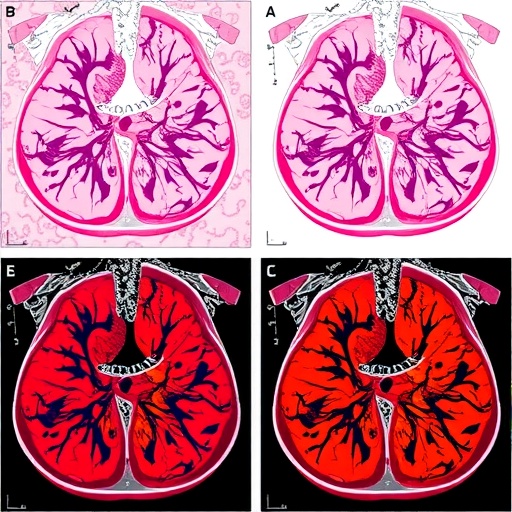
In the quest for precision medicine in oncology, one of the most daunting challenges remains the accurate prediction of neoadjuvant chemotherapy response in HER2-positive breast cancer patients. Accounting for approximately 20% of breast cancer cases, HER2-positive tumors are notoriously aggressive and carry a heightened risk of metastasis. While achieving a pathologic complete response (pCR) following neoadjuvant chemotherapy is a hallmark of improved prognosis, predicting which patients will benefit beforehand remains an elusive yet critical goal. Recent advances in computational pathology now promise to bridge this gap, leveraging the rich spatial information inherent in routine hematoxylin and eosin (H&E) stained whole-slide tissue images to unlock new predictive insights.
Conventional methods for predicting treatment response have heavily relied on immunohistochemical (IHC) markers. Although IHC offers precise and biologically interpretable results, the approach is hamstrung by significant limitations: it is labor-intensive, time-consuming, and not easily scalable to large cohorts. In parallel, artificial intelligence techniques using deep learning have revolutionized digital pathology by enabling automated whole-slide image analysis. However, most extant deep-learning models treat slides as unstructured collections of independent image tiles, neglecting the intricate spatial relationships and tissue compartmentalization that are essential in understanding tumor biology and its microenvironment. The opacity of many deep-learning models further limits their clinical utility as black-box predictors.
A novel research endeavor led by Wensheng Cui and colleagues at Hangzhou Dianzi University proposes a transformative hierarchical tissue-specific modeling framework designed to predict pCR from routine H&E whole-slide images with enhanced interpretability and accuracy. The core innovation lies in biologically meaningful partitioning of the histological landscape into five distinct compartments: tumor, stroma, stromal tumor-infiltrating lymphocytes (sTILs), intratumoral tumor-infiltrating lymphocytes (iTILs), and the aggregate tumor-infiltrating lymphocyte (TIL) population. Segmenting the slide into these compartments enables the model to capture the unique microenvironmental features and spatial organization that govern response to chemotherapy.
For each tissue compartment, a graph was constructed modeling the spatial relationships between clustered representative image tiles. Nodes in this graph represent clusters of homogeneous tissue regions, connected based on spatial proximity, creating an interpretable network that mirrors the biological architecture of the tumor microenvironment. Social network analysis strategies were then applied to extract spatial structural features from these graphs, quantifying tissue organization patterns that correlate with the efficacy of neoadjuvant chemotherapy. Simultaneously, a weakly supervised, pretrained deep-learning multiple-instance learning model was deployed to extract tissue-specific semantic features, producing predictive deep-learning scores for each compartment.
Uniquely, this framework integrates these spatial graph features, deep semantic scores, and relevant clinical information into compartment-specific predictive models. This multi-modal fusion enables leveraging diverse but complementary data sources to enhance both prediction robustness and biological interpretability. Training was conducted using the Yale Response cohort, with rigorous external validation performed on the independent IMPRESS HER2+ dataset to ensure generalizability and resilience to cohort variability.
Results showcased the stromal compartment as the most potent predictor of treatment outcome, achieving an area under the curve (AUC) of 0.907 in the validation cohort—an improvement over previous models based solely on clinical variables, deep-learning scores, or simple tissue quantitation. This finding underscores that stromal tissue, often underappreciated in predictive modeling, harbors critical information about the tumor’s response to chemotherapy. Furthermore, integration of spatial graph features with deep semantic information and clinical variables consistently yielded superior and more stable predictive performance across multiple compartments compared to any individual data source alone.
Of particular interest was the observation that the spatial graph features derived from social network analysis held substantial standalone predictive value, surpassing traditional markers in certain compartments. For example, in the stromal compartment, spatial structural features alone outperformed both deep learning-derived scores and clinical variables. This suggests that the spatial organization and interaction pattern of tissue elements inherently encode salient biological cues linked to chemosensitivity. Analysis across compartments revealed distinct feature reliance; tumor regions depended more heavily on deep semantic representations, while stromal and immune-related compartments benefited markedly from spatial structural characterization.
This compartmentalized modeling approach marks a significant advance in interpretable computational pathology by moving beyond undifferentiated whole-slide predictions. By explicitly modeling biologically relevant tissue compartments and their spatial interplay, the framework illuminates the heterogeneity of the tumor microenvironment related to treatment response. Such insights could potentially inform more nuanced therapeutic decision-making to optimize patient outcomes.
Importantly, the proposed framework leverages routine H&E slides, which are widely available and cost-effective, demonstrating a pathway towards scalable and clinically translatable predictive models. The integration of spatial graph analytics and deep learning-generated semantic information within a unified architecture represents a new paradigm for computational pathology. It offers a much-needed balance between predictive power and model interpretability, an essential criterion for clinical adoption.
While promising, the study’s authors acknowledge that current models are derived from relatively modest public cohorts and consider spatial organization primarily at the tissue compartment level. Future efforts involving larger multicenter datasets and integration of finer-scale cellular and molecular features could bolster model robustness, generalizability, and pave the way for clinical deployment. The potential of this approach to serve as a decision-support tool for neoadjuvant therapy in HER2-positive breast cancer heralds an exciting fusion of digital pathology and precision oncology.
In sum, this study led by Cui and colleagues breaks new ground in predicting neoadjuvant chemotherapy response through hierarchical tissue-specific modeling of pathology images. By harnessing spatial structural features, deep semantic information, and clinical variables within biologically meaningful compartments, the approach not only enhances predictive accuracy but also enriches interpretability. Findings emphasize the pivotal role of stromal and immune microenvironments in determining treatment outcome alongside tumor cell-intrinsic factors. As digital pathology and machine learning continue to mature, integrative frameworks such as this could revolutionize personalized cancer therapy by transforming routine pathology slides into powerful predictive tools.
The publication of this work in the journal Cyborg and Bionic Systems marks a milestone in digital oncology research. Led by Wensheng Cui with collaborators Tao Tan, Ming Fan, and Lihua Li, the study has garnered support from the National Natural Science Foundation of China and Zhejiang Provincial Natural Science Foundation. The fusion of computational innovation with clinical relevance embodied in this research boosts optimism for more precise, interpretable, and actionable cancer treatment planning in the near future.
Subject of Research: Predictive modeling of pathologic complete response to neoadjuvant chemotherapy in HER2-positive breast cancer using hierarchical tissue-specific computational analysis of pathology images.
Article Title: Hierarchical Tissue-Specific Modeling of Pathology Images Predicts Response in HER2+ Breast Cancer
News Publication Date: April 22, 2026
Web References: DOI: 10.34133/cbsystems.0554
References: The study by Wensheng Cui et al., published in Cyborg and Bionic Systems, 2026.
Image Credits: Wensheng Cui, Hangzhou Dianzi University.
Keywords: HER2-positive breast cancer, neoadjuvant chemotherapy, pathologic complete response, computational pathology, whole-slide imaging, deep learning, spatial graph features, tumor microenvironment, stromal compartment, tumor-infiltrating lymphocytes, digital pathology, predictive modeling
Tags: computational pathology in oncologydeep learning for whole-slide image analysisdigital pathology and artificial intelligencehematoxylin and eosin stained image analysisHER2-positive breast cancer treatment predictionhierarchical tissue-specific pathology analysisimmunohistochemical marker limitationsneoadjuvant chemotherapy response modelingpathology image-based treatment response predictionprecision medicine in breast cancerspatial tissue architecture in cancertumor microenvironment modeling