In recent years, chronic traumatic encephalopathy (CTE) has captured widespread attention as a neurodegenerative condition purportedly linked to repeated head injuries, particularly among athletes and military personnel. The challenge in diagnosing CTE during life stems from the fact that its defining neuropathological hallmark—the accumulation of hyperphosphorylated tau protein in specific brain regions—can only be confirmed postmortem. This limitation has spawned clinical criteria aimed at identifying probable CTE cases in living individuals, yet a new comprehensive study from the University of Pennsylvania casts serious doubt on the reliability of such criteria, raising concerns about potential misdiagnoses and associated psychological harm.
Published in Nature Medicine, the landmark study critically evaluated the performance of “traumatic encephalopathy syndrome” (TES) criteria which were developed by a National Institute of Neurological Disorders and Stroke (NINDS) expert panel in 2019. These criteria center on a constellation of clinical symptoms thought to correspond with CTE neuropathology, including cognitive impairment and behavioral changes, in combination with substantial exposure to repetitive head impacts and exclusion of alternative diagnoses like Alzheimer’s disease. However, upon scrutinizing the clinical and pathological data from more than a thousand brain donors, researchers found a disconcerting divergence between TES diagnoses and actual evidence of CTE pathology at autopsy.
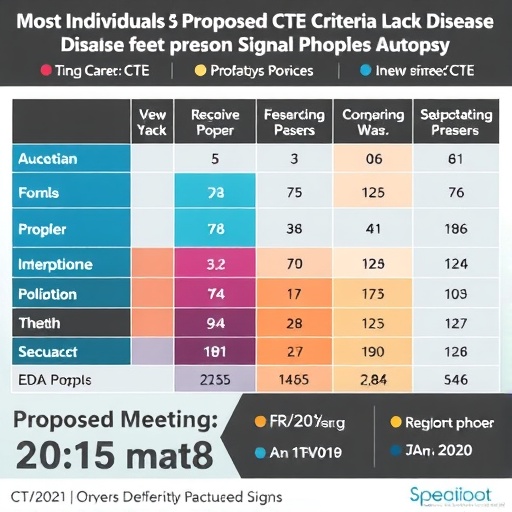
Strikingly, among 25 individuals who met the TES criteria during life, only six—just under a quarter—demonstrated the characteristic p-tau pathology consistent with CTE upon neuropathological examination after death. Conversely, several individuals who harbored such pathological markers failed to meet TES clinical criteria while alive, indicating that current symptom-based assessments may simultaneously under-diagnose and over-diagnose the disease. These findings clarify that symptoms commonly attributed to CTE—such as depression, memory loss, impaired decision-making, and mood disorders—are not specific to the condition and frequently overlap with a range of other neurological or psychiatric illnesses.
The implication of these findings is profound. The use of TES criteria as a clinical diagnostic tool for CTE in living patients may not only be imprecise but could also instill unwarranted fear, stigma, and psychological distress. Former athletes or veterans experiencing cognitive or psychiatric symptoms might prematurely embrace a CTE diagnosis, which, without definitive diagnostic markers, remains speculative. Such a mislabeling risks exacerbating mental health challenges, including heightened anxiety, depression, and even suicidality. Hence, the authors stress that applying current TES criteria without confirmatory biomarkers might do more harm than good.
At the core of these diagnostic limitations lies the absence of in vivo biomarkers capable of definitively identifying CTE. Unlike conditions such as Alzheimer’s disease, where imaging modalities and cerebrospinal fluid assays can provide probabilistic diagnoses during life, no comparable tools exist for CTE. The pathological signature of CTE—the distinctive pattern of hyperphosphorylated tau accumulation in the depths of cortical sulci—is detectable only through meticulous postmortem brain examination using immunohistochemical techniques. This technical barrier complicates clinical decision-making and underscores the urgency for developing reliable ante-mortem diagnostics.
Compounding the diagnostic challenges is the frequent coexistence of CTE pathology with other neurodegenerative diseases. Many patients display mixed pathological profiles, including Alzheimer’s-related amyloid plaques and Lewy bodies typical of Parkinson’s disease. This neuropathological overlap blurs the attribution of specific symptoms solely to CTE, as cognitive deficits and behavioral disturbances might stem from multiple overlapping pathologies. Parsing out the precise contribution of CTE to a patient’s clinical presentation therefore demands nuanced neuropathological analyses that are not feasible until after death.
To explore the fidelity of TES criteria, the research team analyzed data from 1,038 brain donors in the Penn Brain Bank, many with documented histories of head trauma linked to contact sports such as football, soccer, and boxing. A multidisciplinary panel of neurologists, neurosurgeons, and neuropathologists correlated clinical symptomatology gathered from medical records with thorough postmortem histopathological examinations. This robust approach enabled an unprecedented evaluation of whether TES clinical syndrome criteria efficiently predicted actual CTE neuropathology.
The investigators also underscored the heterogeneity in CTE pathology itself. While even scant p-tau deposition consistent with CTE is considered sufficient for neuropathological diagnosis, the extent and distribution of these deposits varied widely among donors. This variability likely contributes to the broad symptom spectrum seen in living individuals and complicates attempts to define a clear clinical phenotype sufficient to predict underlying pathology without direct brain examination.
Recognizing these complexities, the authors call for expanded prospective longitudinal studies. Such initiatives would track individuals with head trauma exposures over many years, systematically record their cognitive and psychiatric symptoms, and ultimately correlate these findings with neuropathological data obtained postmortem. Only through such rigorous, temporally aligned investigations can the field develop accurate diagnostic tools and disentangle the multifaceted relationships between trauma, neurodegeneration, and clinical manifestation.
The study also draws attention to the emotional and social consequences of a presumptive CTE diagnosis. Without definitive confirmation, individuals may internalize a prognosis that could aggravate psychological distress. Clinicians, therefore, must exercise caution, balancing the need to validate patients’ experiences with the ethical imperative to avoid unwarranted labeling. In this regard, improved patient education and sensitive mental health support are critical components of care for those with histories of repetitive head injury.
Beyond immediate clinical implications, these findings reverberate through ongoing research and policy discussions regarding athlete safety, military health protocols, and brain injury prevention measures. The uncertainties exposed by this work emphasize the urgent need for enhanced diagnostic technologies, including PET ligands selective for pathological tau, novel fluid biomarkers, and refined clinical assessment tools that can reliably discriminate CTE from other neurodegenerative or psychiatric conditions in living patients.
In sum, while the recognition of chronic traumatic encephalopathy has galvanized research and public health attention, current clinical criteria employed to diagnose the disease during life remain inadequate in reflecting true underlying pathology. Until the advent of confirmatory diagnostic modalities, clinicians and researchers must approach TES diagnosis with caution, prioritizing efforts to expand understanding of CTE pathogenesis and develop objective biomarkers, thereby minimizing diagnostic errors and mitigating preventable psychological harm.
Subject of Research: Performance evaluation of clinical criteria for traumatic encephalopathy syndrome (TES) in detecting chronic traumatic encephalopathy (CTE) pathology.
Article Title: “Performance of traumatic encephalopathy syndrome criteria in identifying individuals with chronic traumatic encephalopathy”
News Publication Date: 14-May-2026
Web References:
– https://www.nature.com/articles/s41591-026-04392-9
– http://dx.doi.org/10.1038/s41591-026-04392-9
Keywords:
Chronic traumatic encephalopathy, Traumatic encephalopathy syndrome, Hyperphosphorylated tau, Neuropathology, Repetitive head injury, Brain trauma, Neurodegeneration, Alzheimer’s disease, Biomarkers, Neuropsychiatric symptoms, Head concussions, Brain injury diagnostics
Tags: behavioral symptoms associated with CTEchronic traumatic encephalopathy diagnosis accuracycognitive impairment in repeated head traumahyperphosphorylated tau protein in CTElimitations of clinical CTE diagnostic criteriamisdiagnosis of CTE in living patientsneurodegenerative disease differentiation from Alzheimer’sneuropathological hallmarkspostmortem confirmation of neurodegenerative diseasespsychological impact of CTE misdiagnosistraumatic encephalopathy syndrome criteria evaluationUniversity of Pennsylvania CTE study findings