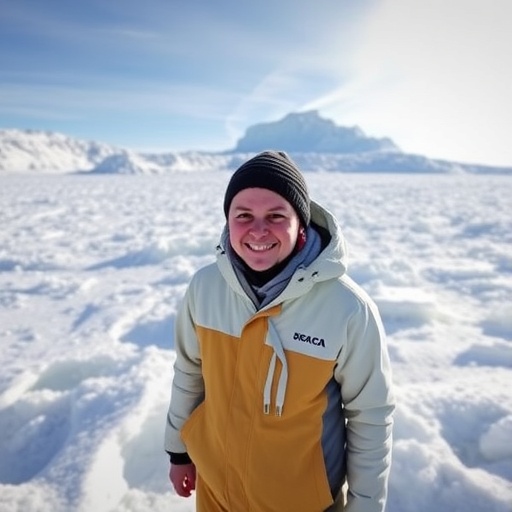
In an extraordinary venture into one of Earth’s most inaccessible frontiers, a pioneering study led by Dr. Emily Broadwell, a University of Bristol PhD scholar, has dramatically expanded our understanding of the microscopic ecosystems flourishing amid the snow and ice of the remote Signy Island in the Antarctic. This research unveils a surprisingly diverse and habitat-specific assortment of microscopic algae that thrive under conditions previously thought too harsh to support such life, thereby reconfiguring existing paradigms of polar microbial ecology.
Signy Island, lying hundreds of miles from both the Antarctic Peninsula and the Falkland Islands, is a rugged landscape primarily known for its abundant seal and penguin colonies. Yet, beneath its icy surface lies a hidden microbial world that Dr. Broadwell was determined to uncover. Her expedition, a two-week arduous journey fraught with the perilous Drake Passage’s towering ocean swells, enabled her to collect vital algae samples crucial to exploring how these organisms survive in extreme polar environments characterized by freezing temperatures, intense sunlight, and severely limited nutrients.
Upon returning to the UK, Dr. Broadwell undertook meticulous DNA analysis at the MicroLab@Bristol, part of the Cabot Institute for the Environment, combining the Antarctic samples with those collected from both Arctic and Alpine ice fields. These molecular investigations revealed an unprecedented level of biodiversity among snow and glacier algae species. The presence of a previously undocumented form of the glacier alga Ancylonema in this Southern Hemisphere location marks a significant addition to the biogeographical knowledge of polar microbiota, challenging prior assumptions about their distribution.
Particularly striking was the identification of distinct algal communities closely tied to specific microhabitats on the island’s ice and snowpack surfaces. Contrary to prior expectations that glacier algae like Ancylonema would dominate the ice cap, the research found a surprising predominance of red snow algae within the ice cap area. This discovery suggests that microhabitat conditions exert a profound influence on species distribution and community composition, reflecting ecological niches finely tuned to localized environmental variables.
These findings have profound ramifications for understanding how polar glacier ecosystems might respond to ongoing climate change. While the Greenland Ice Sheet—with its large-scale algal blooms—is often considered a bellwether for glacial microbial dynamics, the Antarctic system portrayed by Dr. Broadwell’s study appears to follow a different trajectory. This heterogeneity in algal response underlines the necessity to reconsider generalized models of glacial ecosystem resilience and feedbacks in the face of global warming.
Throughout the three-month research period based at the British Antarctic Survey station on Signy Island, temperatures remained relatively mild by Antarctic standards, hovering around the freezing point during the austral summer. This temperate stint provided Dr. Broadwell with a rare opportunity to observe and sample the subtleties of glacier and snow algal ecology in situ and gauge seasonal influences on microbial community dynamics.
Technologically, the study utilized state-of-the-art DNA sequencing techniques to elucidate community composition with high resolution. This genetic approach allowed researchers to detect cryptic diversity hidden within what might visually appear as homogenous red and white ice surfaces. The molecular data not only resolved taxonomic identities but also hinted at the evolutionary adaptations enabling these organisms to withstand the rigors of polar environments, including strategies for photoprotection and nutrient acquisition.
The ecological role of these algae as primary producers in Antarctic ecosystems cannot be overstated. Acting as foundational components of the polar food web, these photosynthetic microorganisms support a cascade of higher trophic levels, influencing biogeochemical cycles within these frigid habitats. Furthermore, their pigmentation influences surface albedo—potentially accelerating ice melt through increased absorption of solar radiation—which adds an additional layer of urgency to understanding their behavior amid a warming climate.
Dr. Broadwell’s observations also underscore the potential for undiscovered microbial diversity hidden within the various morphological ice structures and snow types found on the island. Such microhabitats might serve as refugia for specialized taxa, each exhibiting unique physiological traits adapted to subtle gradients in temperature, light exposure, and nutrient availability. These spatial variations in community structure reveal the intricate complexity of polar microbial landscapes and highlight the need for fine-scale ecological studies.
The study’s co-author, Dr. Chris Williamson, Associate Professor in Polar Microbiology, emphasized the importance of expanding sampling efforts across the Southern Hemisphere to capture the full scope of algal diversity and distribution in polar regions. The distinct ecological niches unearthed in this research point to a largely unexplored microbial frontier with implications for understanding global climate feedback mechanisms and the preservation of biodiversity in a rapidly changing world.
The successful completion of this expedition and the subsequent results represent a vital step forward in polar microbiology, shedding light on the resilience and adaptability of life at the cold extremes of our planet. They also provide an urgent call to action for intensified research efforts to monitor these sensitive ecosystems, which may serve as early indicators of environmental transformations triggered by anthropogenic influences.
Reflecting on the personal challenges and triumphs of polar fieldwork, Dr. Broadwell recalled the rugged remoteness and the scientific exhilaration encountered during her stay on Signy Island and aboard the research vessel RRS Sir David Attenborough. These experiences have not only enriched her academic journey but also contributed to a growing body of knowledge crucial for guiding future conservation and climate mitigation strategies in polar regions.
In summary, this groundbreaking research offers a transformative view of Antarctic glacier ecosystems, revealing a complex and dynamic microcosm of life thriving against the odds. By decoding the genetic signatures of snow and glacier algae, Dr. Broadwell and colleagues have crafted a detailed portrait of biodiversity that contrasts sharply with previously studied Arctic analogues, highlighting the unique ecological narratives written in the ice of the global South.
Subject of Research: Microbial ecology and biodiversity of snow and glacier algae in Antarctic environments
Article Title: Remote Antarctic Island Reveals Unique Algal Dynamics in Snow and Ice
News Publication Date: 22-Apr-2026
Web References:
https://academic.oup.com/ismecommun/advance-article/doi/10.1093/ismeco/ycag100/8660832
References:
Dr. Emily Broadwell et al., ISME Communications, 2026
Image Credits:
Jerry Gillham, British Antarctic Survey
Keywords
Applied ecology, Antarctic microbiology, glacier algae, snow algae, climate change, microbial biodiversity, polar ecosystems, Antarctic research
Tags: Antarctic expedition scientific studyAntarctic microbial biodiversityAntarctic snow algae diversityDNA analysis of polar algaeextreme environment microorganismsglacier ecosystem microorganismsmicroscopic life in Antarcticapolar ecosystem habitat specificitypolar microbial ecology researchSigny Island algae ecosystemssurvival of algae in freezing temperaturesUniversity of Bristol polar research