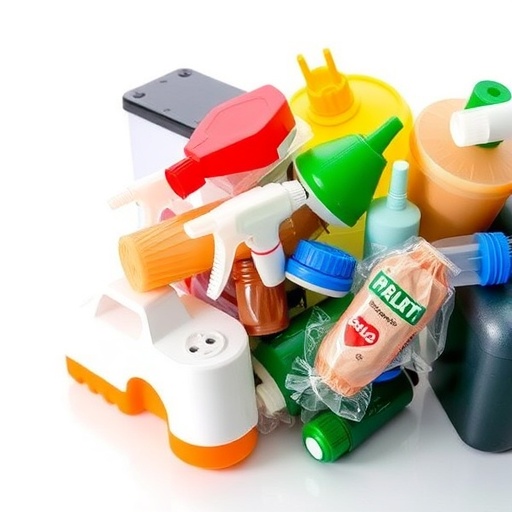
The automotive industry faces mounting pressure to innovate sustainable solutions for vehicle recycling, particularly as European regulations tighten around the reuse of plastics from end-of-life vehicles (ELVs). Each year, approximately four to six million cars are dismantled within the European Union, resulting in substantial amounts of valuable materials at risk of being lost or wasted. However, a forward-thinking research initiative at the Technical University of Munich (TUM) has recently illuminated new pathways toward more efficient circularity for automotive plastics, promising significant environmental benefits and alignment with upcoming regulatory demands.
When a vehicle reaches the end of its service life, the dismantling process begins with the careful removal of high-value components such as batteries, wheels, catalytic converters, and airbags, along with the draining of fluids. What remains, a complex composite of metals, textiles, foams, and particularly plastics, is fed into industrial shredders, producing a heterogeneous “shredder residue.” This mixture, notoriously difficult to separate into recyclable fractions, has traditionally been a barrier to reintroducing plastics back into manufacturing cycles, often relegated instead to waste incineration pathways.
The urgency for enhanced plastics recovery is escalating, driven by the European Union’s proposed amendments to the ELV Directive. The new regulations stipulate that by 2035, at least 25 percent of plastics utilized in new vehicles must derive from post-consumer recycled sources. Critically, such recycled content cannot be sourced solely externally; a minimum of 20 percent must come from closed-loop recycling systems that reclaim plastics directly from dismantled ELVs for reuse in future automotive production. While the percentages may appear modest, the volume of plastics involved is substantial, around 200 kilograms per vehicle, opening a significant avenue for carbon footprint reduction if effectively managed.
Researchers led by Professor Magnus Fröhling at TUM’s Campus Straubing have taken on the challenge to translate these legislative ambitions into practical, scalable recycling technologies. Their work pivots on innovations developed within the Car2Car research project, where sensor-based sorting techniques were applied at industrial scales to segregate automotive shredder residues. This approach leverages advanced mid-infrared sensor technology to distinguish and sort polymers from the heterogeneous mix, a step forward from traditional methods reliant on mechanical separation and manual sorting, which often suffer from contamination and low recovery rates.
The field tests underpinning this research were extensive, involving the processing of residues from over 400 vehicles representing various powertrain types, thus adding robustness to the findings. The sensor-assisted sorting mechanism demonstrated promising plastic recovery rates with potential applications not only within automotive recycling but also broader secondary raw material management spheres. Subsequent processing stages include cleaning and reshaping these recovered plastics to meet the stringent quality requirements of automotive manufacturing, a critical step toward achieving closed-loop material flows.
To quantitatively project the impact of this technological intervention, Fröhling’s team built a comprehensive material flow model. This simulation accounted for variables such as the intensity of dismantling efforts prior to shredding, evolving vehicle compositions reflecting a trend toward lightweight engineered materials, and the efficacy of the sensor sorting process. The model predicts that, under optimistic yet feasible conditions, the EU’s baseline closed-loop recycling target of 3 percent by 2035 can not only be met but surpassed, signaling a tangible pathway to compliance.
Beyond regulatory compliance, the environmental implications are compelling. The research calculates potential reductions in greenhouse gas emissions up to 29 percent compared to the current practice where residual plastics are incinerated. This transition from waste-to-energy disposal to material recovery offers a rare synergy between economic viability and ecological responsibility, positioning automotive plastics recycling as a lever in climate mitigation strategies.
Yet, Professor Fröhling remains pragmatic about the current scope and limitations of their findings. Notably, the analyzed vehicle sample was homogeneous, sourced from a single manufacturer with similar model years, which may not entirely reflect the diverse European vehicle fleet. He stresses that while this represents an important proof-of-concept, broader studies encompassing a wider array of vehicle types and ages are essential to fully gauge the recyclability potential and refine process parameters.
The implications of this research reverberate beyond end-of-life stages, advocating for systemic changes in vehicle design philosophy. Achieving meaningful closed-loop recycling will require upstream design approaches focused on material selection, component standardization, and disassembly-friendly construction techniques. Integrating easily recyclable polymers and reducing composite complexity could exponentially boost recovery rates, emphasizing the collaborative role between automakers, recyclers, and policymakers.
This study underscores an evolving paradigm where recycling innovation dovetails with regulatory frameworks to foster a sustainable automotive ecosystem. It also challenges entrenched perceptions that plastic recycling remains marginal or technically unfeasible within automotive applications. By harnessing advanced sensor technologies and robust modeling, the researchers at TUM demonstrate that the circular economy’s promise in the automotive sector is both attainable and scalable.
Moreover, the interplay of technological development and governmental mandates paints a broader narrative of environmental stewardship through policy-driven innovation. The research signals that incremental targets, such as the 25 percent recycled plastics quota, can serve as catalysts for technological breakthroughs and investment in material recovery infrastructure, thereby stimulating industry-wide transformations.
Industrial partnerships also played a pivotal role in this endeavor, with support from corporate entities providing resources and real-world data critical to validating the process. This collaboration highlights the necessity of integrating academic research with industrial expertise and supply chain realities to bridge the gap between laboratory success and commercial implementation.
Looking forward, the team at TUM envisions a multi-pronged approach balancing pragmatism and ambition. They advocate for immediate deployment of available sorting technologies to capture early environmental gains, while simultaneously researching new recycling chemistries and exploring alternative materials for next-generation vehicles. This dual strategy aims to accelerate progress toward a truly circular automobile lifecycle without compromising current market dynamics.
In conclusion, the work emerging from TUM’s Car2Car project sets a new benchmark in automotive plastic recycling by combining sophisticated sensor-based sorting with predictive modeling of regulatory compliance and environmental outcomes. It not only points toward a viable closed-loop future for end-of-life vehicles but also frames recycling as an integral component of climate action and resource conservation within the automotive industry.
Subject of Research: Not applicable
Article Title: Closed-loop recycled plastics from end-of-life vehicles: Sensor-based sorting of automotive shredder residues and simulation of closed-loop rates
News Publication Date: 15-Mar-2026
Web References: http://dx.doi.org/10.1016/j.wasman.2026.115408
References:
Fröhling, M., Maeder, M., Himpel, E., et al. (2026). Closed-loop recycled plastics from end-of-life vehicles: Sensor-based sorting of automotive shredder residues and simulation of closed-loop rates. Waste Management. https://doi.org/10.1016/j.wasman.2026.115408
Image Credits: Not provided
Keywords
automotive recycling, end-of-life vehicles, plastics recycling, circular economy, sensor-based sorting, automotive shredder residues, closed-loop recycling, EU ELV regulation, greenhouse gas reduction, material flow modeling, sustainable manufacturing, vehicle dismantling
Tags: automotive plastic waste managementchallenges in recycling composite vehicle materialscircular economy for automotive plasticsclosed-loop recycling in automotive industryenvironmental benefits of plastic recyclingEuropean Union ELV Directive regulationsfuture of automotive plastics reuseindustrial shredding of vehicle materialsplastics recovery from end-of-life vehiclesshredder residue separation techniquessustainable vehicle recycling technologiesTechnical University of Munich recycling research