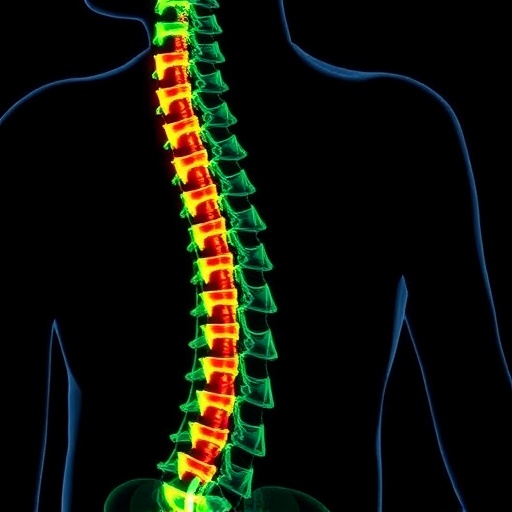
In a groundbreaking study published in Nature Communications, researchers have unveiled remarkable insights into the therapeutic potential of Anti-Nogo-A NG101 treatment in spinal cord injury (SCI). This novel intervention targets the fundamentally challenging problem of neural regeneration, offering hope for unprecedented recovery avenues in patients suffering from the debilitating consequences of spinal trauma. The significance of this advancement lies not only in its immediate clinical implications but also in its profound impact on the understanding of central nervous system plasticity and repair mechanisms.
Spinal cord injuries have long posed a formidable barrier to restoring motor and sensory function due to the central nervous system’s inherently limited regenerative capacity. Following a traumatic injury, the formation of a glial scar and the presence of inhibitory molecules such as Nogo-A impede axonal outgrowth and neural network reorganization. The Anti-Nogo-A NG101 treatment operates by neutralizing Nogo-A, a myelin-associated inhibitor that significantly constrains neural regeneration. By blocking this molecule, the therapy enables previously suppressed neural pathways to reorganize, fostering regrowth across the damaged spinal segments.
The research team, led by Farner, Scheuren, and Sharifi, employed cutting-edge neuroimaging and histological techniques to assess micro- and macrostructural changes within the spinal cord post-treatment. Their methodological rigor spanned advanced diffusion tensor imaging (DTI) to trace axonal integrity and high-resolution confocal microscopy for cellular-level examination. The results demonstrated a marked improvement in white matter integrity and an increase in axonal sprouting, illustrating the multifaceted nature of the therapeutic effects induced by Anti-Nogo-A NG101.
Notably, the study’s experimental design involved a controlled application of Anti-Nogo-A NG101 following standardized spinal cord injury in animal models, ensuring reproducibility and precise evaluation of treatment efficacy. Behavioral assays complemented the structural analyses, revealing substantial recoveries in motor function that were directly correlated with the observed neuroanatomical improvements. These findings underscore the translational potential of Anti-Nogo-A NG101, hinting at future clinical trials aimed at human subjects.
One of the most striking revelations from the study was the dual scale of neural repair facilitated by Anti-Nogo-A NG101. At the microstructural level, there was pronounced remyelination and normalization of axonal morphology, which are critical for restoring electrical conductivity and neural signaling fidelity. On the macrostructural front, the spinal cord exhibited diminished lesion volume and enhanced tissue sparing, indicating a broader scope of neuroprotection that extends beyond mere axonal regrowth.
The molecular underpinnings of Anti-Nogo-A’s mechanism indicate that neutralizing Nogo-A alleviates the inhibitory milieu characteristic of the post-injury environment, thereby reactivating intrinsic growth programs within neurons. This therapeutic reengagement of regenerative cascades potentially reboots developmental pathways, which are otherwise dormant in adult neurons. By effectively modulating this biochemical landscape, NG101 catalyzes a paradigm shift from neurodegeneration toward regeneration.
Furthermore, the longitudinal monitoring of treatment effects revealed sustained benefits over extended periods, suggesting that Anti-Nogo-A NG101 offers not only immediate reparative advantages but also long-term stabilization of neural circuits. This durability is essential for chronic SCI patients, wherein secondary degenerative processes typically exacerbate functional decline. The intervention’s ability to confer prolonged neuroprotection opens new frontiers for managing both acute and chronic phases of spinal injury.
Importantly, the study also highlights the interplay between neuroinflammation and regenerative processes in the context of Anti-Nogo-A therapy. By attenuating Nogo-A signaling, there appears to be a concomitant modulation of inflammatory responses that otherwise contribute to secondary tissue damage. This dual anti-inflammatory and pro-regenerative action positions NG101 as a multifaceted therapeutic agent capable of addressing the complex pathology of SCI.
The implications of these findings resonate well beyond SCI, providing a conceptual framework for tackling other central nervous system disorders marked by inhibitory molecular environments, such as stroke and multiple sclerosis. By targeting molecular inhibitors like Nogo-A, researchers envision broader applications of this strategy to enhance neural plasticity and functional recovery in a variety of neurological conditions.
This study also paves the way for innovative drug delivery modalities designed to optimize the spatial and temporal targeting of NG101. Future research directions include refining administration protocols and exploring synergistic effects with rehabilitation therapies or bioengineering approaches like neural scaffolds. Such integrative strategies could amplify regenerative outcomes and accelerate translation to clinical practice.
Moreover, the work presents a compelling example of bench-to-bedside translational science, emphasizing the importance of comprehensive preclinical evaluation in shaping effective interventions. The meticulous characterization of both structural and functional recovery metrics ensures that therapeutic claims are robust and clinically relevant.
The enthusiasm generated by Anti-Nogo-A NG101’s efficacy also fuels discourse on ethical and regulatory frameworks necessary to expedite human trials while ensuring patient safety. The translational pathway from animal models to human application requires concerted collaborative efforts spanning neuroscientists, clinicians, and policy-makers to harness the therapy’s full potential.
Ultimately, this research signifies a beacon of hope within the spinal cord injury field, historically fraught with therapeutic frustration. The capacity to induce reparative micro- and macrostructural changes not only enhances the prospects for physical rehabilitation but also rejuvenates patient optimism for meaningful recovery and improved quality of life.
In essence, the novel Anti-Nogo-A NG101 treatment transcends existing SCI therapies by fundamentally altering the biological constraints that have impeded neural repair. Future efforts will undoubtedly build upon these transformative insights to craft next-generation interventions that seamlessly integrate molecular modulation with regenerative medicine.
As this revolutionary approach gains traction, it may redefine therapeutic paradigms and establish a new standard of care for spinal cord injuries, marking a historic milestone in neuroscience and clinical rehabilitation.
Subject of Research: The study focuses on the effects of Anti-Nogo-A NG101 treatment on spinal cord micro- and macrostructural changes following spinal cord injury.
Article Title: Anti-Nogo-A NG101 treatment induces changes in spinal cord micro- and macrostructure following spinal cord injury.
Article References: Farner, L., Scheuren, P.S., Sharifi, K. et al. Anti-Nogo-A NG101 treatment induces changes in spinal cord micro- and macrostructure following spinal cord injury. Nat Commun 17, 4197 (2026). https://doi.org/10.1038/s41467-026-71412-0
Image Credits: AI Generated
DOI: https://doi.org/10.1038/s41467-026-71412-0
Tags: Anti-Nogo-A NG101 treatmentaxonal outgrowth enhancementcentral nervous system plasticityglial scar inhibitionhistological analysis of spinal injurymyelin-associated inhibitorsneural network reorganizationneural regeneration therapyneuroimaging in spinal cord repairspinal cord injury recoveryspinal cord structural remodelingtherapeutic strategies for SCI