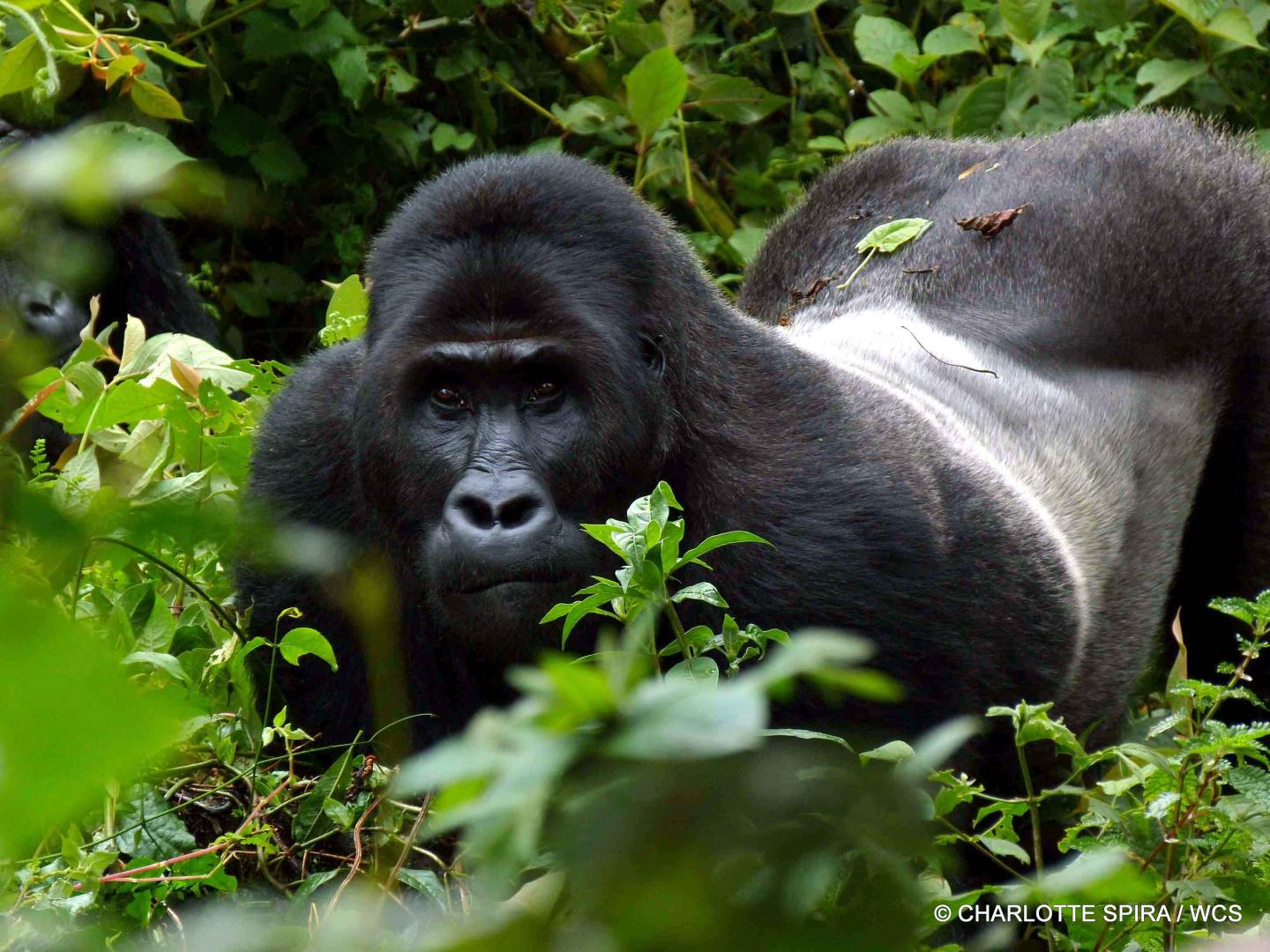
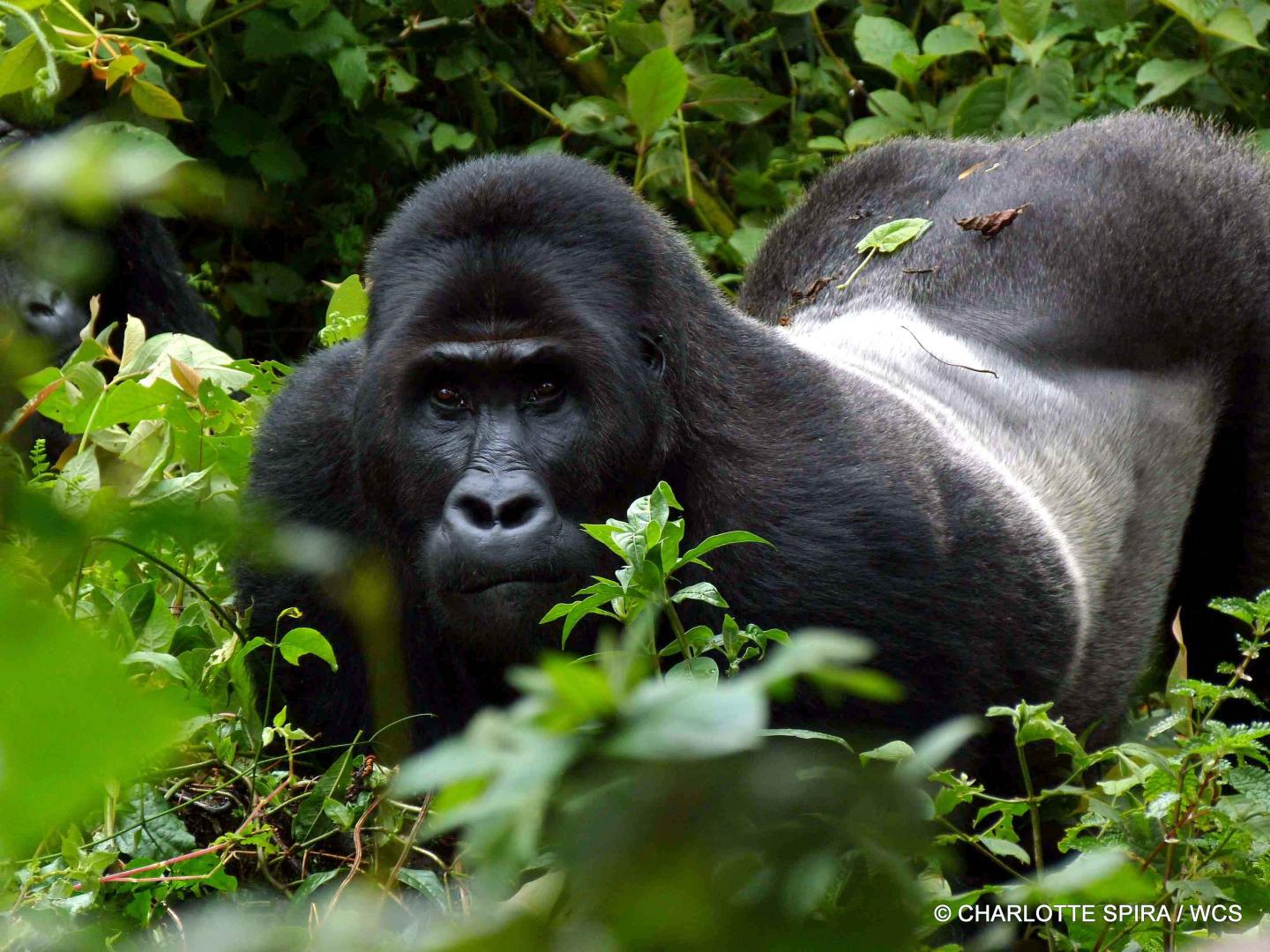
Credit: CREDIT: ©Charlotte Spira/WCS.
KINSHASA, Democratic Republic of Congo (May 26, 2017) – A new study by WCS (Wildlife Conservation Society) has revealed how mining for valuable minerals in eastern Democratic Republic of Congo (DRC) is a major driving factor in the illegal hunting of great apes and other wildlife for food.
The majority of individuals surveyed at mining camps during the 3-month study period said they hunted mostly out of necessity in the absence of any alternative protein, and would much prefer to eat beef, chicken, and fish instead of chimpanzee or gorilla if it were available.
The new study titled "The socio-economics of artisanal mining and bushmeat hunting around protected areas: Kahuzi-Biega National Park and Itombwe Nature Reserve, eastern Democratic Republic of Congo" appears in the online version of the journal Oryx. The authors are: Charlotte Spira, Andrew Kirkby, Deo Kujirakwinja, and Andrew Plumptre of WCS.
Eastern DRC is known for its exceptional biodiversity and its assemblage of large charismatic species, including threatened great ape species such as the endangered eastern chimpanzee and the critically endangered Grauer's gorilla. The region also contains globally significant deposits of valuable minerals such as gold, cassiterite (used to make tin), and coltan, a mineral in high demand for use in cell phones and other technology.
Artisanal and small-scale mining represents a significant source of livelihoods in the DRC, where an estimated 8-10 million people (14-16 percent of the country's population in 2008) take part in the industry. In the eastern part of the country, mining operations have had devastating impacts on wildlife, even within the confines of protected areas such as Kahuzi-Biega National Park and the Itombwe Nature Reserve. Grauer's gorilla numbers have declined by 77 percent over the past 20 years due to hunting, which the presence of mining sites continues to fuel.
Wildlife rangers trying to protect these natural resources face extreme danger as armed militias and insurgent groups inside national parks occupy vast swaths of wildlife habitat in order to illegally control and exploit access to minerals. Many sites visited during the survey were controlled by armed groups and indeed more than 20 percent of tin and coltan mines in the region are thought to be controlled by armed groups. The presence of armed groups results in a proliferation of arms that facilitates both the hunting of great apes and a general breakdown in rule of law for local communities.
"Our analysis shows that although mining attracts people due to the opportunity to get quick cash, most miners were in favor of leaving the sector for better and safer economic opportunities," said WCS researcher Charlotte Spira, the lead author of the study. "We also found that most miners who participated in the survey hunt wildlife out of necessity, and many would stop hunting if they had a secure income, if domestic sources of meat were made available, and if hunting laws were strongly enforced."
The authors of the study suggest that a better regulated mining sector in forests outside of protected areas would improve local governance, social wellbeing and economic opportunities whilst reducing negative environmental impacts.
International measures, such as the US government's Dodd-Frank Conflict Minerals Rule that require transparency by companies and businesses in sourcing conflict minerals — which is currently being contested by the US Securities and Exchange Commission — are important and should be encouraged.
"Mining in the region can be greatly improved through the demilitarization of mining sites along with law enforcement to prevent bushmeat hunting, and more access to domestic sources of protein that would reduce the need for bushmeat," said Richard Tshombe, Director for WCS's Democratic Republic of Congo Program. "Developing sustainable business opportunities that can compete with the economic benefits of mining could support miners to pursue other avenues of employment and at the same time help ease the burden of mining in DRC's most biodiverse landscapes."
###
WCS is urging members of the public to demand an end to conflict minerals by taking action at https://www.wcs.org/get-involved/conflict-minerals-pledge.
This work was supported by the Arcus Foundation, the Jane Goodall Institute, and the U.S. Agency for International Development, and the Critical Ecosystem Partnership Fund. The Critical Ecosystem Partnership Fund is a joint initiative of l'Agence Française de Développement, Conservation International, the European Union, the Global Environment Facility, the Government of Japan, the MacArthur Foundation and the World Bank. A fundamental goal is to ensure civil society is engaged in biodiversity conservation.
WCS (Wildlife Conservation Society)
MISSION: WCS saves wildlife and wild places worldwide through science, conservation action, education, and inspiring people to value nature. To achieve our mission, WCS, based at the Bronx Zoo, harnesses the power of its Global Conservation Program in nearly 60 nations and in all the world's oceans and its five wildlife parks in New York City, visited by 4 million people annually. WCS combines its expertise in the field, zoos, and aquarium to achieve its conservation mission. Visit: newsroom.wcs.org Follow: @WCSNewsroom. For more information: 347-840-1242.
Media Contact
John Delaney
[email protected]
718-220-3275
@TheWCS
http://www.wcs.org
############
Story Source: Materials provided by Scienmag