Falls represent one of the most critical and yet underappreciated challenges faced by the elderly, particularly those recovering from hip fractures. Recent groundbreaking research has shed new light on the nuanced relationship between a patient’s functional status and their risk of falling, providing invaluable insights that could transform clinical approaches in geriatric care. The study, spearheaded by Inoue, Otaka, Kawakami, and colleagues, delves deeply into the intersection of mobility, functional impairment, and fall incidence among hip fracture patients, uncovering patterns that could redefine fall prevention strategies. Given the profound implications for patient outcomes and healthcare resource allocation, these findings are poised to ignite widespread interest across multiple medical disciplines.
The foundational premise of this research stems from the recognition that falls are not merely incidental events but are often symptomatic of underlying functional deficits. In particular, patients who have suffered hip fractures face a heightened vulnerability due to compromised musculoskeletal integrity and frequently diminished cognitive and sensory capabilities. The investigators employed a comprehensive assessment methodology, integrating quantitative measures of functional status—encompassing balance, lower extremity strength, and gait parameters—with meticulously recorded data on subsequent falls. This multi-dimensional approach allowed for a granular understanding of how different degrees of functional impairment translate into varying fall risk profiles.
One striking revelation from the study is the heterogeneity in fall risk that exists even within seemingly homogenous patient populations. For instance, individuals demonstrating moderate functional impairment exhibited a disproportionately higher frequency of falls compared to those with either minimal or severe functional limitations. This counterintuitive finding challenges traditional assumptions that the most severely disabled patients are inherently at the greatest risk. Instead, it suggests a nuanced interplay where partial mobility may paradoxically increase exposure to fall risk because these patients remain ambulatory yet possess insufficient neuromuscular control to navigate environmental hazards safely.
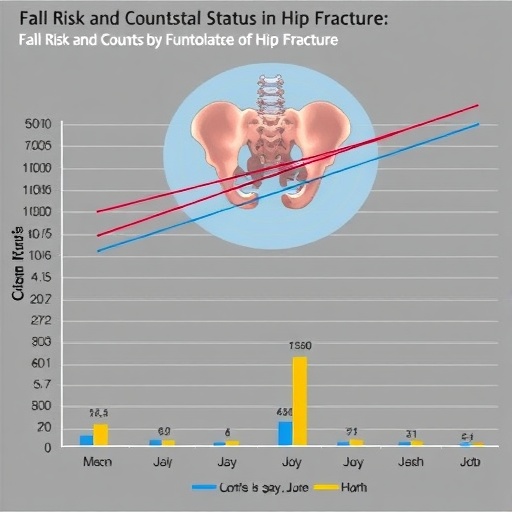
Expanding beyond mere risk categorization, the researchers explored the number of falls experienced in relation to functional status, providing an innovative metric for assessing patient vulnerability. The data demonstrated a clear dose-response relationship, with incremental declines in functional capability correlating with escalating fall counts over the monitored period. Such quantification permits clinicians to prioritize interventions for individuals not only at high risk of experiencing a first fall but also those susceptible to recurrent events, which pose a substantially elevated threat of morbidity and mortality.
Integral to the study’s methodology was the deployment of validated assessment tools tailored to older adults recovering from hip fractures. By utilizing instruments capable of capturing subtle distinctions in muscle coordination, postural reflexes, and cognitive processing speed, the authors ensured a robust characterization of each participant’s functional landscape. These precise metrics facilitated the construction of predictive models with impressive accuracy, suggesting that routine incorporation of similar evaluations in clinical settings could dramatically enhance fall risk stratification and prevention protocols.
The implications of these findings extend far beyond immediate clinical care. Healthcare systems globally endure substantial economic burdens owing to fall-related injuries, particularly hip fractures, which frequently necessitate costly surgical interventions and prolonged rehabilitation. The nuanced understanding of fall risk as elucidated by this study offers a pathway to optimize resource allocation by targeting preventive measures to those most likely to benefit. Furthermore, it paves the way for developing personalized rehabilitation regimens that address specific deficiencies identified through functional profiling rather than employing uniform, generalized approaches.
Another dimension explored in this research concerns the role of environmental and psychosocial factors interacting with functional status to modulate fall risk. While the primary focus remained on objective physical assessments, the authors recognized the necessity of situating these within broader contexts encompassing living conditions, caregiver support structures, and mental health status. Integrating such variables promises to refine predictive models further, enabling more holistic patient management strategies that acknowledge the complex biopsychosocial nature of falls.
Moreover, the longitudinal design of the investigation, tracking patients over extended periods post-hip fracture, allowed for examination of temporal trends in functional recovery and fall incidence. This approach revealed that while some patients experience gradual restoration of functional capabilities accompanied by diminishing fall risk, others endure persistent deficits that prolong vulnerability. Identifying early predictors of these divergent trajectories may inform timely interventions that avert fall-related complications, ultimately improving survival and quality-of-life outcomes.
Technological advancements also figure prominently in the context of this research. The authors highlight the potential of integrating wearable sensors and mobile health applications to continuously monitor key functional parameters outside clinical environments. Such real-time tracking could offer alerts to patients and healthcare providers about deteriorating stability or gait abnormalities, facilitating proactive adjustments in care plans and potentially preventing falls before they occur. This fusion of technology and clinical expertise heralds a promising frontier in geriatric care innovation.
From a biomechanical perspective, the study underscores the importance of muscle strength and balance as critical determinants of fall propensity. Detailed analysis revealed that impairments in ankle dorsiflexion and hip abduction strength surfaced as particularly predictive markers of fall risk. These insights advocate for targeted physiotherapeutic interventions focusing on these muscle groups to fortify postural control mechanisms. Additionally, cognitive factors such as attentional capacity and executive function emerged as influential, reinforcing the necessity of multidisciplinary approaches that encompass both physical and neuropsychological rehabilitation.
One of the more unexpected outcomes pertained to the psychological dimension of fall risk. Fear of falling, often regarded as a protective mechanism, paradoxically correlated with elevated fall rates in some patients. The researchers postulate that excessive fear may induce compensatory movements or reduced physical activity, leading to muscle atrophy and impaired balance, thereby increasing actual fall incidence. Breaking this vicious cycle through cognitive-behavioral therapies and confidence-building exercises could thus represent a vital component of holistic fall prevention strategies.
In terms of broader public health implications, the study calls attention to the need for systemic reforms in post-discharge care for hip fracture patients. Transition periods from hospital to home constitute critical windows where fall risk may escalate due to environmental adjustments and fluctuating functional status. Enhanced coordination among multidisciplinary teams, incorporation of home safety assessments, and patient education programs are recommended to mitigate these transitional vulnerabilities and promote sustained rehabilitation outcomes.
The research further draws attention to disparities in fall risk and outcomes linked to socioeconomic status and access to care. Patients residing in resource-limited settings often encounter compounded challenges, including inadequate rehabilitation services, suboptimal nutrition, and social isolation, all of which may exacerbate functional decline and fall propensity. Addressing these inequities requires integrated policy responses that prioritize vulnerable populations and ensure equitable distribution of fall prevention resources and support.
The study’s robust dataset and sophisticated analytical techniques have set a new benchmark for epidemiological investigations into fall risk among hip fracture patients. However, the authors acknowledge limitations, including potential confounding factors inherent in observational designs and the challenge of generalizing findings across diverse healthcare systems. They advocate for future multi-center trials incorporating diverse demographic cohorts to validate and expand upon their conclusions, thereby fostering global applicability.
In the evolving landscape of aging populations worldwide, the urgency of addressing fall risk cannot be overstated. Hip fractures remain a sentinel event predicting profound functional decline, institutionalization, and increased mortality. The insights provided by Inoue and colleagues represent a pivotal step forward in unraveling the complexities of fall risk stratification and emphasize the imperative for nuanced, patient-centered interventions. As healthcare systems grapple with escalating demands, translating these research findings into practical, scalable solutions will be essential to safeguarding the health and dignity of older adults.
Ultimately, this research compels the medical community to re-examine long-held assumptions about fall risk, recognizing that the interplay between functional status and falls is far more intricate than previously appreciated. By embracing comprehensive assessments, leveraging technological innovations, and fostering multidisciplinary collaboration, clinicians can pave the way for more effective fall prevention strategies. Such advances hold promise not only for improving individual patient trajectories but also for reducing the substantial societal burden imposed by falls in the elderly, marking a paradigm shift in geriatric care.
Subject of Research: Fall risk assessment and fall frequency in relation to functional status among patients recovering from hip fractures.
Article Title: Fall risk and falls count by functional status in patients with hip fracture.
Article References:
Inoue, S., Otaka, Y., Kawakami, M. et al. Fall risk and falls count by functional status in patients with hip fracture. BMC Geriatr (2026). https://doi.org/10.1186/s12877-026-07628-y
Image Credits: AI Generated
Tags: balance assessment in hip fracture recoveryclinical approaches to reduce fallscognitive deficits and fall vulnerabilityfall risk assessment tools for seniorsfall risk in elderly hip fracture patientsfunctional status and fall incidencegait analysis in elderly patientsgeriatric fall prevention strategieshealthcare resource allocation in geriatric carelower extremity strength and fall riskmobility impairment and fallsmusculoskeletal integrity after hip fracture