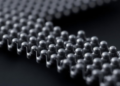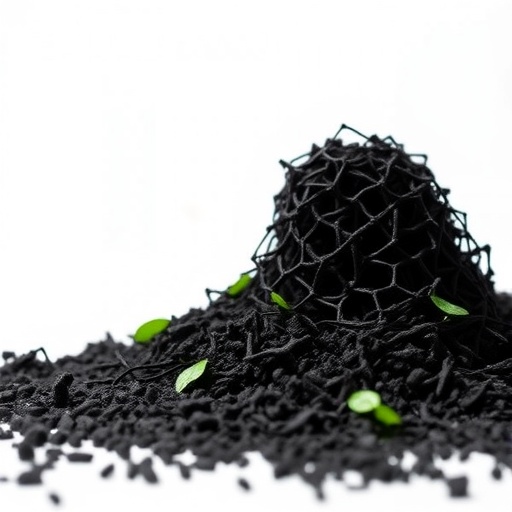
In the relentless pursuit of effective solutions to mitigate global climate change, a carbonaceous material known as biochar is rapidly gaining attention for its potential to capture atmospheric carbon dioxide (CO2). Derived from an array of organic feedstocks including agricultural residues, wood by-products, sewage sludge, and animal manure, biochar has traditionally been regarded as an environmentally friendly soil amendment. However, a burgeoning body of research suggests that through precise engineering—particularly via heteroatom doping—biochar can be transformed into a high-performance adsorbent for CO2 sequestration. A recent comprehensive review published in Carbon Research elucidates the recent scientific advances and technological prospects in this domain, revealing biochar’s capacity to emerge as a sustainable and economically viable carbon capture material.
The alarming rise in atmospheric CO2 concentrations remains the principal driver of anthropogenic global warming, giving impetus to the development of carbon capture, utilization, and storage (CCUS) technologies worldwide. Despite significant strides in CCUS, the capture phase continues to represent a significant economic and energetic bottleneck due to the high costs and energy requirements imposed by conventional adsorbents like zeolites, metal-organic frameworks, and activated carbons. These materials, albeit effective in certain operational parameters, often suffer from limitations including sensitivity to moisture, challenges in large-scale reproducibility, and high regeneration energy consumption. Biochar, a renewable carbonaceous material generated through thermochemical pyrolysis of biomass, offers a promising alternative owing to its low cost, scalability, and environmentally benign nature. Nevertheless, raw biochar’s innate pore structure and surface chemistry are typically inadequate for the selective and efficient adsorption of CO2 molecules.
To overcome these intrinsic limitations, researchers have focused on the deliberate manipulation of biochar’s physical and chemical attributes via controlled engineering processes. Tailoring parameters such as pore size distribution, surface area, hydrophobicity, alkalinity, and the presence of functional groups through activation and doping techniques enhances the sorption capabilities of biochar. Central to these strategies is the process of heteroatom doping, wherein non-carbon atoms, including nitrogen, sulfur, phosphorus, and boron, are introduced into the carbonaceous framework to alter its electronic properties and generate active sites conducive to CO2 binding. This engineered approach not only broadens the application spectrum of biochar but also offers insights into the fundamental adsorption mechanisms at play.
Nitrogen doping, in particular, stands out as a versatile and efficacious modification route due to its pronounced effects on surface basicity and structural rearrangement. The incorporation of nitrogen-containing moieties such as pyridinic, pyrrolic, and pyridone-like groups into biochar matrices significantly enhances the affinity for CO2 via multiple molecular interactions. These surface nitrogen species facilitate Lewis acid-base interactions and hydrogen bonding with CO2 molecules, providing both physical adsorption sites and opportunities for chemisorption. Moreover, nitrogen doping can delicately modulate the microporosity within biochar, particularly emphasizing the generation of ultramicropores smaller than 0.7 nanometers, whose dimensions closely match the kinetic diameter of CO2. This precise pore architecture amplifies the effectiveness of micropore filling and enhances van der Waals forces, leading to improved uptake capacity and kinetics.
Complementing chemical doping, physical activation methods employing agents like CO2 or steam are widely utilized to increase the surface area and porosity of biochar, thereby providing an expanded network of adsorption sites. Chemical activation, often combined with heteroatom doping, bestows the biochar surface with a richness of functional groups that further stimulate CO2 affinity. The stage at which doping occurs critically influences the structural integrity and performance of the resultant biochar. Pre-modification doping—introducing heteroatoms during the carbonization step before biochar formation—tends to yield superior doping efficiency along with enhanced structural stability when compared to the post-synthesis augmentation of biochar. Advanced co-doping techniques, such as nitrogen-phosphorus and nitrogen-sulfur co-doping, have demonstrated synergistic enhancements in adsorption characteristics, suggesting powerful avenues for further optimization.
While laboratory-scale tests have exhibited highly promising results, translating engineered biochar into industrially scalable carbon capture solutions entails overcoming significant practical challenges. Issues including techno-economic feasibility, the energetic cost of regenerating the adsorbent after saturation, establishing standardized protocols for material characterization, and assessing long-term cyclic stability remain at the forefront of ongoing investigations. Furthermore, comprehensive life-cycle assessments are imperative to ascertain the true environmental and economic benefits of biochar-based CO2 adsorbents in real-world operational scenarios.
The integration of emerging computational methodologies like machine learning promises to accelerate the rational design of engineered biochars tailored for optimized CO2 capture. By systematically correlating variables such as biomass feedstock properties, pyrolysis parameters, pore structure, and surface chemistry with adsorption performance metrics, data-driven models can expedite the discovery and scaling of high-performance biochar adsorbents. This intersection of materials science, chemical engineering, and artificial intelligence could catalyze transformative advancements in carbon capture technology.
Future research trajectories must strategically balance the dual adsorption mechanisms—physisorption and chemisorption—to develop biochars that sustain high microporosity while presenting the ideal surface functionalities for selective, energy-efficient CO2 uptake. The nuanced orchestration of micropore volume and chemical heterogeneity will underpin the next generation of biochar adsorbents capable of meeting stringent performance and sustainability criteria. Ultimately, innovative engineered biochar materials derived from biomass residues hold the promise to convert waste streams into invaluable tools for climate change mitigation.
This pivotal review contributes a comprehensive roadmap guiding the scientific community toward scalable, sustainable biochar solutions for carbon capture applications. As the urgency intensifies to deploy economically and ecologically viable carbon management technologies, biochar-based adsorbents could play a transformative role in global emission reduction efforts. Harnessing nature’s bounty through engineered carbon materials epitomizes a powerful synergy between ecological stewardship and advanced material science in the fight against climate change.
Subject of Research: Engineered biochar materials for carbon dioxide capture through heteroatom doping.
Article Title: Recent advances in the development of engineered biochar for CO2 adsorption: Research on heteroatom-doped biochar.
News Publication Date: 13-Apr-2026
Web References:
Carbon Research Journal
DOI: 10.1007/s44246-026-00264-6
References:
Li, X., Li, X., Zhang, C. et al. Recent advances in the development of engineered biochar for CO2 adsorption: Research on heteroatom-doped biochar. Carbon Res. 5, 26 (2026).
Image Credits: Xiangping Li, Xuanxuan Li, Caixia Zhang, Yifei Yu, Qing Liu, Mahesh Hordagoda, Wenbing Ding, Shengshu Xu, Thilini U. Ariyadasa, P. H. V. Nimarshana, Xizhuang Qin & Peng Liang.
Keywords
Biochar, Carbon capture, Heteroatom doping, Nitrogen doping, Microporosity, CO2 adsorption, Thermochemical conversion, Carbonaceous materials, Sustainable materials, Climate change mitigation, Carbon sequestration, Machine learning in material design
Tags: advanced biochar engineering methodsbiochar from agricultural residuesbiochar in global climate change mitigationbiochar soil amendment benefitscarbon capture utilization and storage technologieschallenges in conventional CO2 adsorbentseconomic viability of biochar carbon captureengineered biochar for carbon captureheteroatom-doped biochar adsorbentshigh-performance biochar adsorbentsscalable biochar production for CO2 removalsustainable CO2 sequestration materials