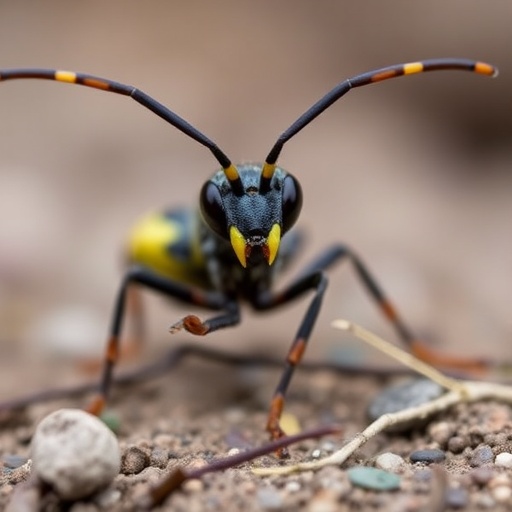
In a remarkable homage to one of the most influential figures in natural history broadcasting, scientists at the Natural History Museum in London have unveiled a newly discovered genus and species of parasitic wasp from Chile. This wasp, named Attenboroughnculus tau, commemorates the centenary of Sir David Attenborough, whose pioneering work has been instrumental in highlighting the intricate fabric of the natural world to global audiences. This discovery underscores not only the enduring significance of natural history archives but also the importance of detailed taxonomic research in understanding biodiversity.
The species was identified from a specimen collected in Valdivia Province, Chile, in 1983 and has been part of the Museum’s entomological collections for decades. Only recently did detailed examination, led by Dr. Gavin R. Broad, the Principal Curator of Insects at the Museum, reveal the unique morphological characteristics that distinguish this insect from all previously known taxa. It is so distinct that it necessitates the designation of an entirely new genus within the subfamily Pedunculinae of the family Ichneumonidae, an otherwise poorly understood group of parasitoid wasps.
The wasp itself is diminutive, with a mere 3.5-millimeter body length, yet it carries significant scientific weight. Its anatomy features a pronounced curvature in the abdominal segments and subtle but definitive toothlike projections on the ovipositor—a specialized organ used by female wasps to deposit their eggs, often within or on a host. Further, the species demonstrates unique modifications in wing venation and leg morphology, setting it apart from its nearest relatives in the ichneumonid fauna. These anatomical novelties are not merely cosmetic but provide key phylogenetic and functional insights into the evolutionary pathways of parasitic wasps.
This species’ name, tau, is derived from a distinctive T-shaped marking present on the dorsal side of the insect’s abdomen, aligning aptly with its genus name that honors Sir David Attenborough. The choice of nomenclature reflects the scientific community’s recognition of Attenborough’s profound influence on conservation biology, public engagement, and biodiversity appreciation. His detailed narration on parasitoid wasps, often termed “body snatcher wasps,” in influential programs like The Trials of Life has brought unprecedented attention to these ecologically critical yet diminutive organisms.
Parasitoid wasps play essential roles in regulating insect populations and maintaining ecological balance. They exhibit extraordinary life cycles, where larvae consume their hosts from within, an evolutionary strategy that has fascinated naturalists and evolutionary biologists alike. Despite their ecological significance, many genera and species within Pedunculinae remain cryptic, hidden within museum collections, or overlooked due to their minute size and the complexity of their morphological traits.
The rediscovery and taxonomic revelation of Attenboroughnculus tau emphasize the invaluable scientific resource represented by historical museum collections. These archives serve as time capsules, preserving biological diversity and enabling contemporary researchers to revisit and reinterpret specimens using advanced methodological approaches. The work spearheaded by Dr. Broad and his team, including the significant contribution of volunteer Augustijn De Ketelaere, exemplifies the collaborative nature of modern taxonomy and the crucial role of citizen science in biodiversity discovery.
This discovery also underscores the critical ongoing efforts at the Natural History Museum to digitize its vast collections under initiatives like the NHM Unlocked program. Such programs aim to create comprehensive digital repositories that dramatically enhance accessibility, cross-disciplinary collaboration, and the potential for new biological discoveries. These advances promise to accelerate the rate at which unknown species, particularly small and cryptic insect taxa, can be identified, described, and integrated into our broader understanding of life on Earth.
The ecological and evolutionary implications of naming a new genus are profound. It reflects a taxon that cannot be woven into existing phylogenetic frameworks without modification, indicating substantial evolutionary divergence. Detailed morphological and molecular analyses often reveal such taxa to be crucial links or outliers that refine evolutionary hypotheses about speciation, host-parasite dynamics, and adaptive diversification.
Sir David Attenborough’s impact extends far beyond popular science broadcasting; his inspirational legacy instigated many to pursue careers in taxonomy and ecology. Dr. Broad credits Attenborough’s series Life on Earth as his own gateway into the world of taxonomic science. This project, therefore, represents a full-circle moment, where the legacies of naturalist enthusiasm and scientific rigour converge to enhance our knowledge of global biodiversity.
The public can engage with this discovery and broader natural history themes through the Museum’s ongoing immersive experience, Our Story with David Attenborough, which draws on Sir David’s lifetime of exploration to highlight the interconnectedness of humanity and the natural world. This initiative complements the Museum’s commitment to fostering environmental stewardship, as echoed by a permanent bronze inscription bearing Attenborough’s words: “The future of the natural world, on which we all depend, is in our hands.”
As this small but scientifically substantial wasp takes its place in the annals of natural history, it serves as a meaningful reminder of the enormous biodiversity still undiscovered and the pivotal role of taxonomic science. The merging of historic collections, modern technology, and dedicated scholarship offers fertile ground for future breakthroughs that transcend mere classification, helping to frame conservation priorities in an era of unprecedented ecological change.
In conclusion, Attenboroughnculus tau epitomizes a scientific tribute, a discovery of evolutionary novelty, and a testament to the indispensable value of museum collections. It calls on researchers worldwide to reexamine their own repositories; for thousands of potential new species may well be entombed within drawers, awaiting recognition. Such discoveries not only enrich biological systematics but also deepen our appreciation of life’s astounding diversity and the urgent need to safeguard it for future generations.
Subject of Research: Taxonomy and description of a new genus and species in the subfamily Pedunculinae (Hymenoptera: Ichneumonidae), parasitic wasps.
Article Title: The description of a new genus of Pedunculinae (Hymenoptera: Ichneumonidae) from Chile and a key to the world genera.
News Publication Date: 7-May-2026
Web References:
Journal Article DOI
Natural History Museum Digital Collections
NHM Unlocked Programme
Our Story with David Attenborough Exhibition
References:
Gavin R. Broad et al., “The description of a new genus of Pedunculinae (Hymenoptera: Ichneumonidae) from Chile and a key to the world genera,” Journal of Natural History, 2026.
Image Credits: Trustees of the Natural History Museum
Keywords: Biodiversity, Parasitic Wasps, Ichneumonidae, Taxonomy, New Genus, Museum Collections, David Attenborough, Hymenoptera, Evolutionary Biology, Natural History, Species Discovery, Chile
Tags: Attenboroughnculus tau discoverybiodiversity and natural history archivesChilean wasp Valdivia ProvinceDr. Gavin R. Broad wasp researchinsect morphology and classificationNatural History Museum Londonnew species of parasitic waspparasitoid wasps IchneumonidaePedunculinae subfamily waspssignificance of wasp species namingSir David Attenborough tributetaxonomic research in entomology