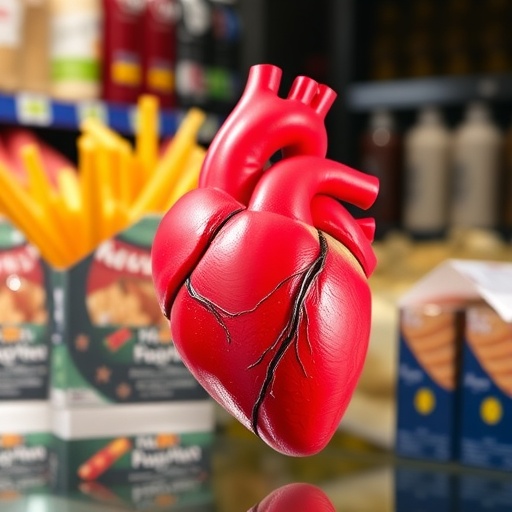
Sophia Antipolis, France – May 7, 2026. In a landmark report published today in the European Heart Journal, leading cardiology experts from across Europe have delivered a decisive clinical consensus on the cardiovascular risks posed by ultra-processed foods (UPFs). This comprehensive analysis synthesizes a decade’s worth of research, revealing a consistent and troubling link between high consumption of UPFs and various cardiovascular diseases, including heart attacks, atrial fibrillation, and cardiovascular mortality. These findings underscore a crucial gap in public health messaging and clinical practice, as current dietary guidelines fail to address the potential dangers associated with food processing.
Ultra-processed foods, defined by their industrial formulations laden with additives, preservatives, and modified ingredients, have rapidly permeated modern diets. Unlike whole or minimally processed foods, UPFs are engineered to be hyper-palatable, convenient, and shelf-stable, often at the expense of nutritional integrity. While traditional nutritional advice focuses on individual nutrients such as fats, sugars, and salts, this report shifts the paradigm to consider the degree of food processing as a fundamental determinant of cardiovascular risk.
The report details compelling epidemiological evidence linking UPF consumption to an array of metabolic and cardiovascular risk factors. Individuals consuming the highest quantities of ultra-processed foods exhibit up to a 19% increased risk of coronary heart disease and a 13% higher likelihood of developing atrial fibrillation. More strikingly, the risk of dying from cardiovascular causes can be elevated by as much as 65% compared to those consuming minimal UPFs. These associations persist across diverse populations, highlighting the robustness of the evidence.
Mechanistically, the adverse cardiovascular effects of UPFs are multifaceted. These foods typically contain excessive amounts of refined sugars, sodium, and unhealthy fats, which collectively contribute to the development of obesity, hypertension, type 2 diabetes, and dyslipidemia — all recognized risk factors for cardiovascular disease. Beyond macronutrient composition, UPFs harbor additives and contaminants, alongside altered food matrix structures, which may provoke systemic inflammation, metabolic dysregulation, and alterations in gut microbiota. Such biological disruptions may foster a pro-atherogenic environment and promote the progression of cardiovascular pathology.
Europe faces a growing public health challenge as UPF consumption steadily rises, constituting more than half of daily caloric intake in some countries. For instance, residents of the Netherlands and the UK derive approximately 61% and 54% of their calories, respectively, from ultra-processed sources, whereas southern European countries like Spain, Portugal, and Italy have lower but climbing rates, ranging from 18% to 25%. This north-south gradient reflects divergent food cultures but signifies a continent-wide trend toward increasingly industrialized diets.
Alarmingly, most national dietary guidelines remain entrenched in nutrient-centric frameworks that do not adequately consider food processing levels. As a result, public understanding of UPFs’ health risks remains limited, and misleading marketing often positions these products as “healthier” options despite their processing profiles. This discrepancy calls for urgent policy reforms to update food labeling, regulate marketing practices, and elevate public awareness of food processing’s role in disease prevention.
The European Society of Cardiology’s Council for Cardiology Practice and the European Association of Preventive Cardiology, having spearheaded this consensus, urge clinicians to integrate UPF assessment into routine dietary evaluations. Physicians managing patients with cardiovascular disease or those at high risk are encouraged to specifically inquire about UPF intake and counsel on reducing these foods alongside traditional lifestyle interventions such as increasing physical activity, smoking cessation, and moderated alcohol consumption.
While the observational data linking UPFs to cardiovascular outcomes is compelling, the authors acknowledge the current evidence base is predominantly derived from cohort studies, with a paucity of long-term interventional trials. They emphasize the necessity for rigorous randomized controlled trials designed to evaluate whether reducing UPFs can tangibly improve cardiovascular health metrics and patient outcomes, as well as to elucidate the health effects of specific food additives, processing methods, and structural food changes.
The biological plausibility of UPFs’ harmful effects is reinforced by emerging research revealing that processing-induced alterations can trigger inflammatory pathways, disturb normal metabolic signaling, and disrupt the gut microbiome’s delicate balance. Such perturbations are implicated in the pathogenesis of atherosclerosis, insulin resistance, and hypertension, effectively creating a mechanistic link between industrial food processing and cardiovascular disease etiology.
Importantly, this consensus challenges the traditional nutrient-focused model of dietary advice by emphasizing that even foods deemed nutritionally adequate based solely on their macronutrient profile can be detrimental if extensively processed. This paradigm shift encourages medical professionals and public health policymakers to incorporate processing-based classifications into dietary recommendations to better address chronic disease prevention.
The increasing consumption of ultra-processed foods coincides with a global surge in cardiovascular disease prevalence, underscoring the urgent need for concrete public health strategies targeting food environments. The report advocates for comprehensive measures including enhanced food labeling transparency, regulatory reforms to limit harmful ingredients and misleading claims, and educational campaigns to improve food choices at the population level.
Integrating ultra-processed food awareness into clinical practice promises a cost-effective and scalable approach to mitigating cardiovascular risk that complements existing lifestyle modifications. Physicians are poised to play a pivotal role by equipping patients with actionable knowledge on identifying and minimizing ultra-processed foods, ultimately contributing to improved cardiovascular outcomes and reduced healthcare burdens.
In sum, the expert consensus expertly consolidates the growing body of evidence implicating ultra-processed foods as a significant modifiable risk factor for cardiovascular disease. It calls for a transformative approach to dietary guidance that transcends nutrient counting, embracing a holistic view of food quality, processing, and their systemic health impacts. Adopting this perspective could mark a critical stride forward in combating the global cardiovascular epidemic.
Subject of Research: People
Article Title: Ultra-processed foods, lifestyle management, and cardiovascular diseases: A clinical consensus statement of the European Society of Cardiology Council for Cardiology Practice and the European Association of Preventive Cardiology of the European Society of Cardiology
News Publication Date: May 7, 2026
Web References: http://dx.doi.org/10.1093/eurheartj/ehag226
References: European Heart Journal, 2026, DOI: 10.1093/eurheartj/ehag226
Image Credits: Not specified
Keywords: Ultra-processed foods, cardiovascular disease, obesity, hypertension, diabetes, food additives, food processing, public health, dietetics, metabolic disorders, cardiovascular disorders
Tags: atrial fibrillation linked to processed food consumptioncardiovascular risks of industrial food additivesclinical consensus on processed foods and heart diseasedietary recommendations to lower cardiovascularepidemiological evidence on UPFs and heart attacksimpact of food processing on cardiovascular healthlong-term health effects of food additivesmetabolic risk factors related to UPFsnutritional integrity and food processingpublic health guidelines on ultra-processed foodsreducing ultra-processed food intake for heart healthultra-processed foods and heart disease risk