• HOME
  • NEWS
  • EXPLORE
    • CAREER
      • Companies
      • Jobs
    • EVENTS
    • iGEM
      • News
      • Team
    • PHOTOS
    • VIDEO
    • WIKI
  • BLOG
  • COMMUNITY
    • FACEBOOK
    • INSTAGRAM
    • TWITTER
Sunday, October 4, 2026
BIOENGINEER.ORG
No Result
View All Result
  • Login
  • HOME
  • NEWS
  • EXPLORE
    • CAREER
      • Companies
      • Jobs
        • Lecturer
        • PhD Studentship
        • Postdoc
        • Research Assistant
    • EVENTS
    • iGEM
      • News
      • Team
    • PHOTOS
    • VIDEO
    • WIKI
  • BLOG
  • COMMUNITY
    • FACEBOOK
    • INSTAGRAM
    • TWITTER
No Result
View All Result
Bioengineer.org
No Result
View All Result
Home NEWS Science News

Engines of twingenuity: NASA’s twin study investigators have a meeting of the minds

Bioengineer by Bioengineer
May 25, 2017
in Science News
Reading Time: 2 mins read
0
Share on FacebookShare on TwitterShare on LinkedinShare on RedditShare on Telegram
IMAGE

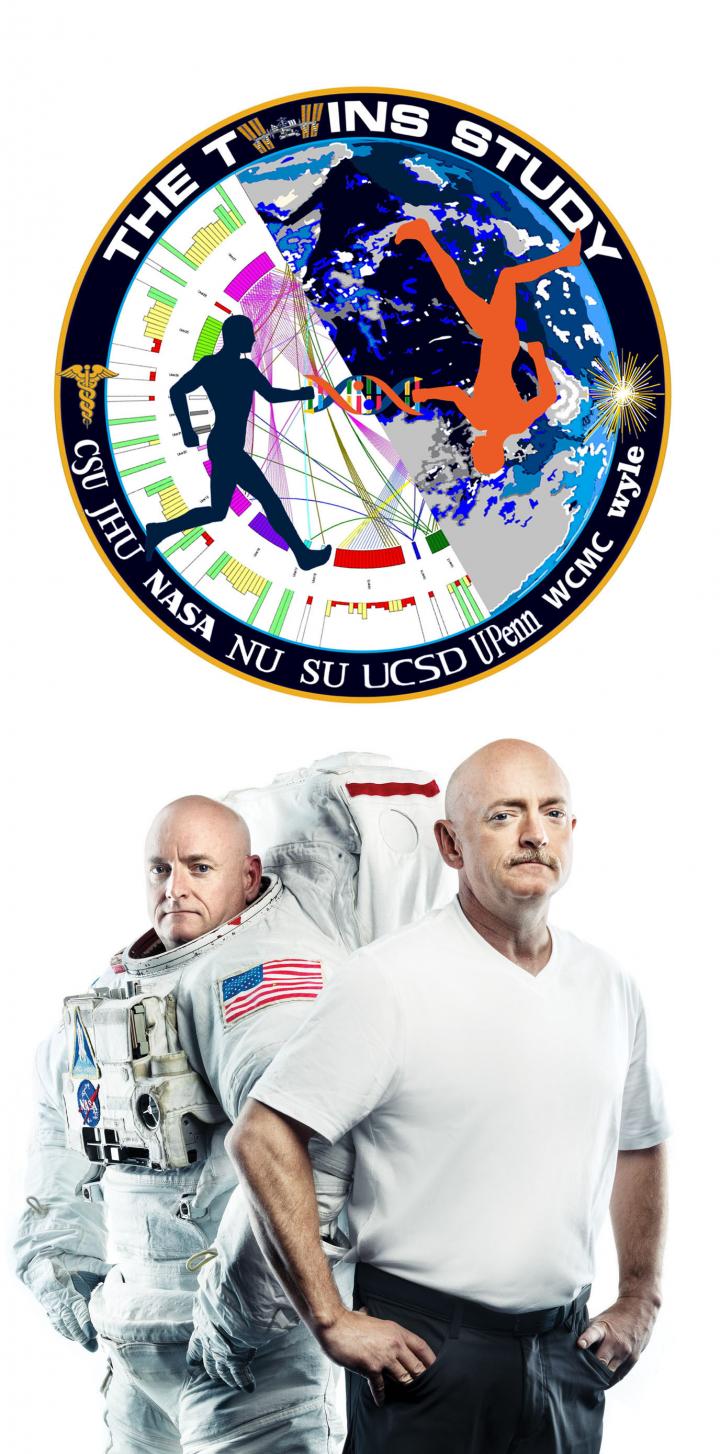
Credit: NASA/Time

If you took all the DNA (deoxyribonucleic acid) in your body and strung it end-to-end, it would reach all the way to Pluto and back. The Twins Study, looking at the effects of space on the human body at the genetic level by studying identical twins Scott Kelly and Mark Kelly, investigates far more than DNA and has generated a vast amount of data. It includes researching proteins, metabolites, gut microbes, telomeres, RNA (ribonucleic acid), epigenomes and how all the various molecules interact in the human body. Research investigators recently met in Houston to discuss the volumes of data and their initial findings to collaborate on a path forward.

John Charles, Ph.D., chief scientist for NASA's Human Research Program and head of the Twins Study, said, "We completed the final data collections so the purpose of this meeting was to inform each other of those findings, learn from each other and look for synergies to prepare for a summary paper."

Preliminary findings were discussed in January at the Human Research Program's annual Investigators' Workshop in Galveston. This latest investigators meeting was to discuss the integrated findings. Integration helps identify correlations and confirm preliminary findings or modify those findings with new insights. When the integrated data is ready, the summary of results will likely be published in early 2018. After that, individual investigators will publish theme papers with more detailed findings of the various investigations.

The Twins Study is the first study of its kind to conduct full multi-omics profiles on identical twin astronauts. Comparing nearly identical genes enables researchers to focus on the space stressors and other changes that may be taking place in the body. Many researchers combine as many as two to three types of data, but this study is one that is collecting many different types of big data and an immense amount of information. These findings, from sifting through the data for these investigations, aim to help NASA take its next big leap for a human journey to Mars.

###

The Twins Study is managed by NASA's Human Research Program (HRP). HRP is dedicated to discovering the best methods and technologies to support safe, productive human space travel, and enables space exploration by reducing the risks to human health and performance using ground research facilities, the International Space Station, and analog environments. This leads to the development and delivery of a program focused on: human health, performance, and habitability standards; countermeasures and risk mitigation solutions; and advanced habitability and medical support technologies. HRP supports innovative, scientific human research by funding more than 300 research grants to respected universities, hospitals and NASA centers to over 200 researchers in more than 30 states.

Amy Blanchett
Laurie Abadie
NASA Human Research Engagement & Communications

Media Contact

Amy Blanchett
[email protected]
@NASA_Johnson

http://www.nasa.gov/centers/johnson/home

############

Story Source: Materials provided by Scienmag

Share12Tweet8Share2ShareShareShare2

Related Posts

New Study Examines How Dedicated Dermatology Textbooks Represent Skin of Colour

New Study Examines How Dedicated Dermatology Textbooks Represent Skin of Colour

October 4, 2026
Adding Immunotherapy to Chemo and Bevacizumab Extends Survival in Recurrent Cervical Cancer

Adding Immunotherapy to Chemo and Bevacizumab Extends Survival in Recurrent Cervical Cancer

October 4, 2026

Forskolin Extract Boosts Gut Hormone GLP-1 and Strengthens Intestinal Barrier in Cell Study

October 4, 2026

Empathy, Not Mood, Drives Helping in Autistic Children, Study Finds

October 4, 2026
Please login to join discussion

POPULAR NEWS

  • Alloys That Shrink Their Own Grains: New PIX Mechanism Refines Metals With Heat Alone

    Alloys That Shrink Their Own Grains: New PIX Mechanism Refines Metals With Heat Alone

    29 shares
    Share 12 Tweet 7
  • Endurance Exercise Reshapes the Liver in Males and Females Through Distinct Molecular Routes

    29 shares
    Share 12 Tweet 7
  • Single Transcription Factor PU.1 Rapidly Converts Fibroblasts into Macrophage-Lineage Cells

    29 shares
    Share 12 Tweet 7
  • New Scale Measures How Ready Nurse Educators Really Are for the AI Era

    29 shares
    Share 12 Tweet 7

About

We bring you the latest biotechnology news from best research centers and universities around the world. Check our website.

Follow us

Recent News

Alloys That Shrink Their Own Grains: New PIX Mechanism Refines Metals With Heat Alone

Endurance Exercise Reshapes the Liver in Males and Females Through Distinct Molecular Routes

Single Transcription Factor PU.1 Rapidly Converts Fibroblasts into Macrophage-Lineage Cells

Subscribe to Blog via Email

Success! An email was just sent to confirm your subscription. Please find the email now and click 'Confirm' to start subscribing.

Join 85 other subscribers
  • Contact Us

Bioengineer.org © Copyright 2023 All Rights Reserved.

Welcome Back!

Login to your account below

Forgotten Password?

Retrieve your password

Please enter your username or email address to reset your password.

Log In
No Result
View All Result
  • Homepages
    • Home Page 1
    • Home Page 2
  • News
  • National
  • Business
  • Health
  • Lifestyle
  • Science

Bioengineer.org © Copyright 2023 All Rights Reserved.