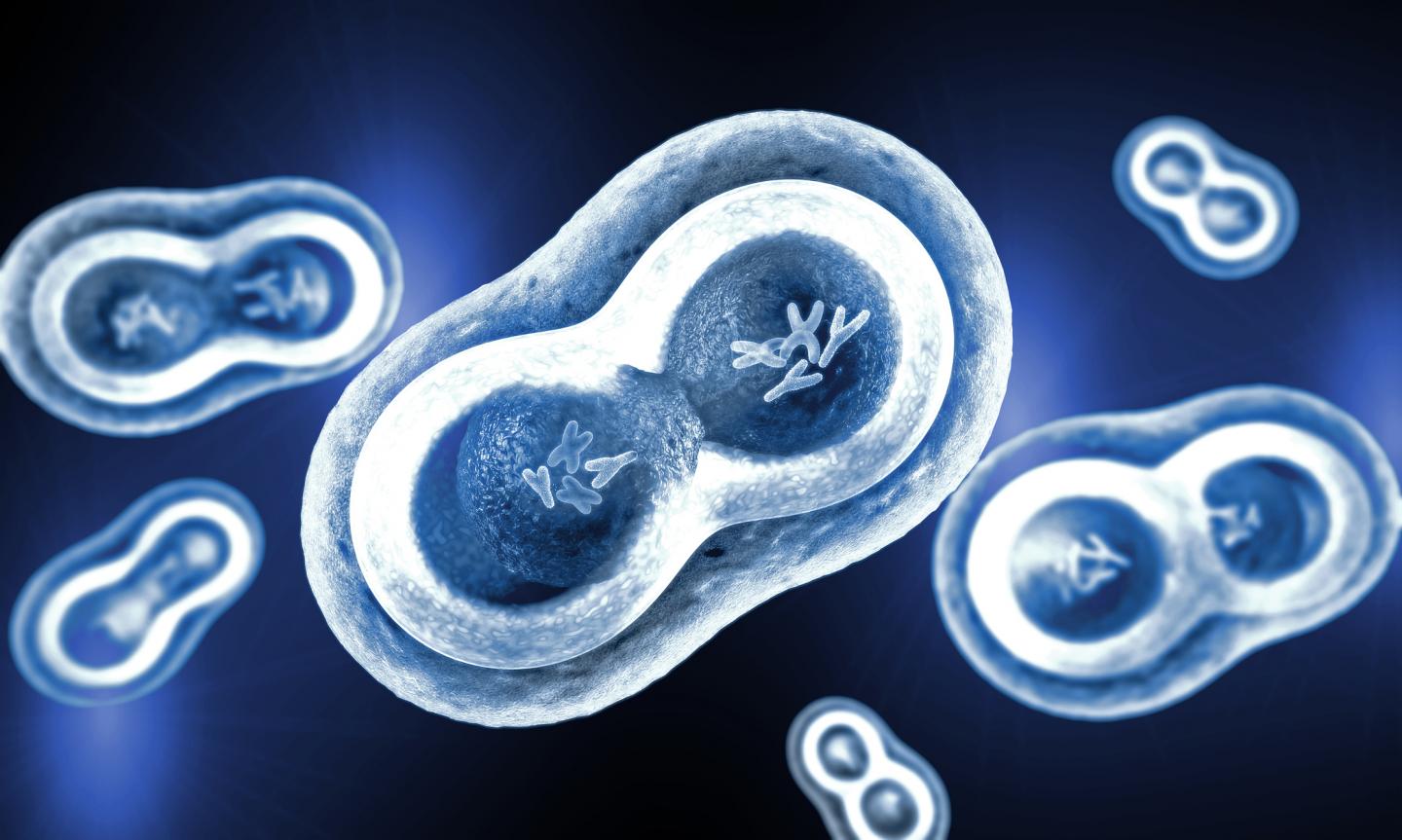
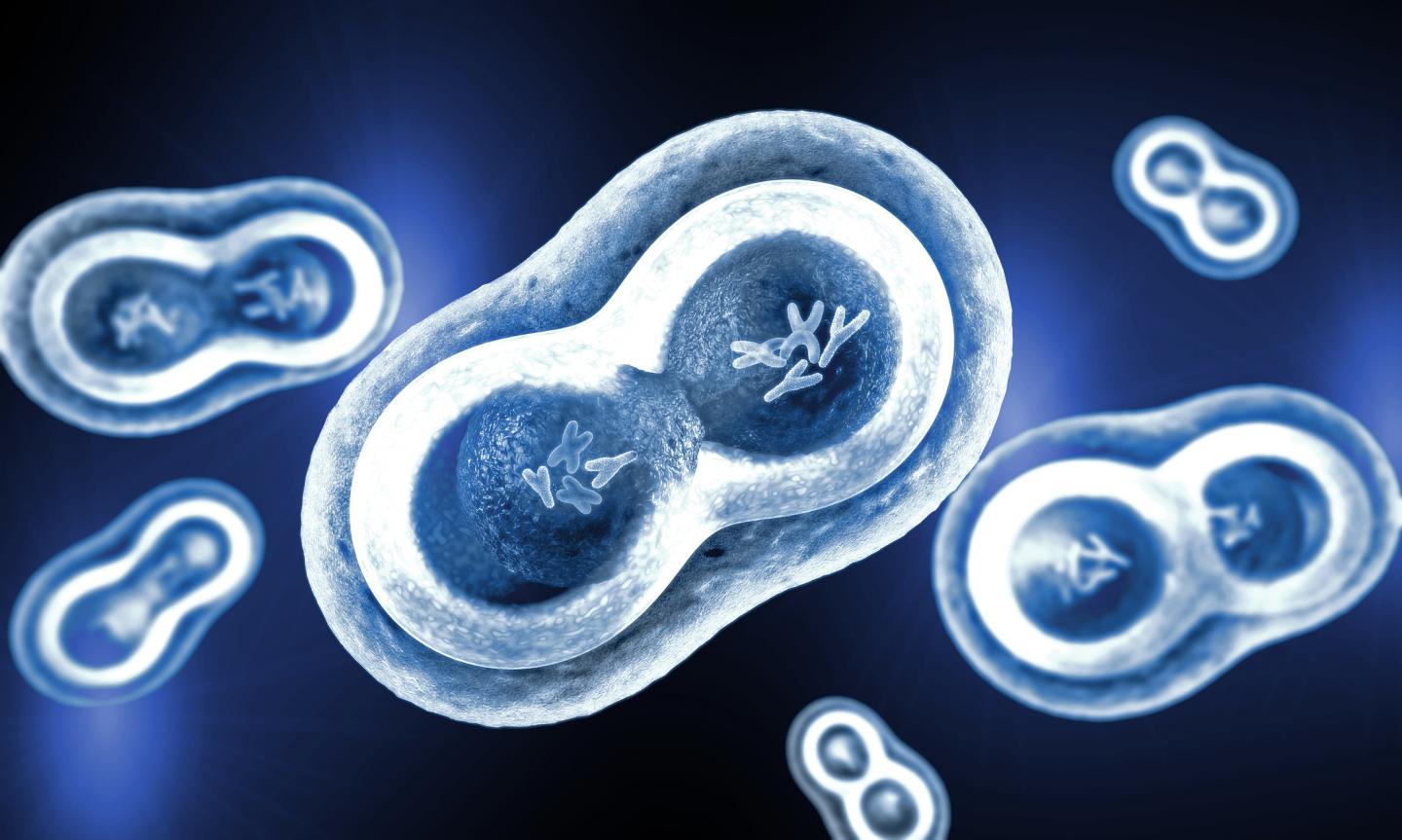
Credit: University of Rochester Medical Center
Cancer is an extremely complex disease, but its definition is quite simple: the abnormal and uncontrollable growth of cells. Researchers from the University of Rochester's Center for RNA Biology have identified a new way to potentially slow the fast-growing cells that characterize all types of cancer. The findings, reported today in the journal Science and funded by the National Institutes of Health, were made in kidney and cervical cancer cells in the laboratory and are a long way from being applied in people. But, they could be the basis of a treatment option in the future, the authors said.
Cancer: The Cell Cycle Gone Wrong
All cells go through the "cell cycle," a series of events that culminate in orderly cell growth and division. In cancer, the cell cycle is out of whack; cells divide without stopping and invade surrounding tissues.
Researchers identified a protein called Tudor-SN that is important in the "preparatory" phase of the cell cycle – the period when the cell gets ready to divide. When scientists eliminated this protein from cells, using the gene editing technology CRISPR-Cas9, cells took longer to gear up for division. The loss of Tudor-SN slowed the cell cycle.
"We know that Tudor-SN is more abundant in cancer cells than healthy cells, and our study suggests that targeting this protein could inhibit fast-growing cancer cells," said Reyad A. Elbarbary, Ph.D., lead study author and research assistant professor in the Center for RNA Biology and the department of Biochemistry and Biophysics at the University of Rochester School of Medicine and Dentistry.
Elbarbary, who works in the laboratory of senior study author Lynne E. Maquat, Ph.D., a world-renowned expert in RNA biology, adds that there are existing compounds that block Tudor-SN that could be good candidates for a possible therapy.
Putting the Brakes on Cell Growth
Maquat's team discovered that Tudor-SN influences the cell cycle by controlling microRNAs, molecules that fine tune the expression of thousands of human genes.
When Tudor-SN is removed from human cells, the levels of dozens of microRNAs go up. Boosting the presence of microRNAs puts the brakes on genes that encourage cell growth. With these genes in the "off" position, the cell moves more slowly from the preparatory phase to the cell division phase.
"Because cancer cells have a faulty cell cycle, pursuing factors involved in the cell cycle is a promising avenue for cancer treatment," noted Maquat, director of the Center for RNA Biology and the J. Lowell Orbison Endowed Chair and professor of Biochemistry and Biophysics.
Maquat, who also holds an appointment in the Wilmot Cancer Institute, and Elbarbary have filed a patent application for methods targeting Tudor-SN for the treatment and prevention of cancer. Research next steps include understanding how Tudor-SN works in concert with other molecules and proteins so that scientists can identify the most appropriate drugs to target it.
Keita Miyoshi, Ph.D., staff scientist in Maquat's lab, served as lead study author with Elbarbary. Jason R. Myers and John M. Ashton, Ph.D. from the UR Genomics Research Center played an instrumental role in the study analysis.
###
Media Contact
Emily Boynton
[email protected]
585-273-1757
@UR_Med
http://www.urmc.rochester.edu
############
Story Source: Materials provided by Scienmag