In the rapidly evolving field of geriatric care, the burden on caregivers of older adults with limited activity remains a critical challenge. Addressing this issue, a recent quasi-experimental study conducted in Sri Lanka offers compelling evidence on how targeted educational interventions can significantly enhance the quality of life for these caregivers. This research provides not only a blueprint for improved caregiving practices but also highlights the broader implications for public health policies aimed at aging populations.
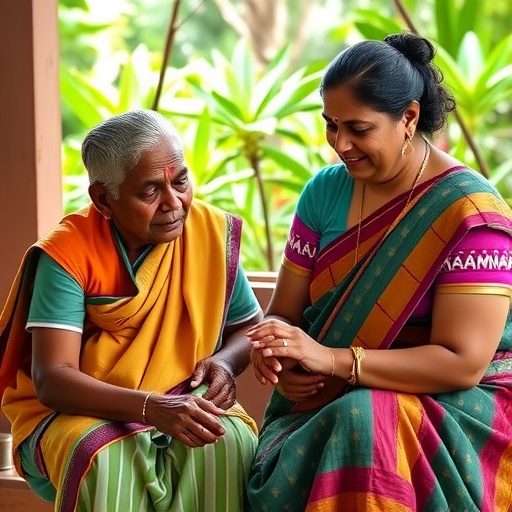
The study focuses on community-dwelling older adults who experience significant limitations in their daily activities, a group that demands consistent and often intensive care. Caregivers, frequently family members without formal training, face enormous physical and emotional stress. The lack of proper education about caregiving strategies often exacerbates their burden, impacting their psychological well-being and capacity to provide optimal support.
This investigative effort implemented a structured educational program intended to empower caregivers with practical knowledge and skills. The intervention included comprehensive modules covering geriatric care principles, coping mechanisms for caregiver stress, and guidance on managing physical limitations common in older adults. Beyond the direct transfer of knowledge, the program sought to build caregivers’ confidence and resilience through interactive sessions and peer support.
Methodologically, the study employed a quasi-experimental design which, while lacking the randomization of clinical trials, allowed for robust observation of intervention effects in real-world settings. Participants were carefully selected to represent a broad spectrum of caregiver demographics, ensuring that findings would be applicable across various socio-economic backgrounds within the Sri Lankan context.
Data collection involved standardized assessments administered before and after the intervention. These instruments measured caregiver quality of life, burden, and psychological distress. The researchers also monitored changes in caregiving practices and the health status of the older adults under their care, attempting to draw correlations between education received and tangible improvements in caregiving outcomes.
The results were striking. Post-intervention analyses revealed a marked improvement in caregivers’ reported quality of life. Participants exhibited reduced levels of stress and burnout, alongside enhanced emotional well-being. This suggests that education not only equips caregivers with essential skills but also provides psychological fortification against the demands of caregiving.
Furthermore, the study uncovered ancillary benefits extending to the older adults themselves. Improved caregiving techniques translated into better management of their daily activities and health conditions. This bidirectional impact underscores the intertwined nature of caregiver and care recipient well-being, emphasizing that caregiver support is an integral component of effective elder care systems.
One of the pivotal insights from this research is the importance of contextualizing educational interventions. The curriculum was tailored to reflect cultural nuances and resource availability unique to Sri Lanka’s rural and urban communities. This localization of knowledge ensured greater receptivity and practical applicability, a factor often overlooked in one-size-fits-all training models.
The study also shed light on the social dynamics influenced by the educational program. Caregivers reported a sense of reduced isolation, facilitated by group interactions and shared experiences during the sessions. This social networking aspect emerged as a significant contributor to sustained improvements in their mental health and motivation.
Technological integration played a subtle yet supportive role. Educational materials were sometimes supplemented with visual aids and simple digital tools, enhancing engagement and retention. As digital literacy rises globally, such hybrid approaches hold promise for scaling up interventions without substantial increases in cost or logistical complexity.
From a public health perspective, these findings advocate for the incorporation of caregiver education into national aging strategies. Policymakers are urged to recognize that supporting informal caregivers is not merely a compassionate gesture but a cost-effective strategy to maintain elder care quality and reduce healthcare system strain.
Moreover, this research opens avenues for further exploration into the optimization of caregiver training. Questions remain regarding the ideal frequency, duration, and modes of delivery for sustaining long-term benefits. Future studies could also examine the integration of mental health services directly into caregiver support programs, recognizing the multifaceted nature of caregiving challenges.
In conclusion, the Sri Lankan study adds a valuable chapter to the narrative of geriatric care innovation. It convincingly demonstrates that educational empowerment is a critical lever for improving quality of life for caregivers of activity-limited elders. This advancement holds global significance as populations age worldwide, reinforcing the need for holistic, culturally attuned approaches to caregiver support.
The implications extend beyond individual families, suggesting that societies invest in knowledge dissemination and capacity building as foundational elements of responsive healthcare. As the global demographic landscape shifts, ensuring the sustainability and effectiveness of informal caregiving will be an essential component of public health success.
This research not only charts a path forward for Sri Lanka but also offers a replicable framework for other nations grappling with similar demographic and social challenges. By focusing on caregiver education, we move closer to realizing health systems that are both compassionate and resilient in the face of aging population pressures.
Undoubtedly, the journey toward optimized geriatric care is complex and multifaceted, yet studies like this illuminate actionable strategies with profound human impact. Ultimately, empowering caregivers is empowering entire communities, fostering environments where aging with dignity and support becomes the norm rather than the exception.
Subject of Research:
The impact of educational interventions on the quality of life of caregivers of older adults with activity limitations living in community settings in Sri Lanka.
Article Title:
The impact of a caregiver educational intervention on improving the quality of life of caregivers of community-dwelling activity-limited older adults in Sri Lanka: a quasi-experimental study.
Article References:
Wijesiri, H.S.M., Wasalathanthri, S., Weliange, S.D.S. et al. The impact of a caregiver educational intervention on improving the quality of life of caregivers of community-dwelling activity-limited older adults in Sri Lanka: a quasi-experimental study. BMC Geriatr (2026). https://doi.org/10.1186/s12877-026-07613-5
Image Credits: AI Generated
Tags: caregiver training programs in geriatric carecommunity-based eldercare support strategiescoping mechanisms for caregivers of disabled elderlyeducational interventions for family caregiversenhancing resilience in eldercare providersgeriatric care education for non-professional caregiversimpact of caregiver training on psychological well-beingimproving caregiver quality of life in Sri Lankamanaging caregiver stress in aging populationspublic health policy for aging societiesquasi-experimental studies on caregiving efficacystructured caregiver education modules