In recent years, coastal urban centers have embarked on a transformative journey to mitigate the destructive impacts of flooding and stormwater runoff. This shift towards sustainability is characterized by the adoption of more permeable surfaces and the promotion of water retention and conservation efforts among residents. While these measures might seem incremental at an individual level, recent research from Drexel University’s College of Engineering underscores their profound collective potential. As climate change accelerates sea level rise and intensifies extreme weather, these decentralized strategies emerge as critical components in safeguarding vulnerable coastal cities from devastating flooding.
Drexel’s multidisciplinary team conducted an unprecedented computational simulation study, recently published in Urban Climate, pioneering the integration of decentralized stormwater interventions within municipal flood modeling frameworks. Their approach, which models stormwater dynamics at a granular, block-by-block resolution, also establishes a vital baseline for quantifying the mitigation impacts of household-level measures. This breakthrough enables urban planners to incorporate these strategies with greater precision in their comprehensive flood risk assessments and infrastructural development plans.
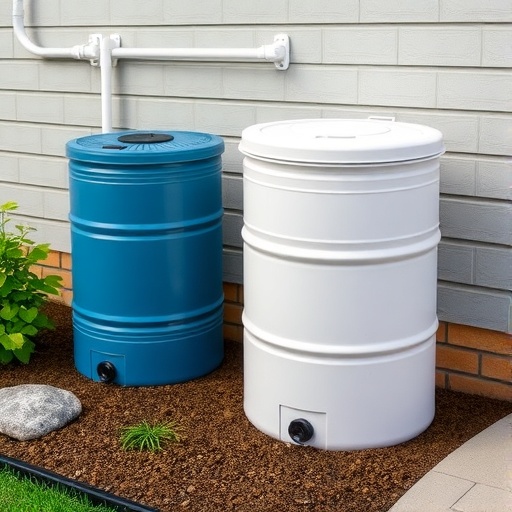
Central to their findings is the demonstration that widespread adoption of decentralized stormwater controls—including rain barrels, cisterns, efficient water fixtures, and greywater reuse—can collectively reduce stormwater flooding volumes and combined sewer overflows by an estimated 11 to 13 percent. Remarkably, these reductions remain robust even under future climate scenarios plagued by heavier precipitation and rising seas. This study not only underscores the effectiveness of grassroots water conservation efforts but also their sustainability amidst escalating environmental stressors.
The team’s innovative model simulates sixteen unique combinations of household water management strategies within Camden, New Jersey’s Cramer Hill neighborhood—a region situated in a state-designated coastal hazard zone vulnerable to flooding. Through meticulous calibration using historical precipitation and tidal datasets from 2014, the model captures the nuanced interaction of decentralized interventions with complex urban hydrology. The model tracks floodwater movement, accumulation, and overflow discharge at multiple critical outfall locations that connect to the Delaware River, shedding light on the systemic effects of localized water management choices.
Particularly in older coastal cities such as Philadelphia, New York, and Boston, the challenge is exacerbated by combined sewer systems where stormwater and sanitary sewage share a single treatment conduit. During intense precipitation events, these systems are overwhelmed, discharging untreated sewage into adjacent waterways and posing substantial environmental and public health risks. Drexel’s research shines a light on the capacity of decentralized strategies to serve as frontline defenses, alleviating pressure on these aging infrastructures and reducing the frequency and severity of overflow incidents.
The underlying philosophy steering this research is the concept of a circular water economy—an ethos more commonly associated with material recycling but equally applicable to water management. By promoting the capture and reuse of water at the household scale—for example, using greywater to flush toilets or harvesting rainwater for irrigation—the demand on centralized water supplies and treatment facilities is curtailed. This approach not only decreases flood risk but concurrently diminishes the energy footprint of urban water systems by reducing the volume of water requiring treatment and distribution.
The findings hold particular promise for municipalities in compliance with regulatory frameworks such as the Clean Water Act, which mandates measures to control combined sewer overflows. Philadelphia and Camden, despite ongoing mitigation efforts, still grapple with an estimated 16 billion gallons of overflow annually. Drexel’s study offers a replicable, scientifically validated pathway to augment current infrastructure investments with community-driven, decentralized interventions that can yield meaningful improvements in flood control.
Testing the durability of these water strategies under simulated future conditions, the researchers incorporated scenarios depicting precipitation intensities increasing by up to 30% and sea level rises reaching 1.8 meters. The simulations highlight the dual pressures of intensified rainfall and backpressure from elevated seas on sewer and drainage systems, leading to exacerbated flooding and overflow challenges. Yet, within these stress tests, decentralized strategies consistently delivered an 11-13% reduction in flood volume increases, reinforcing their critical role in adaptive urban water management.
The study reveals that although no single solution suffices to fully resolve the intricately linked challenges of combined sewer overflow and urban flooding, a synergistic blend of decentralized household measures with centralized infrastructure upgrades presents the most effective resilience strategy. This integrated planning paradigm offers a roadmap for cities worldwide confronting similar vulnerabilities—combining technological innovation, regulatory compliance, and community engagement.
Looking forward, the research team emphasizes the importance of addressing social dimensions—such as public perception and barriers to adoption of decentralized water strategies—to unlock their full potential. Additionally, expanding flood models to analyze the impacts on water quality and extending applications to diverse geographic regions will refine mitigation efforts further. Such enhancements will enhance predictive capabilities and tailor interventions to the heterogeneous needs of coastal urban environments across the globe.
Ultimately, Drexel’s research represents a vital step in bridging a significant knowledge gap by systematically evaluating the combined efficacy of distributed water management measures under climate change stresses. The innovative use of detailed hydrologic and hydraulic modeling provides urban stakeholders with scientifically grounded evidence to advance policies and planning that reinforce urban resilience. As coastal cities brace for an uncertain future, strategies rooted in circular water principles and decentralized management emerge as indispensable tools to mitigate flooding, protect ecosystems, and sustain urban livelihoods.
The implications of these findings transcend local contexts, offering a scalable framework for holistic water resource stewardship in the face of mounting climate challenges. By demonstrating measurable impacts achievable through collective action and integrated planning, this study stands to galvanize policymakers, urban planners, and communities alike to embrace decentralized water solutions as a cornerstone of resilient, sustainable urban development.
Subject of Research: Decentralized circular water management strategies for mitigating combined sewer overflow and urban flooding in coastal cities, under current and projected climate change conditions.
Article Title: Understanding the impacts of decentralized circular water strategies for combined sewer overflow and urban flooding
News Publication Date: April 8, 2026
Web References:
Urban Climate Journal
DOI: 10.1016/j.uclim.2026.102887
Philadelphia LTCP Reports
Camden Stormwater Management Initiative
Keywords
Flood control, combined sewer overflow, water quality control, hydraulic engineering, civil engineering, sea level rise, urban flooding, circular water economy, climate resilience, decentralized stormwater management
Tags: climate change and sea level rise solutionscoastal urban flood mitigationcombined sewer overflow reductioncomputational simulation for flood riskdecentralized stormwater interventionsDrexel University stormwater researchhousehold-level stormwater controlsimpact of permeable surfaces on floodingmunicipal flood modeling innovationsrain barrels for stormwater managementsustainable water retention strategiesurban climate adaptation techniques