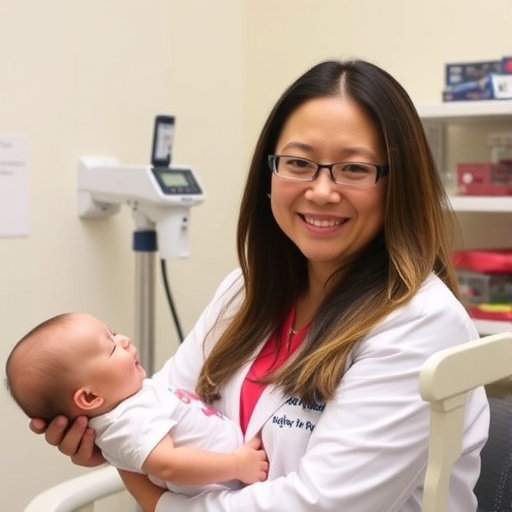
In an innovative leap forward for prenatal medicine, Dr. Arin Oestreich, a leading researcher at Shriners Children’s St. Louis, has secured a $3.1 million R01 grant from the Eunice Kennedy Shriver National Institute of Child Health and Human Development (NICHD) to investigate groundbreaking treatments for rare bone diseases, particularly osteogenesis imperfecta (OI), administered while babies are still in the womb. This pioneering research aims to fundamentally alter the developmental trajectory of bone strength far before birth, potentially transforming outcomes for children affected by this debilitating disorder.
Osteogenesis imperfecta is a genetic disorder characterized by fragile bones that break easily, earning it the moniker “brittle bone disease.” In the United States alone, approximately 50,000 individuals live with OI. The severity ranges widely from mild forms resulting in few fractures to the most severe leading to numerous fractures and skeletal deformities. Current treatment paradigms largely focus on postnatal interventions. Dr. Oestreich’s work, however, breaks new ground by targeting therapeutic intervention during fetal development, a timeframe traditionally overlooked but crucial for bone mass accrual.
The core of this research revolves around the inhibition of myostatin, a powerful regulatory protein known to suppress muscle growth. Myostatin’s physiological role is to maintain muscle mass within certain limits, acting essentially as a “brake” on muscle hypertrophy. When this protein is blocked, muscles undergo hyperplasia and hypertrophy, which in turn exerts mechanical forces that stimulate bone growth and density. Dr. Oestreich’s hypothesis is that inactivation of myostatin during pregnancy could augment not only fetal muscle mass but also bone development, offering a dual-pronged approach to fortify skeletal integrity before birth.
A key aspect of this investigation involves the use of sophisticated mouse models that genetically mimic human osteogenesis imperfecta. These models allow the research team to observe the effects of myostatin inhibition on critical parameters such as litter size, pregnancy viability, fetal bone growth, and postnatal development. By delineating key developmental windows, the researchers hope to pinpoint the optimal timing for therapeutic intervention that maximizes the accrual of peak bone mass in utero — a factor strongly correlated with long-term skeletal health.
Collaborating with experts across prominent institutions including Washington University in St. Louis, the University of Missouri, and Shriners Children’s St. Louis, Dr. Oestreich leads a multidisciplinary team dedicated to pushing the boundaries of perinatal bone biology. Besides directly addressing fetal outcomes, this research also considers maternal health, as pregnancy and lactation place extraordinary mechanical and metabolic demands on the mother’s skeleton. Understanding how myostatin inhibition affects maternal bone remodeling during these physiological states is a strategic dimension of the study.
Recently published preliminary data revealed that administering myostatin inhibitors to female mice with OI from pre-conception through lactation resulted in increased maternal muscle mass and cortical bone thickness. These findings are particularly significant as they highlight a potential dual therapeutic benefit — attenuating the detrimental bone loss often associated with pregnancy and lactation in women with OI, thereby preserving maternal skeletal integrity while also promoting fetal bone development.
This research represents a paradigm shift in pediatric orthopedic science, moving away from postnatal treatments to preventive strategies employed in utero. It acknowledges the uterine environment not just as a passive incubator but an active influencer of lifelong musculoskeletal health. By leveraging molecular therapeutics during gestation, the research aspires to recalibrate the biological setting, fostering stronger, more resilient bones before the child even takes their first breath.
Importantly, although the strategy of myostatin inhibition is not a cure for osteogenesis imperfecta, it aims to mitigate the severity of the disease by maximizing muscle strength and skeletal robustness from the earliest stages of life. This approach could reduce fracture incidence across the lifespan, greatly improving quality of life for children afflicted with OI and potentially altering the socioeconomic and healthcare burdens associated with chronic bone fragility.
Dr. Oestreich emphasizes the complexity and delicacy of fetal developmental windows, explaining that subtle alterations in prenatal treatments can have profound and lasting consequences on the offspring’s structural health. The team’s investigations seek to characterize these critical periods to enhance therapeutic precision, ensuring interventions deliver maximum benefit with minimal unintended consequences.
This project underscores Shriners Children’s St. Louis’s commitment to harnessing cutting-edge scientific advances to revolutionize pediatric care. The institution’s integrated model combining clinical expertise, innovative research, and professional education serves as a foundation for translating these discoveries from bench to bedside, ultimately offering new hope to families impacted by rare and challenging bone conditions.
As the research progresses through preclinical phases, ongoing animal studies will further elucidate safety profiles, dosage optimization, and biological mechanisms underpinning therapeutic efficacy. Dr. Oestreich and her colleagues remain cautiously optimistic, fully aware of the complex physiological interplay involved but driven by the potential to fundamentally improve outcomes for children born with OI.
With public dissemination already underway through their first publication detailing myostatin’s role in maternal bone adaptation during pregnancy, the team invites collaboration and dialogue within the scientific community. Sharing insights and data through peer-reviewed journals ensures that this potentially transformative approach benefits from rigorous scrutiny, peer feedback, and eventual clinical translation.
In conclusion, this $3.1 million NICHD grant propels a visionary research program centered on prenatal therapy for osteogenesis imperfecta, aimed at enhancing bone strength before birth through targeted myostatin inhibition. The implications of such therapy extend beyond fetal health, promising dual benefits for maternal skeletal resilience during pregnancy and lactation. This research stands at the frontier of prenatal medicine and pediatric orthopedics, heralding a new era where early intervention could profoundly reshape the lives of those affected by rare skeletal diseases.
Subject of Research: Prenatal therapeutic intervention to strengthen bones in osteogenesis imperfecta via myostatin inhibition
Article Title: Shriners Children’s St. Louis Researcher Awarded $3 Million Grant to Study Providing Treatment to Strengthen Bones While Still in the Womb
News Publication Date: May 5, 2026
Web References:
https://www.sciencedirect.com/science/article/pii/S8756328226001262
http://dx.doi.org/10.1016/j.bone.2026.117900
Image Credits: Shriners Children’s
Keywords: Osteogenesis imperfecta, myostatin inhibition, prenatal therapy, bone diseases, maternal bone health, fetal bone development, NICHD grant, Shriners Children’s research
Tags: early bone mass accrual therapiesEunice Kennedy Shriver NICHD research grantfetal intervention for brittle bone diseasefetal muscle and bone growth regulationin utero bone strengthening treatmentsinnovative prenatal therapeutic strategiesmyostatin inhibition in fetal developmentosteogenesis imperfecta genetic disorder treatmentprenatal medicine advancements in bone healthprenatal therapy for osteogenesis imperfectarare bone disease prenatal treatmentsShriners Children’s St. Louis research