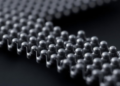
In the pursuit of advanced materials for energy storage, the integration of chemical engineering principles with materials science has become a cornerstone for innovation. Among the most challenging targets is the large-scale production of high-entropy cathode materials for sodium-ion batteries (SIBs), a promising alternative to lithium-ion technologies for grid-scale applications due to sodium’s abundance and cost-efficiency. High-entropy sodium vanadium fluorophosphates (HE-NVPF) have emerged as exceptionally active cathode materials owing to their robust electrochemical properties and thermal stability. However, traditional synthesis methods have been plagued by difficulties in maintaining high phase purity and achieving consistent performance at scale, severely limiting their commercial viability.
Professor Jianhong Xu and his team at Tsinghua University, in collaboration with Professor Xingjiang Wu from Hebei University of Technology, have addressed these limitations through an innovative, microfluidic high-throughput optimization strategy. Their approach revolutionizes the synthesis and screening process by dramatically accelerating the exploration of reaction parameters, enabling rapid identification of optimal conditions for the production of HE-NVPF materials. This breakthrough was realized via a sophisticated “lab-on-a-chip” device that combines precise microfluidic flow control with real-time monitoring through a micro-Raman spectrometer. The device allows researchers to directly observe the nucleation and growth mechanisms of cathode particles at the microscale, thus creating a data-driven synthesis pathway that is approximately 400 times faster than conventional batch methods.
This real-time feedback loop is pivotal because the electrochemical performance of HE-NVPF cathodes is highly sensitive to structural and compositional subtlety. Traditional batch reactor approaches often fall short, as their iterative nature is slow and imprecise, resulting in heterogeneous materials with poor phase control and suboptimal ionic transport properties. By contrast, the microfluidic platform’s parallelized processing and instantaneous spectral analysis permit a more granular understanding of the kinetic and thermodynamic factors governing phase purity and particle morphology. This knowledge enables the fine-tuning of synthesis parameters, thus controlling defect densities, particle size distribution, and crystallinity—key factors for enhancing sodium-ion diffusion pathways and multi-electron redox reactions.
Scaling this microfluidic insight into practical production, the researchers employed a microfluidic spray drying technique that enabled kilogram-scale synthesis of HE-NVPF cathode materials with unprecedented uniformity and phase purity. The scalability of this method is transformative, bridging the gap between laboratory discovery and industrial manufacturing. Crucially, this spray drying process preserves the tailored microstructural features identified during optimization, ensuring that the high throughput benefits extend beyond speed to material quality and consistency. Moreover, this approach is not confined to a single chemical system; it promises applicability across a diverse range of multi-component complex oxides and polyanionic compounds, positioning it as a versatile platform for future energy materials research.
From an electrochemical performance standpoint, the HE-NVPF materials synthesized via this integrated approach demonstrate exceptional achievements. They exhibit stable multi-electron transfer capabilities, which are essential for high energy density, and accelerated sodium-ion diffusion kinetics. Furthermore, these cathodes maintain exceptional structural integrity during cycling, undergoing reversible phase transitions with minimal volumetric change. This mitigates mechanical strain and enhances cycle life, as reflected by capacity retention metrics of 86% after 500 cycles at a 1C rate. Remarkably, the material achieves a rate capability of 50C, which translates to ultrafast charging and discharging while maintaining substantial capacity (108.6 mAh/g) and energy density (371.9 Wh/kg). These performance parameters significantly surpass those of comparable cathode materials produced via traditional batch synthesis methods.
The success of this research lies not only in the materials themselves but also in the compelling new synthesis and screening paradigm it establishes. By coupling microfluidics with advanced in-situ characterization, this study paves the way for a paradigm shift in how high-entropy materials are developed. High-throughput screening that integrates experimental feedback with sophisticated data analysis stands to reduce the trial-and-error bottleneck that traditionally hampers materials discovery. This is especially critical for complex high-entropy systems, where compositional and structural degrees of freedom exponentially increase the parameter space to be explored.
Moreover, the implications for energy storage technology are profound. High-entropy cathodes synthesized with this method offer a pathway to affordable, scalable, and high-performance sodium-ion batteries, addressing crucial demands for grid-level energy storage where cost and resource availability are paramount. Enhancing sodium-ion battery technologies with reliable, fast-charging, and long-life cathode materials could accelerate the deployment of renewable energy infrastructures by smoothing out intermittency through effective load balancing and storage.
Professor Xu remarked on the transformative potential of their work, emphasizing how the new framework integrates theoretical understanding with a powerful technical toolkit. Through this synergy, rapid material design, screening, and scale-up become achievable within timeframes and precision levels previously thought impossible. Notably, the collaboration highlights the interdisciplinary innovation that arises when chemical engineering principles are fused with cutting-edge materials science, microfluidics, and real-time spectroscopic diagnostics—all underpinned by rigorous experimental methodologies.
This development also signals a broader trend in materials science toward the convergence of microfabrication techniques with energy materials research. Microfluidics, traditionally the realm of biological and chemical analysis, now propels breakthroughs in the synthesis of complex inorganic materials. By capitalizing on laminar flow control and minimized reagent volumes, microfluidic devices reduce waste, improve reaction uniformity, and provide unparalleled control over reaction kinetics. Real-time micro-Raman spectroscopy further enriches this process by furnishing molecular fingerprints that guide optimization dynamically, circumventing the delays inherent in ex situ characterization.
The lead authors of this pioneering work, PhD candidates Tian Zhicheng and Zhou Yuanzheng, underscore the critical role of young researchers in driving innovation within high-entropy materials synthesis. Their contributions demonstrate that enabling technologies combined with rigorous chemical engineering concepts can redefine conventional paradigms. As the field progresses, further integration with machine learning algorithms for analysis and control may accelerate the rate of discovery even more substantially.
In conclusion, this research not only overcomes the longstanding challenge of synthesizing phase-pure, high-performance HE-NVPF cathode materials at scale but also introduces a universal approach applicable across a wide range of high-entropy energy materials. The combination of microfluidic high-throughput experimentation, real-time monitoring, and scalable spray drying synthesis establishes a new standard for the rapid development of next-generation energy storage technologies. Such technological advancements pave the way toward achieving sustainable energy solutions that are both economically viable and technologically superior, setting a precedent for future studies to capitalize upon.
Subject of Research:
High-throughput microfluidic synthesis and optimization of high-entropy sodium vanadium fluorophosphate cathode materials for advanced sodium-ion batteries.
Article Title:
Microfluidic High-Throughput Optimization Enables Kilogram-Scale Production of High-Purity High-Entropy Sodium Vanadium Fluorophosphate Cathodes with Exceptional Rate Performance
Web References:
http://dx.doi.org/10.1093/nsr/nwag195
Image Credits:
©Science China Press
Keywords
High-entropy cathode materials, sodium-ion batteries, microfluidics, high-throughput screening, micro-Raman spectroscopy, spray drying synthesis, phase purity, multi-electron transfer, sodium diffusion kinetics, scalable energy storage materials, real-time monitoring, advanced materials engineering
Tags: advanced materials for grid-scale energy storagechemical engineering in battery material developmentcollaboration inhigh-entropy cathode materials for sodium-ion batterieslab-on-a-chip synthesis for battery materialslarge-scale production of HE-NVPFmicro-Raman spectrometer in material synthesismicrofluidic high-throughput optimization strategyrapid screening of cathode material parametersscalable synthesis methods for sodium-ion batteriessodium vanadium fluorophosphates electrochemical propertiesthermal stability of sodium-ion battery cathodes