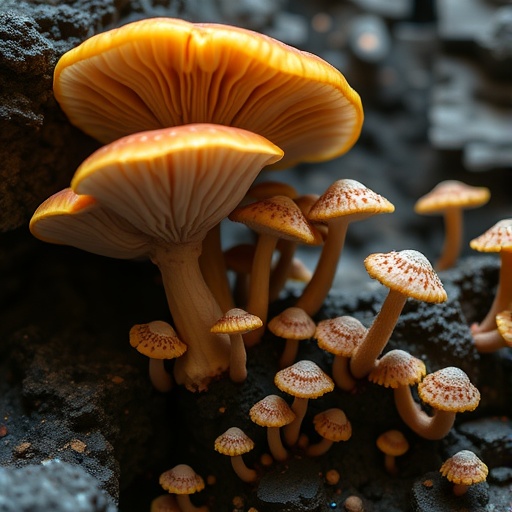
In a groundbreaking study led by Professor Dr. Bart Thomma from the Institute for Plant Sciences at the University of Cologne, an international team of plant scientists has unraveled the intriguing evolutionary origins of fungal effector proteins—molecules that plant pathogens deploy to invade and manipulate their hosts. Contrary to previous assumptions, these effectors, which disable host plant immune defenses, are now understood to have emerged from ancient antimicrobial proteins originally developed for microbial competition. This revelation opens new dimensions in understanding fungal pathogenicity and the complex interactions between fungi, host plants, and their microbiomes.
Fungal pathogens inhabit an environment densely populated by diverse microorganisms, including bacteria, viruses, and beneficial symbiotic microbes. These beneficial microbes play critical roles in maintaining plant health by thwarting potential pathogens and modulating immune responses. Plants invest heavily in producing a broad arsenal of metabolites that selectively recruit these protective microorganisms while deterring harmful invaders. For a pathogenic fungus, successful infection entails overcoming not just the plant immune system but also the protective microbiome that surrounds and supports the host.
Effectors have long been recognized as pivotal secreted proteins that pathogens use to suppress plant immune responses, allowing fungal colonization. However, the current study, spotlighting the plant pathogen Verticillium dahliae and its effector Vd424Y, reveals a dual role for these molecules. Apart from manipulating plant immunity, a significant subset of these effectors exerts antimicrobial activity directly against microbial competitors within the host. This duality underscores an evolutionary legacy where ancient fungal proteins were primarily weapons in microbial warfare, only later co-opted to negotiate host interactions.
The team’s pioneering research involved comprehensive biochemical and structural analyses demonstrating that up to half of the proteins secreted by fungi have the capability to disrupt or inhibit other microorganisms. This extensive antimicrobial repertoire suggests that fungi have been equipped for inter-microbial competition on a broad scale, a feature that historically predates their role as pathogens. Many of these proteins, previously uncharacterized for such activity, now emerge as key players in pathogen ecology and disease progression.
Crucially, the study reports that antimicrobial proteins with effector functions are widespread across the fungal kingdom. They are not confined to pathogenic species but also occur in non-pathogenic fungi with similar structural motifs. This widespread distribution and structural conservation imply that these molecules initially evolved as microbial antagonists, serving competitive roles in complex environments rather than functions directly related to virulence or host manipulation.
Evolutionarily, ancestral fungi did not possess pathogenic traits. Instead, their primary challenge was survival amid microbial competitors, for which they evolved antimicrobial proteins to outcompete and defend against bacteria and other microorganisms. When plants and other potential hosts evolved and became colonized by fungi, these antimicrobial proteins enabled fungal colonization by modulating the host’s associated microbiome. Over time, progressive mutations augmented these proteins’ functionalities, endowing them with the capacity to suppress host immune responses directly, marking the transition from mere microbial combat to intricate host manipulation.
Focusing on Verticillium dahliae’s Vd424Y effector, the researchers provided direct evidence of its impact on both the microbial community within plants and the plant’s immune status. Vd424Y alters the microbiota composition favoring fungal colonization and disease development. Structural modifications enable this effector to penetrate plant cells, reach the nucleus, and modulate transcriptional and immune signaling pathways. This multifaceted action orchestrates an environment conducive to fungal growth while subverting host defenses.
The dual function of effector proteins sheds light on the complex biology of fungal infections. Not only do these proteins provide an advantage during microbial competition, but they also directly subvert host immunity. This multifunctionality highlights the evolutionary ingenuity of fungi, which have fine-tuned their molecular arsenal to manipulate two fronts simultaneously — the internal immune landscape of the host and the external microbial competitors.
This insight fundamentally shifts our understanding of effector proteins. Microbial competition, long considered a peripheral aspect of fungal life, is now recognized as a core driving force in effector evolution, predating and facilitating the emergence of pathogenicity. Recognizing this evolutionary trajectory opens new avenues for research and potentially transformative strategies for managing fungal diseases.
Importantly, the team speculates that this evolutionary paradigm may extend well beyond plant pathogens. Because antimicrobial activity is a deeply conserved function in fungi, similar molecular strategies might underlie fungal infections in animals and humans. Understanding fungal manipulation of host microbiota and immune systems could revolutionize medical mycology, offering novel therapeutic targets in combating fungal diseases.
From an applied perspective, these findings hold promise for agriculture and medicine alike. By elucidating how fungal effectors perturb host-associated microbiomes, researchers can devise innovative approaches to harness or restore protective microbiota, enhancing disease resistance in crops. Additionally, the vast catalog of fungal antimicrobial proteins represents a rich, largely untapped resource for the development of novel antibiotics, urgently needed in an era of increasing antimicrobial resistance.
This landmark study, published in the reputable journal Science Advances, exemplifies cutting-edge experimental research. It combines molecular biology, evolutionary genetics, and microbial ecology to decode the multifunctionality of fungal effectors. The work underscores the complexity of host-pathogen-microbiome interactions and the evolutionary forces shaping microbial arsenals.
In sum, the discovery that fungal effector proteins evolved from ancient antimicrobial agents not only reshapes foundational concepts in plant pathology but also signals a new frontier in understanding the dynamics of microbial warfare and host manipulation. This paradigm shift offers fertile ground for future research aimed at securing plant health and combating fungal diseases broadly, including those affecting humans.
Subject of Research: Not applicable
Article Title: Plant-associated fungi co-opt ancient antimicrobials for host manipulation
News Publication Date: 29-Apr-2026
Web References: DOI: 10.1126/sciadv.aec1406
References: Science Advances, Article DOI 10.1126/sciadv.aec1406
Keywords: fungal effector proteins, antimicrobial proteins, plant pathology, microbiome, microbial competition, Verticillium dahliae, host immune system, fungal evolution, plant diseases, molecular plant-microbe interactions
Tags: ancient antimicrobial proteinsbeneficial plant microbiomesevolution of fungal effectorsFungal effector proteinsfungal pathogenicity mechanismsfungal-host coevolutionmicrobial competition in fungimolecular plant pathologyplant health and microbial symbiosisplant immune system suppressionplant pathogen invasion strategiesplant-microbiome interactions