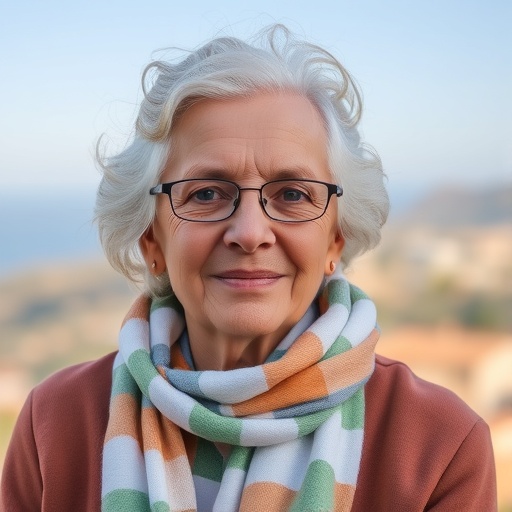
Advancing Healthy Ageing in Greece: Implementing the WHO ICOPE Protocol within the JA PreventNCD Framework
As populations worldwide continue to age rapidly, the imperative to promote healthy ageing has never been more pressing. The aging demographic in Greece, a country with a high percentage of elderly citizens, accentuates challenges in healthcare delivery and sustainability. Against this backdrop, a cutting-edge initiative emerges, framed by the World Health Organization’s Integrated Care for Older People (ICOPE) protocol, tailored into the Joint Action on Prevention of Non-Communicable Diseases (JA PreventNCD) framework. This innovative approach marks a significant stride toward enhancing the quality of life for older adults through early detection, timely intervention, and comprehensive community-based care strategies.
The WHO ICOPE protocol represents a pivotal advancement in geriatric healthcare, providing structured guidelines that prioritize functional ability and intrinsic capacity rather than simply focusing on disease management. This paradigm shift supports the concept that preserving physical, mental, and social capacities can meaningfully delay institutionalization and dependency. By integrating ICOPE within PreventNCD—a robust European initiative aimed at curbing the burden of chronic diseases—the Greek context becomes a fertile ground for deploying a multidimensional, evidence-based model of care.
Tapping into the Greek national health infrastructure, the implementation of the ICOPE protocol under the PreventNCD umbrella emphasizes person-centered care, mobilizing multidisciplinary teams that include physicians, nurses, social workers, and community health agents. This broadened healthcare tessellation aims to anticipate and mitigate functional decline through continual assessment of domains such as mobility, cognition, nutrition, vision, hearing, and mental health. The capacity to generate real-time data on these critical determinants allows for rapid and customized interventions.
Biological aging is inherently heterogeneous, influenced by genetics, environmental exposures, lifestyle, and comorbidities. The ICOPE protocol acknowledges this complexity by recommending standardized screenings that reflect the multidimensionality of aging. Greece’s deployment showcases how local adaptations—taking into account socioeconomic disparities, urban-rural divides, and cultural factors—enhance the practicality and acceptance of the protocol across diverse populations. Digital health tools and telemedicine platforms further empower healthcare providers to reach marginalized elderly populations, facilitating continuous monitoring and engagement.
One of the most notable aspects of the Greek ICOPE-PreventNCD integration is its capacity to address the escalating epidemic of non-communicable diseases (NCDs) among older adults. Cardiovascular diseases, diabetes, chronic respiratory conditions, and neurodegenerative disorders present both a clinical challenge and substantial economic strain. Through proactive functional evaluations and personalized preventive strategies, the initiative aims to forestall disability onset, promote resilience, and extend healthspan.
Besides the clinical angles, the synergy between public health policies and community-based interventions fosters a supportive ecosystem for the elderly. Local governments and non-governmental organizations (NGOs) collaborate to improve accessibility to health services and social support. Programs oriented towards physical activity promotion, nutritional counseling, and mental wellness are integral complements to the ICOPE-guided clinical encounters, showcasing a holistic approach to healthy aging.
Research efforts underpinning the protocol’s adaptation in Greece provide compelling evidence of the protocol’s effectiveness and scalability. Pilot studies reflect promising outcomes in maintaining functional capacities, reducing hospital admissions, and enhancing patient-reported quality of life metrics. These data points encourage policymakers to endorse broad rollouts nationally and potentially extend the model across Southern Europe, where aging populations face comparable healthcare challenges.
Technology integration serves as a cornerstone for success. Utilizing wearable sensors, mobile health applications, and electronic health records allows continuous collection and analysis of intrinsic capacity parameters. This digital ecosystem facilitates predictive analytics, enabling healthcare providers to intervene before irreversible decline sets in. Additionally, continuous education programs ensure that healthcare professionals are proficient in leveraging these advanced tools aligned with ICOPE metrics.
Yet, challenges remain, including overcoming resistance to change in clinical workflows, ensuring data privacy, and addressing digital literacy deficiencies among elderly users. The Greek pilot consciously embeds training modules for caregivers and patients alike, fostering an inclusive environment where older adults actively participate in managing their health trajectory. Such empowerment constitutes a vital element in achieving sustainable, person-centered care.
Financial sustainability and policy alignment are critical to the long-term success of the WHO ICOPE initiative in Greece. The integration within the JA PreventNCD framework benefits from European Union support, linking healthy aging directly to chronic disease prevention and health promotion strategies. This alignment optimizes resource allocation, reduces redundancy, and leverages existing public health infrastructures effectively.
The cultural dimension also plays a significant role. Greece’s strong family traditions and social networks provide a natural foundation for community-oriented aging solutions. The protocol’s design recognizes the importance of social engagement and mental health, integrating assessments of psychological wellbeing alongside physical health. This approach counters loneliness, depression, and cognitive impairments prevalent in ageing populations, further solidifying the comprehensive nature of care.
In spotlighting Greece’s commitment to advancing healthy ageing, this initiative also sets a global example. The combination of WHO’s evidence-based protocol with the JA PreventNCD framework illustrates how international collaborations and tailored national implementations can together reshape aging paradigms. Greece’s strategy offers a blueprint for other nations striving to enhance elderly care amid rising chronic disease burdens and shifting demographic profiles.
A crucial takeaway from the Greek ICOPE implementation highlights the significance of early intervention and prevention. By shifting healthcare focus upstream—prioritizing intrinsic capacity maintenance before severe decline—the model envisaged by WHO and JA PreventNCD holds promise in alleviating strain on specialized geriatric and acute care services. This not only improves individual outcomes but also fosters systemic efficiencies with profound socio-economic implications.
Furthermore, the success of Greece’s integrated approach buttresses the importance of multisectoral engagement. Healthcare professionals, policymakers, technologists, communities, and older adults themselves all have vital contributions to make toward realizing the vision of healthy ageing. By promoting shared ownership and responsibility, the model cultivates resilience within healthcare systems and societies confronting the realities of population ageing.
As this initiative advances toward full national implementation, longitudinal monitoring and impact assessments will provide crucial insights, shaping refinement and scaling strategies. Continuous feedback loops between clinical practice, technological innovation, and community engagement ensure that the evolving needs of Greece’s ageing population are met with agility, compassion, and scientific rigor.
Ultimately, the intersection of the WHO ICOPE protocol with the JA PreventNCD framework in Greece exemplifies a forward-thinking, integrative approach to healthy ageing. It embodies a shift from fragmented, disease-centric models toward inclusive, proactive systems that preserve function and dignity for older adults. This transformative paradigm promises to inspire global efforts to reimagine aging and deliver equitable, sustainable health outcomes in the 21st century and beyond.
Subject of Research: Advancing healthy ageing through integrated care protocols targeting functional ability and non-communicable disease prevention in older adults in Greece.
Article Title: Advancing healthy ageing in Greece: the WHO ICOPE protocol within the JA PreventNCD framework.
Article References:
Adamakidou, T., Koreli, A., Tavassoli, N. et al. Advancing healthy ageing in Greece: the WHO ICOPE protocol within the JA PreventNCD framework. BMC Geriatr (2026). https://doi.org/10.1186/s12877-026-07488-6
Image Credits: AI Generated
Tags: chronic disease management in elderlycommunity-based elder care strategiesearly detection in geriatric careelderly healthcare challenges Greecefunctional ability preservation elderlyhealthy ageing in GreeceIntegrated Care for Older Peopleintrinsic capacity and ageingJA PreventNCD frameworknon-communicable diseases prevention Europesustainable healthcare for ageing populationsWHO ICOPE protocol implementation