• HOME
  • NEWS
  • EXPLORE
    • CAREER
      • Companies
      • Jobs
    • EVENTS
    • iGEM
      • News
      • Team
    • PHOTOS
    • VIDEO
    • WIKI
  • BLOG
  • COMMUNITY
    • FACEBOOK
    • INSTAGRAM
    • TWITTER
Saturday, February 7, 2026
BIOENGINEER.ORG
No Result
View All Result
  • Login
  • HOME
  • NEWS
  • EXPLORE
    • CAREER
      • Companies
      • Jobs
        • Lecturer
        • PhD Studentship
        • Postdoc
        • Research Assistant
    • EVENTS
    • iGEM
      • News
      • Team
    • PHOTOS
    • VIDEO
    • WIKI
  • BLOG
  • COMMUNITY
    • FACEBOOK
    • INSTAGRAM
    • TWITTER
  • HOME
  • NEWS
  • EXPLORE
    • CAREER
      • Companies
      • Jobs
        • Lecturer
        • PhD Studentship
        • Postdoc
        • Research Assistant
    • EVENTS
    • iGEM
      • News
      • Team
    • PHOTOS
    • VIDEO
    • WIKI
  • BLOG
  • COMMUNITY
    • FACEBOOK
    • INSTAGRAM
    • TWITTER
No Result
View All Result
Bioengineer.org
No Result
View All Result
Home NEWS Science News Health

Ancient genetic markers in sockeye salmon can help manage healthier fish stocks

Bioengineer by Bioengineer
May 25, 2017
in Health
Reading Time: 2 mins read
0
Share on FacebookShare on TwitterShare on LinkedinShare on RedditShare on Telegram
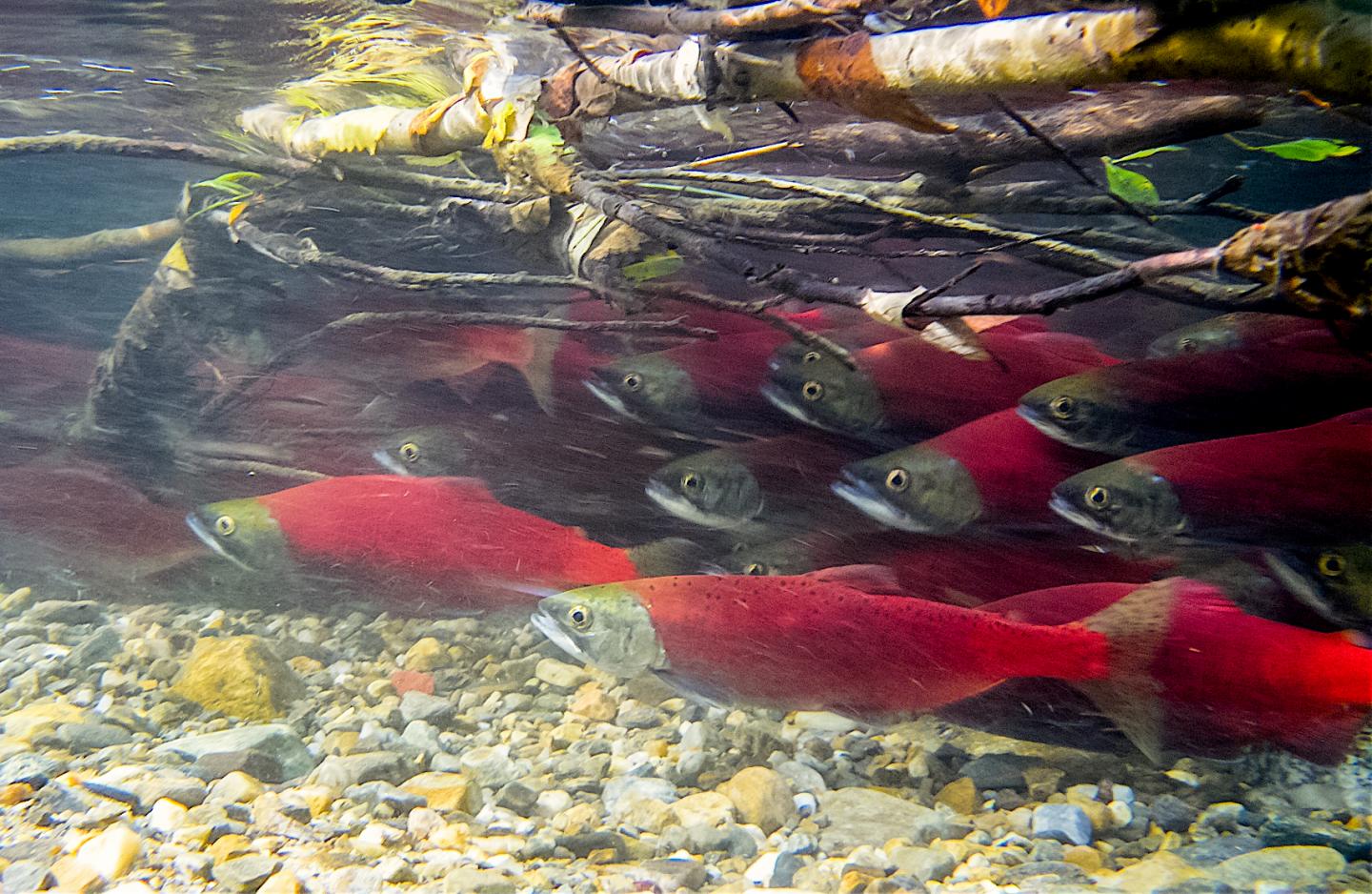
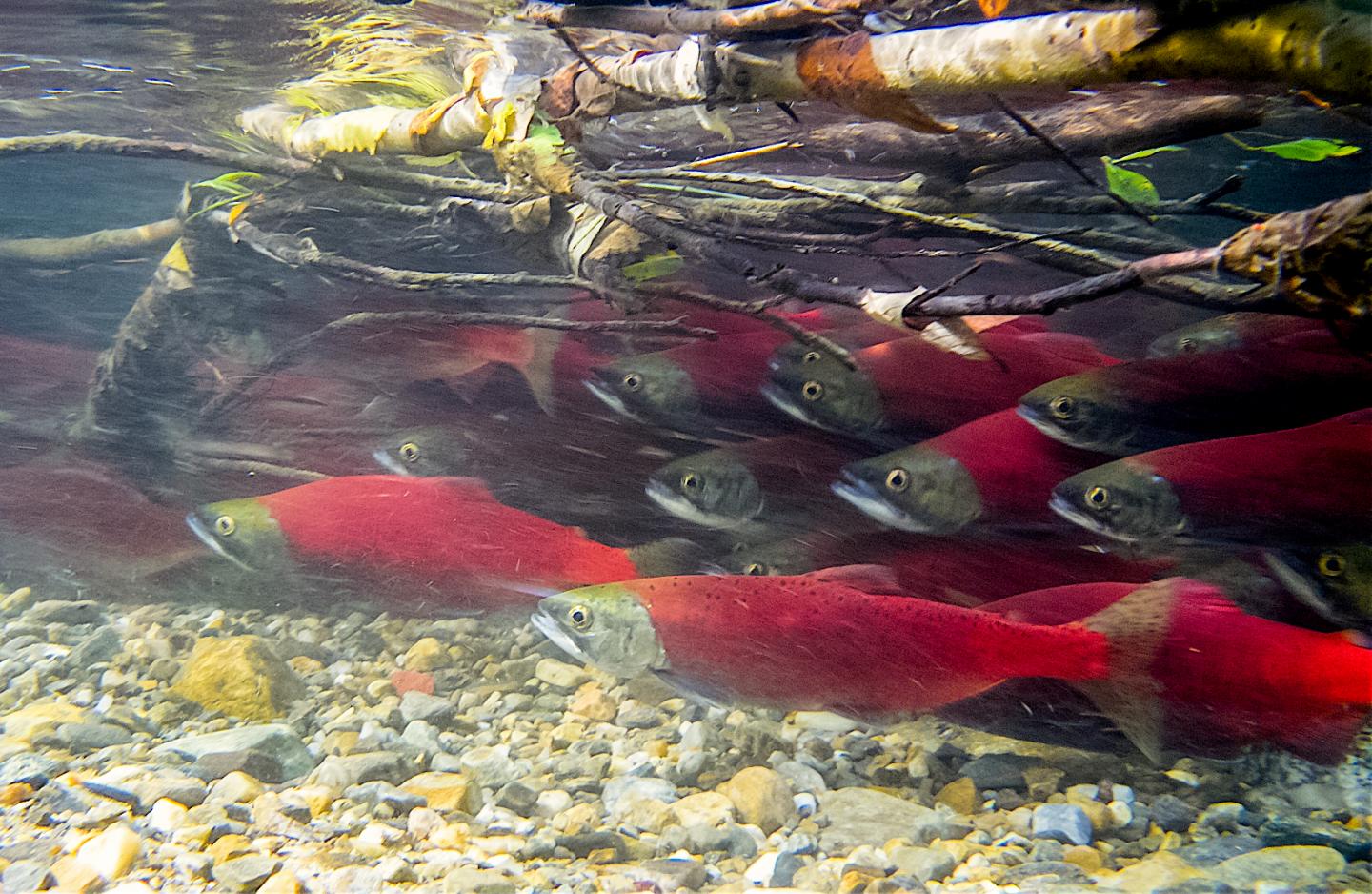
IMAGE

Credit: Kyle Hawes, UBC Okanagan

A recent study from UBC's Okanagan campus identifies new genetic markers in sockeye salmon that can help improve management of fish populations.

The markers, called single nucleotide polymorphisms, are individual locations in the genome that, in this case, allow researchers to distinguish between the different variants of sockeye salmon: those that spawn on lake shore or island beaches and those that spawn in rivers and streams.

"The obvious practical application is in fisheries management," says study senior author Michael Russello, biology professor at UBC Okanagan. "Until now, it was quite challenging and even impossible, in some cases, to identify these different variants outside the spawning season. But the new genetic markers provide a fast, inexpensive and accurate way to tell them apart."

The ability for fisheries managers to precisely identify and monitor the abundance of different sockeye salmon populations is important to helping maintain healthy fish stocks, says Russello. The Ecological and Conservation Genomics Lab is working with fisheries managers to help classify kokanee, a freshwater form of sockeye salmon, to more accurately estimate population numbers, an important key in monitoring the impacts of changes to their habitat and hopefully in preventing future declines in the salmon run.

Russello and former UBC Okanagan post-doctoral associate Andrew Veale (now at the University of Otago) studied populations across the range of sockeye salmon in the United States, Canada, Russia and Japan at these areas in the genome. What they found was remarkably consistent genetic patterns for shore- and stream-spawning sockeye, despite spawning locations spanning different continents.

"What's really exciting are the clues this provides for better understanding the genetic basis of how new forms arise in nature," adds Russello. "In this case, we can estimate that the different sockeye salmon types diverged some 3.8 million years ago, much earlier than we would have predicted. There is incredible potential here to better understand the complex evolutionary history of this species."

###

The study was published in Scientific Reports, an online journal from the publishers of Nature, and was supported by funding from Genome British Columbia, Okanagan Aquatic Enterprises, BC Ministry of Forests, Lands and Natural Resource, and BC Hydro.

Media Contact: Nathan Skolski
Associate Director, Public Affairs
The University of British Columbia | Okanagan Campus
Phone 250-807-9926 | Email: [email protected]

Media Contact

Nathan Skolski
[email protected]
250-807-9926

http://ok.ubc.ca/welcome.html

############

Story Source: Materials provided by Scienmag

Share12Tweet8Share2ShareShareShare2

Related Posts

Evaluating Pediatric Emergency Care Quality in Ethiopia

February 7, 2026

TPMT Expression Predictions Linked to Azathioprine Side Effects

February 7, 2026

Improving Dementia Care with Enhanced Activity Kits

February 7, 2026

Decoding Prostate Cancer Origins via snFLARE-seq, mxFRIZNGRND

February 7, 2026
Please login to join discussion

POPULAR NEWS

  • Robotic Ureteral Reconstruction: A Novel Approach

    Robotic Ureteral Reconstruction: A Novel Approach

    82 shares
    Share 33 Tweet 21
  • Digital Privacy: Health Data Control in Incarceration

    63 shares
    Share 25 Tweet 16
  • Study Reveals Lipid Accumulation in ME/CFS Cells

    57 shares
    Share 23 Tweet 14
  • Breakthrough in RNA Research Accelerates Medical Innovations Timeline

    53 shares
    Share 21 Tweet 13

About

We bring you the latest biotechnology news from best research centers and universities around the world. Check our website.

Follow us

Recent News

Evaluating Pediatric Emergency Care Quality in Ethiopia

TPMT Expression Predictions Linked to Azathioprine Side Effects

Improving Dementia Care with Enhanced Activity Kits

Subscribe to Blog via Email

Success! An email was just sent to confirm your subscription. Please find the email now and click 'Confirm' to start subscribing.

Join 73 other subscribers
  • Contact Us

Bioengineer.org © Copyright 2023 All Rights Reserved.

Welcome Back!

Login to your account below

Forgotten Password?

Retrieve your password

Please enter your username or email address to reset your password.

Log In
No Result
View All Result
  • Homepages
    • Home Page 1
    • Home Page 2
  • News
  • National
  • Business
  • Health
  • Lifestyle
  • Science

Bioengineer.org © Copyright 2023 All Rights Reserved.