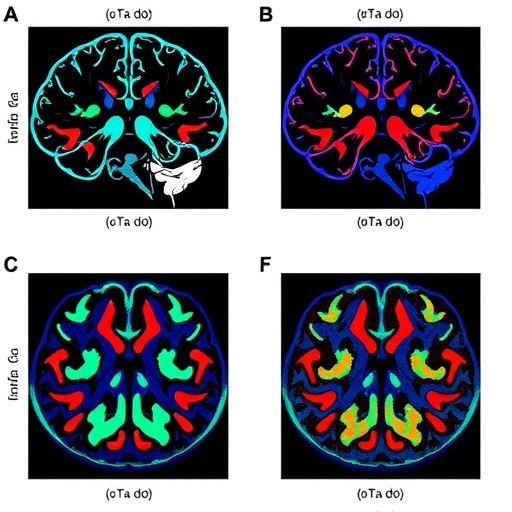
In an unprecedented longitudinal study leveraging advanced magnetic resonance imaging (MRI) technology, researchers have uncovered compelling evidence linking sustained reductions in visceral fat—the metabolically active fat stored deep within the abdominal cavity—to a significant deceleration in brain atrophy and enhancement in cognitive function during late midlife. This work, conducted over a 5 to 16-year period with over 500 participants, elucidates a nuanced relationship between regional adiposity and neurodegenerative trajectories, marking a pivotal advance in our understanding of modifiable risk factors in brain aging.
The investigative team, led by Prof. Iris Shai from Ben-Gurion University of the Negev and Reichman University, alongside collaborators from Harvard University, Leipzig University, and Tulane University, meticulously tracked 533 middle-aged men and women who participated in controlled dietary intervention trials spanning more than a decade. Repeated MRI assessments quantified visceral fat accumulation alongside detailed neuroanatomical measurements and comprehensive cognitive evaluations using the Montreal Cognitive Assessment (MoCA).
Unlike generalized obesity metrics such as body mass index (BMI), which showed no predictive power for brain structural changes, the study zeros in on visceral adiposity as a specific and biologically relevant marker influencing cerebral integrity. Participants exhibiting lower cumulative visceral fat consistently demonstrated preservation of crucial brain structures—including total brain volume, cortical gray matter, and the hippocampus—regions integral to memory formation and cognitive resilience. Correspondingly, there was a deceleration in ventricular enlargement, an established hallmark of neurodegeneration.
Underlying these associations, the research implicates glycemic control and insulin sensitivity as central mechanistic mediators. Elevated fasting glucose and HbA1c levels emerged as significant predictors of accelerated brain atrophy, whereas traditional blood lipid profiles and inflammatory markers bore no such correlation. This metabolic signature supports a model wherein insulin resistance and chronic dysregulation of glucose metabolism compromise cerebral perfusion and blood-brain barrier integrity, precipitating selective gray matter loss and hippocampal vulnerability.
The study’s rigorous design, incorporating repeated MRI measurements alongside cognitive testing, allowed for the unprecedented characterization of cumulative visceral fat exposure over time. Notably, reductions in visceral fat achieved during an 18-month dietary intervention forecasted brain structural preservation even 5 to 10 years later, independently of overall weight loss. This critical finding delineates a clear path for targeted interventions focusing on visceral adiposity rather than general weight metrics.
Dr. Dafna Pachter, the study’s first author, emphasized the limitations of relying solely on weight as a biomarker for metabolic health, highlighting that modest reductions in visceral fat can yield substantial neuroprotective effects. This insight calls for a paradigm shift in clinical and public health approaches, advocating for more precise, MRI-informed assessments of abdominal fat and metabolic status.
The longitudinal nature of the study further solidifies the causal inference between visceral adiposity and neurodegeneration. Subgroup analyses involving three separate brain MRI scans over five years revealed that individuals with persistently elevated visceral fat experienced notably accelerated hippocampal volume loss and ventricular expansion. Importantly, this effect was not paralleled by subcutaneous fat compartments, underscoring the unique pathogenic role of visceral fat in brain aging.
The ramifications of these findings are far-reaching. Identifying visceral fat reduction—and by extension, optimized glucose metabolism—as modifiable targets in midlife opens novel preventative avenues for dementia and age-related cognitive decline. Unlike irreversible genetic predispositions, these metabolic factors offer actionable intervention points amenable to lifestyle modification and clinical therapies.
This seminal research, published in the high-impact journal Nature Communications, represents the most extensive and longitudinal MRI-based investigation to date connecting specific fat depots to brain aging trajectories. The integration of advanced imaging, rigorous dietary interventions, and comprehensive metabolic profiling delivers a multidimensional perspective essential for future neuroprotective strategies.
From a methodological standpoint, the use of repeated, high-resolution MRI scans provided unparalleled precision in quantifying both cerebral and abdominal adiposity changes over time. The combination of neuroimaging biomarkers—including total brain volume, gray matter, hippocampal occupancy score, and ventricular metrics—with cognitive testing furnishes a robust framework for monitoring disease progression and intervention efficacy.
Moreover, the study’s multinational collaboration harnessed expertise across epidemiology, clinical nutrition, neurology, and metabolic research. This interdisciplinary approach was critical in teasing apart the complex interplay between metabolic health and brain integrity, positioning the findings at the forefront of translational neuroscience.
Prof. Iris Shai envisions these findings driving a new clinical focus on glycemic control and visceral fat as measurable, modifiable determinants of brain aging, emphasizing the potential to slow degeneration and diminish the risk of cognitive decline. As the global population ages and the burden of neurodegenerative diseases escalates, this research offers hope for impactful prevention rooted in metabolic health optimization.
The funding for this groundbreaking endeavor came from prominent institutions, including the German Research Foundation’s LeiCeM center of excellence and the ERA-4-Health initiative, underscoring the initiative’s international significance and the scientific community’s commitment to confronting brain aging through innovative metabolic research.
In summation, this groundbreaking study substantiates the pivotal role of visceral adiposity in brain aging and provides compelling evidence that targeted reduction of abdominal fat can attenuate neurodegeneration and enhance cognitive function in midlife. These findings herald a transformative era in preventive neurology—one where metabolic health interventions become integral to preserving brain vitality across the lifespan.
Subject of Research: People
Article Title: Sustained visceral fat loss is associated with attenuated brain atrophy and improved cognitive function in late midlife
News Publication Date: 26-Mar-2026
Web References: https://doi.org/10.1038/s41467-026-71141-4
Image Credits: Credit: Nir Slakman
Keywords: Fat storage, Metabolism, Dietary counseling, Magnetic resonance imaging
Tags: dietary interventions for brain healthimpact of abdominal fat on brain atrophylong-term visceral fat loss and cognitive healthlongitudinal brain imaging and fat reductionmetabolic fat and cognitive functionmiddle-aged cognitive decline preventionmodifiable risk factors for brain agingMRI studies on brain agingneuroanatomical effects of fat lossregional fat distribution and brain structurevisceral adiposity and neurodegenerationvisceral fat versus BMI in brain health