In the realm of minimally invasive medical diagnostics and industrial inspections, fiber endoscopes stand out as remarkable tools due to their slender, flexible design, capable of navigating confined spaces inaccessible to conventional imaging systems. These ultrathin “visual tentacles” hold immense promise for advancing surgical navigation and diagnosis by providing real-time internal images without the need for extensive incisions. Yet, as the quest for minimizing probe size intensifies, a fundamental challenge persists: procuring clear, precise, and reliable images through these ultra-compact endoscopes remains an obstinate hurdle.
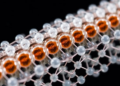
Emerging at the forefront of this technological pursuit are multi-core fibers (MCFs), which revolutionize the architecture of fiber optic probes by removing distal optics. This design alteration drastically diminishes the endoscope’s diameter and complexity, allowing for novel applications and less invasive procedures. The intrinsic structure of MCFs—comprising numerous discrete fiber cores arranged typically in hexagonal arrays—functions akin to a densely packed grid of minuscule sampling apertures. However, this configuration introduces unique imaging peculiarities. Specifically, the discrete nature gives rise to characteristic honeycomb artifacts in the reconstructed images, a pervasive distortion that compromises image clarity and diagnostic reliability.
Traditional post-processing efforts, including interpolation, filtering, and deep learning techniques, have been deployed to ameliorate these artifacts. Nonetheless, these methods frequently encounter significant limitations—whether in the scope of restoration effectiveness, the challenges involved in obtaining comprehensive training datasets, or in their interpretability concerning the physical underpinnings of the artifacts. Generalization across varied imaging contexts also remains suboptimal. Addressing these multifaceted challenges necessitates an approach deeply grounded in the physics of image formation within MCF systems.
A pioneering research team has introduced SGARNet, an innovative physics-informed neural network framework explicitly crafted for lensless multi-core fiber imaging. The cornerstone of their approach lies in revealing and harnessing the frequency-domain characteristics inherent to honeycomb artifacts. By analyzing the spatial arrangement of fiber cores and their impact on image sampling, the team elucidated that the hexagonal layout induces periodic traces in the frequency spectrum of captured images. These traces manifest as discrete, prominent peaks aligned with the geometric lattice of the fiber cores. Recognizing these spectral signatures as the artifact’s fingerprints provided a critical pathway to targeted correction strategies.
Building upon this foundational insight, the researchers engineered a novel spectral filtering module termed SpectralGate. Unlike conventional neural network layers that primarily operate in the spatial domain, SpectralGate functions as a frequency-domain sieve embedded within the network architecture. This module selectively attenuates spectral components correlated with honeycomb artifact formation while safeguarding frequency bands carrying vital image details. The integration of SpectralGate enables SGARNet to perform artifact suppression with heightened physical interpretability, steering the restoration process beyond blind data-driven corrections toward informed, physics-congruent image recovery.
The SGARNet framework employs a lightweight image restoration pipeline, carefully positioning the SpectralGate module at junctures optimized for mitigating global periodic artifacts without incurring substantial computational overhead. This architectural design not only enhances artifact suppression efficacy but also renders the system suitable for real-time imaging applications—an essential feature for dynamic clinical and industrial environments where rapid feedback is imperative.
Experimental validation of SGARNet underscores its robust performance across varied imaging complexities. For images with straightforward textures, the network excels in faithfully restoring colors, enhancing contrast, and recovering structural fidelity. More challengingly, for images rich in fine details and complex patterns, SGARNet excels at suppressing pervasive honeycomb artifacts without eroding critical visual information. These capabilities were rigorously tested using the USAF 1951 resolution target, a benchmark in optical imaging, where the system consistently resolved fine line structures down to approximately 2.1 micrometers, closely corresponding to the physical dimensions of fiber cores.
Further extending their empirical studies, the team applied SGARNet to biological samples, encompassing diverse tissue types such as wheat caryopsis, nerve tissue, mushroom cross-sections, and woody dicot stems. The results demonstrated marked enhancement in image clarity and artifact removal, providing compelling evidence of the method’s applicability to real-world biomedical imaging. Notably, SGARNet’s training on projection-based synthetic data exhibited impressive transferability to complex, real-sample imaging scenarios, validating its robustness and versatility.
This breakthrough signifies a substantial leap forward in endoscopic imaging technology, where the fusion of physical insight and advanced neural architecture converges to overcome longstanding challenges. By embedding domain-specific information within deep learning models, the researchers have set a new paradigm for artifact removal in lensless multi-core fiber systems, paving the way for ultrathin, high-performance imaging probes capable of facilitating precise, minimally invasive interventions.
Ultimately, SGARNet embodies a novel synthesis of physics and machine learning, enhancing the interpretability and generalizability of deep image restoration approaches in fiber optic contexts. Its efficient design and real-time feasibility position it as a transformative tool in the biomedical imaging arsenal, with potential applications extending into industrial inspection and beyond. The scientific community and clinical practitioners alike stand to benefit from these advancements, as clearer, artifact-free images empower more accurate diagnoses and superior procedural guidance.
In conclusion, the development of SGARNet exemplifies how meticulous understanding of underlying physical phenomena, combined with innovative computational techniques, can surmount entrenched technical barriers. As fiber-based imaging continues to miniaturize and proliferate across diverse domains, solutions like SGARNet will be crucial drivers of progress, delivering clarity and precision from the most delicate and constrained environments within the human body and industry.
Subject of Research: Development of a physics-guided neural network for artifact removal in lensless multi-core fiber imaging.
Article Title: SGARNet: a deep artifact removal approach for lensless multi-core fiber imaging
Web References: DOI link
Image Credits: Liangcai Cao et al.
Keywords
Multi-core fiber, fiber endoscope, lensless imaging, honeycomb artifact, Fourier frequency domain, physics-guided neural network, image restoration, SpectralGate, artifact removal, biomedical imaging, minimally invasive diagnosis, real-time imaging
Tags: deep learning artifact correctionfiber endoscopy imagingfiber optic probe advancementshexagonal fiber core arrayhoneycomb artifact removalindustrial inspection imagingminimally invasive medical imagingmulti-core fiber opticsphysics-guided neural networksreal-time internal imaging techniquessurgical navigation imagingultra-compact endoscope design