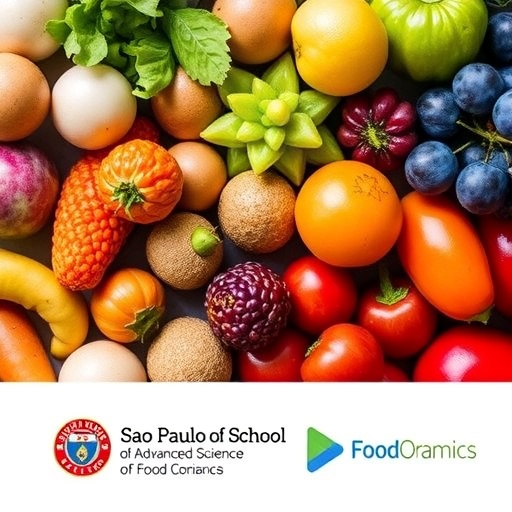
The São Paulo School of Advanced Science (SPSAS) on FoodOmics is set to take place from September 13 to 26, 2026, at the School of Food Engineering of the State University of Campinas (FEA-UNICAMP) in São Paulo, Brazil. This prestigious event will gather a diverse international community of researchers, students, and early-career scientists, focusing on the exciting and transformative field of FoodOmics. The interdisciplinary nature of FoodOmics integrates various omics technologies to unravel the complexities inherent in food and nutrition systems, encompassing every stage from agricultural production to human consumption.
FoodOmics represents an innovative frontier in scientific research, employing high-throughput technologies such as genomics, proteomics, metabolomics, and transcriptomics to achieve a comprehensive understanding of food systems. These omics platforms enable researchers to decipher intricate biochemical and molecular interactions that influence food quality, safety, and nutritional benefits. The comprehensive approach facilitated by FoodOmics transcends traditional food science, fostering a holistic grasp of how foods interface with biological systems and affect human health outcomes through molecular-level insights.
The two-week program of SPSAS on FoodOmics is meticulously designed to foster both theoretical comprehension and practical expertise. Participants will engage with a variety of educational formats, including expert keynote lectures, interactive poster sessions, and rigorous hands-on workshops. Emphasizing experiential learning, the school offers advanced training on state-of-the-art analytical instruments and bioinformatics tools central to omics research, thereby empowering attendees with the skills necessary to conduct high-impact FoodOmics investigations.
In addition to didactic sessions, participants will benefit from technical visits to cutting-edge laboratories at UNICAMP and the Brazilian Center for Research in Energy and Materials (CNPEM). These visits will provide unparalleled exposure to world-class research infrastructures, such as mass spectrometry platforms and next-generation sequencing facilities, further enriching the educational experience. Cultural activities interwoven throughout the program will promote intercultural exchange and foster networking among the global cohort of emerging and established scientists.
Prominent figures in global FoodOmics research will headline the conference, lending their expertise and pioneering contributions to elevate the discourse. Notably, Professor Alejandro Cifuentes, who originally coined the term FoodOmics and is affiliated with the Instituto de Investigación en Ciencias de la Alimentación in Spain, will share his visionary insights. Other distinguished speakers include Professor Jianguo Xia from McGill University, renowned for developing the widely used MetaboAnalyst platform for integrative metabolomics data analysis, Professor Mónica Cala Molina from Universidad de Los Andes and head of the Latin-American Society of Metabolic Profile, and Professor Hector Henrique Ferreira Koolen, coordinator of the Legal Amazon Metabolomics Network.
The school anticipates enrolling around 200 participants encompassing undergraduate and graduate students along with postdoctoral researchers. The selection committee aims to assemble a richly diverse group, reflecting a spectrum of nationalities, genders, ethnicities, and academic disciplines. The projected composition includes 125 participants from São Paulo state, 25 from other Brazilian regions, and 50 international attendees. This deliberate inclusivity underscores the commitment to fostering a multifaceted scientific community dedicated to advancing FoodOmics.
Registration will remain open until May 31, 2026, and can be completed via the official event website. Prospective attendees are encouraged to submit their applications promptly to secure a place in this highly competitive and sought-after program. Journalists and science communicators are also invited to register and participate in the school’s scientific sessions and short courses, which will showcase cutting-edge discoveries and technical advancements in FoodOmics research.
Financial support for SPSAS on FoodOmics is generously provided by The São Paulo Research Foundation (FAPESP) via its São Paulo School of Advanced Science program. This funding model ensures equitable access by covering all essential costs for participants residing outside Campinas. Travel expenses, accommodation, daily meals, in-country transportation during school activities, and travel insurance for international attendees will be fully sponsored, eliminating financial barriers and promoting broad participation.
FAPESP’s commitment to excellence in scientific research is well established, as it supports myriad projects across disciplines in São Paulo state. The foundation maintains strategic partnerships with global research agencies and academic institutions to promote collaborative innovation. By facilitating opportunities such as SPSAS on FoodOmics, FAPESP is actively cultivating the next generation of scientists poised to lead transformative food and nutrition research on an international scale.
FoodOmics as an emerging discipline combines genomics, metabolomics, and bioinformatics to dissect the molecular basis of food systems and their influence on human physiology. The ability to integrate multi-omics data revolutionizes our understanding of nutrient bioavailability, food safety, and the mechanisms underpinning diet-related health effects. This holistic approach promises breakthroughs in personalized nutrition, sustainable food production, and functional foods that promote optimal health.
Hosting the School at UNICAMP, one of Latin America’s leading research universities, offers additional advantages. UNICAMP’s robust infrastructure and rich academic environment form an ideal backdrop for interdisciplinary collaboration. Coupled with Brazil’s biodiversity and unique food resources, the School serves as a fertile ground for groundbreaking FoodOmics research tailored to regional and global challenges.
The inclusion of laboratory tours at CNPEM highlights the School’s commitment to linking theory with frontline research technologies. CNPEM’s facilities include synchrotron radiation sources and advanced omics platforms that facilitate high-resolution structural and molecular analyses. Exposure to these technologies enhances participants’ capacity to pursue innovative experimental designs and comprehensive data interpretation frameworks in their future careers.
By convening international experts and cultivating a nurturing environment for emerging scientists, SPSAS on FoodOmics represents a landmark initiative. It accelerates knowledge creation at the intersection of food science, molecular biology, and data analytics. This gathering not only advances scientific frontiers but also builds a global community poised to tackle pressing challenges related to food security, nutrition, and public health in an increasingly complex world.
The event harnesses networking and collaborative synergy to inspire novel research directions and methodologies tailored for the FoodOmics domain. These include the development of biomarkers for food quality and disease risk, metabolomic profiling of indigenous plant species, and exploration of food-microbiome interactions. The collaborative environment fosters cross-disciplinary problem-solving critical for translating omics findings into tangible societal benefits.
In summary, the São Paulo School of Advanced Science on FoodOmics is a landmark event set to propel the frontier of food and nutrition research through integrative omics sciences. Supported by FAPESP and anchored at UNICAMP, the school provides an exceptional platform for knowledge exchange, skill development, and international cooperation. It represents a critical investment in shaping future leaders capable of leveraging FoodOmics technologies to transform global food systems for health, sustainability, and innovation.
Subject of Research: FoodOmics and its application in food science, nutrition, and omics technology integration
Article Title: The São Paulo School of Advanced Science on FoodOmics: Advancing Horizons in Food and Nutrition Research
News Publication Date: 2026-09-13
Web References:
– https://espca.fea.unicamp.br/
– https://espca.fea.unicamp.br/application/
– https://www.metaboanalyst.ca/
– http://espca.fapesp.br/home
Keywords
FoodOmics, omics technologies, metabolomics, genomics, proteomics, nutrition science, food safety, UNESCO-UNICAMP, São Paulo Research Foundation, FAPESP, research collaboration, advanced scientific training
Tags: advanced food engineering education Brazilagricultural production to human consumption food systemsfood quality and safety molecular analysisgenomics proteomics metabolomics transcriptomicshands-on foodomics training programhigh-throughput foodomics methodsinterdisciplinary foodomics research 2026international foodomics researchers conferencenutritional benefits of foodomicsomics technologies in food scienceSão Paulo School of Advanced Science FoodOmicsState University of Campinas FoodOmics event