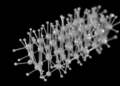
In a groundbreaking advance at the intersection of quantum technology and cellular biology, researchers from the National Institutes for Quantum Science and Technology (QST) in Japan, in collaboration with The University of Tokyo and Kyushu University, have unveiled a novel class of molecular quantum nanosensors capable of operating within the complex milieu of living cancer cells. These molecular quantum nanosensors (MoQNs) mark a paradigm shift in intracellular sensing, delivering unprecedented precision in temperature measurement and spin detection with subcellular specificity. Published in Science Advances on April 29, 2026, this work addresses one of biology’s most formidable challenges: achieving quantitative, high-resolution physical and chemical mapping inside living cells.
Traditional intracellular quantum sensing platforms—ranging from nitrogen-vacancy centers in nanodiamonds to semiconductor quantum dots and genetically encoded fluorescent probes—have long faced intrinsic limitations. These include heterogeneous material properties causing inconsistent sensor responses, challenges in achieving absolute thermometric accuracy amid cellular complexity, and biocompatibility issues that compromise cellular viability or sensor stability. The newly developed MoQNs surmount these obstacles by integrating pentacene molecular spin qubits embedded within para-terphenyl nanocrystals, themselves coated in the biocompatible surfactant Pluronic F127, yielding nanoscale sensors with molecular-level uniformity and preserved quantum coherence in physiological conditions.
Contrast to defect-based solid-state quantum sensors, which rely on vacancy creation in rigid crystalline lattices and suffer from spectral variability, MoQNs circumvent these pitfalls by embedding molecular spin qubits into nanocrystalline hosts without inducing defects. This careful materials engineering drastically reduces particle-to-particle heterogeneity in resonance spectra and consequently enhances the reliability of absolute temperature readings at single-particle resolution inside living cells. Crucially, the team confirmed that MoQNs can be internalized by living cells without detriment to membrane integrity, metabolic function, or cell-cycle dynamics, affirming their suitability for live-cell quantum sensing studies.
The quantum functionalities of these molecular sensors manifest robustly within intracellular environments. The researchers demonstrated continuous-wave optically detected magnetic resonance (ODMR) detection alongside hallmark quantum phenomena such as Rabi oscillations and spin-echo coherence measurements, alongside T1 spin relaxation analysis. To further refine thermometric sensitivity, they molecularly engineered the ODMR spectral profile by incorporating fully deuterated pentacene variants, termed dMoQNs, which fine-tune electron-nuclear spin interactions and mitigate decoherence.
Harnessing the enhanced dMoQNs, the team achieved absolute temperature sensing within the cytoplasm of living cancer cells with exceptional precision. Their observations consistently revealed that intracellular temperature exceeds that of extracellular media, and importantly, this temperature elevation varies spatially within the cytoplasm—a finding that underscores previously unappreciated thermal heterogeneity at the nanoscale within living cells. Extending these studies to the cellular nucleus, the researchers successfully delivered dMoQNs into nuclear compartments, presenting the first maps of absolute temperature distribution within subnuclear domains. These data reveal localized thermal microenvironments, suggesting intricate thermoregulation mechanisms active at the organelle level.
Beyond temperature mapping, the MoQN platform exhibits striking versatility by detecting radical-related spin species within living cancer cells. Upon treating cells with hydrogen peroxide to induce oxidative stress, the sensors detected localized variations in spin relaxation and coherence signatures in both cytoplasmic and nuclear regions. This capability heralds a new frontier in intracellular redox biology, where MoQNs can provide real-time, spatially resolved insights into radical-mediated biochemical processes, potentially illuminating pathways of oxidative damage and signaling that are pivotal in cancer progression and therapy resistance.
This research thus presents MoQNs as a chemically adaptable quantum sensing platform, combining nanoscale spatial resolution, molecular-level tunability, and full biocompatibility. By preserving quantum coherence under physiological conditions and enabling absolute thermometry along with radical spin detection in live cells, MoQNs chart a course towards advanced, minimally invasive bio-quantum measurements. Such innovations promise to unlock new dimensions in intracellular thermodynamics, biochemical microenvironment sensing, and augment the toolkit for future quantum-biological investigations and medical diagnostics.
Dr. Hitoshi Ishiwata, who leads the Quantum Bioengineering Team at QST and also holds a professorship at Chiba University’s Center of Quantum Life Science for Structural Therapeutics (cQUEST), emphasized the significance of this leap: “This work shows that MoQNs can operate directly inside living cells while maintaining the precision needed for absolute thermometry. We believe this opens a new route toward quantitative quantum measurement of intracellular environments.” His pioneering research integrates nanoscale quantum technologies to interrogate biological processes with label-free, high-resolution acuity.
In addition to the fundamental scientific advancements, this study lays foundational groundwork for practical applications spanning biomedical research, drug development, and clinical diagnostics. The ability to accurately measure intracellular temperature gradients and radical species could provide insights into cellular metabolism, stress responses, and disease mechanisms at unparalleled resolutions. It broadens the horizon for quantum-enabled investigations into the physicochemical landscapes that govern cell function and pathology.
The development of MoQNs is supported by a synthesis of cutting-edge chemistry, quantum physics, and nanotechnology. Pentacene molecules, selected for their favorable spin properties, are embedded into para-terphenyl nanocrystals engineered for optimal quantum coherence. The surface coating with Pluronic F127 imparts biocompatibility and colloidal stability, facilitating cellular uptake without cytotoxicity. This interdisciplinary approach exemplifies how strategic molecular design can overcome the historical limitations of intracellular quantum sensors.
Furthermore, the study showcases the adaptability of molecular quantum nanosensors to modifications such as deuteration to enhance performance. By carefully tuning electron-nuclear spin interactions, the researchers improved the ODMR spectral resolution and thermometric precision. This molecular engineering underscores the unique advantage of MoQNs over conventional solid-state quantum sensors, whose characteristics are often fixed by crystal defects and difficult to manipulate post-synthesis.
In conclusion, the MoQN platform represents a transformative leap in intracellular sensing technologies. It offers reliable, high-fidelity quantum measurements directly inside living cells, enabling biological discoveries and medical advancements previously out of reach. As quantum technologies integrate increasingly with life sciences, tools like MoQNs are poised to become indispensable for exploring the nanoscale frontiers of cell biology and for developing innovative quantum-assisted diagnostics and therapeutics.
Subject of Research: Cells
Article Title: Molecular Quantum Nanosensors Functioning in Living Cells
News Publication Date: 29-Apr-2026
Web References:
https://doi.org/10.1126/sciadv.aeb5422
https://www.qst.go.jp/site/qst-english/
References:
DOI: 10.1126/sciadv.aeb5422
Image Credits:
National Institutes for Quantum Science and Technology, Japan
Keywords
Quantum sensing, molecular quantum nanosensors, intracellular thermometry, spin detection, living cancer cells, pentacene molecular spin qubits, para-terphenyl nanocrystals, biocompatible quantum sensors, optically detected magnetic resonance, Rabi oscillations, spin-echo, T1 relaxometry, molecular engineering, oxidative stress sensing, nanoscale thermodynamics, quantum bioengineering
Tags: biocompatible quantum sensors Pluronic F127high-resolution chemical mapping inside cellsintracellular temperature measurement with quantum sensorsmolecular spin qubits for cellular sensingovercoming limitations of nitrogen-vacancy quantum sensorspara-terphenyl nanocrystals for biosensingpentacene-based quantum nanosensorsquantitative intracellular spin detectionquantum molecular nanosensors in living cellsquantum sensing of radical activity in cancer cellsquantum technology in cellular biologystable quantum coherence in physiological conditions