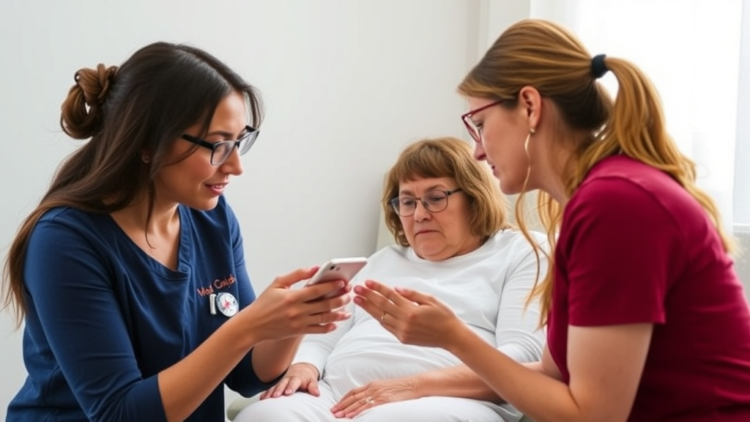
In an era increasingly defined by health consciousness and environmental awareness, the intersection of scientific research and public understanding has become paramount. A recent study published in the Journal of Exposure Science and Environmental Epidemiology pushes this frontier forward, examining the effectiveness of report-back methods in conveying individualized research results to participants. Specifically, the study focuses on how brief video report-backs can enhance the communication of indoor air quality data collected from residential settings, aiming to evaluate both the acceptability of this communication method and its impact on knowledge acquisition and behavior modification.
The concept of report-back transcends mere data dissemination; it is an active engagement strategy whereby researchers return personalized results to participants, thereby closing the loop on the research process. Traditional methods often involve dense reports or numerical data dumps, which can leave participants bewildered or disengaged. Addressing this gap, the research team explored video-based communication as a more accessible and user-friendly medium. Unlike lengthy textual reports, a concise video presentation holds promise for demystifying complex scientific information, making it easier for the general public to understand and act upon.
Indoor air quality (IAQ) is a critical public health concern, particularly as modern lifestyles result in extended periods spent indoors. Pollutants ranging from particulate matter and volatile organic compounds to allergens and molds can adversely affect respiratory health and overall well-being. Despite its significance, awareness and proactive management of IAQ remain limited among many households. By delivering individualized IAQ data through tailored videos, the researchers hypothesized that participants would not only grasp the risks but also feel empowered to implement practical changes aimed at improving their indoor environments.
The study conducted by Huntington-Moskos et al. involved recruiting residents from diverse urban and suburban homes, equipping these households with sensors to collect real-time IAQ measurements. Once data collection was complete, participants received a brief video report outlining their specific air quality profiles, highlighting areas of concern, potential sources of pollutants, and actionable steps for mitigation. The videos were designed with simplicity and clarity in mind, employing accessible language, engaging visuals, and direct calls to action to foster comprehension and motivation.
A key aspect evaluated was the “acceptability” of this report-back format. Acceptability pertains to how well participants received and processed the video information, including their satisfaction with the communication style, length, and relevance. This assessment is crucial because even the most accurate data, if poorly communicated, fails to inspire behavioral change. The researchers systematically gathered feedback through surveys and interviews, comparing participant responses to video report-backs against traditional data-sharing methods.
Results demonstrated a significant preference for video-based report-back. Participants described the videos as “informative,” “engaging,” and “easy to understand,” with many appreciating the personalized nature of the content. This positive reception suggests that video not only bridges the comprehension gap but also builds a sense of individualized attention, which is often lacking in broader public health messaging. Many participants reported feeling more confident about their IAQ status and expressed a stronger intention to implement mitigation strategies such as increasing ventilation or using air purifiers.
Equally important was the assessment of usability. Usability, in this context, refers to the practical ease with which participants could access and navigate the video content, including playback on various devices and the clarity of presented information. The study noted minimal technical issues, with most participants managing to view the report-back videos without difficulty. This simplicity of access is especially critical in ensuring equitable dissemination, so that individuals across age groups and technological proficiency levels can benefit from personalized environmental health data.
One striking finding was the tangible influence of video report-back on actual behavior change. Follow-up surveys conducted weeks after receiving their individualized reports found that participants who viewed video reports were more likely to adopt indoor air quality improvement practices compared to those who received traditional reports or no feedback at all. This behavioral shift underscores the transformative potential of using modern communication tools in environmental health research to directly impact public well-being.
The implications of these findings reach far beyond indoor air quality. Report-back, particularly through innovative media, can become a standard practice in environmental and public health research, encouraging transparency and participant empowerment. By personalizing data and delivering it in engaging formats, researchers can foster a more informed public, better equipped to make decisions that support their health and safety. This methodological shift could also enhance recruitment and retention rates in longitudinal studies by building trust and ongoing engagement among participants.
Moreover, the application of video report-backs aligns with the broader digital transformation in science communication. With the ubiquity of smartphones, tablets, and internet connectivity, researchers have unprecedented opportunities to harness multimedia content for impactful knowledge transfer. When designed thoughtfully, such communication tools can overcome barriers like scientific jargon, data overload, and low literacy, democratizing access to vital environmental health information.
Despite its promise, the study highlights critical considerations for future implementation. Videos must be carefully crafted to balance simplicity with scientific accuracy, avoiding oversimplification that could mislead audiences. Additionally, cultural relevance, language diversity, and accessibility features such as closed captioning should be integrated to maximize inclusivity. Researchers and public health practitioners must also monitor for unintended consequences, such as undue anxiety or misinterpretation of data.
This study marks a pioneering step by Huntington-Moskos and colleagues in empirically testing how innovative communication strategies can enhance the public’s understanding of individualized environmental health risks and promote proactive behavior changes. In doing so, it challenges traditional paradigms of data dissemination and advocates for a participant-centered approach that respects and values the diverse needs of research participants. As environmental research continues to unravel complex exposures and health outcomes, such report-back innovations will be vital in bridging the gap between science and society.
In summary, the integration of brief, user-friendly video report-back mechanisms offers a compelling pathway to improve public engagement with environmental health data. Through clear visualization and personalized narratives, these videos forge connections that transcend passive data delivery, empowering individuals to become active stewards of their health environments. This study not only enriches scientific dialogue around indoor air quality but also exemplifies how digital tools can revolutionize the communication and impact of environmental health research.
As environmental challenges mount globally, fostering informed public participation becomes a cornerstone of effective health protection strategies. Efforts such as those of Huntington-Moskos et al. highlight the critical role of thoughtful communication innovations in transforming data into action. Ultimately, enabling participants to fully comprehend and respond to their own health data could catalyze widespread improvements in indoor air quality, contributing to healthier homes and communities worldwide.
The study encourages environmental researchers, clinicians, and policymakers to prioritize participant-centered communication approaches. By leveraging multimedia tools appropriately, public health messages can resonate more deeply, inspiring lasting changes with meaningful effects. Integrating video report-back into routine research practices could transform how individuals engage with scientific findings, driving a new era of transparency, empowerment, and environmental health improvement.
Future research directions include exploring the scalability of video report-back interventions across diverse populations and environmental contexts. Comparative studies examining different multimedia formats and interactivity levels could further refine best practices for delivering personalized environmental data. Additionally, long-term studies are warranted to assess the sustained impact of video report-backs on behavior and health outcomes, solidifying their role in environmental health promotion.
Embracing these communication advancements reflects a growing recognition that public understanding and engagement are as crucial as data collection in advancing environmental health. The study’s findings open the door to a more collaborative relationship between scientists and communities, where personalized data becomes a dialogue catalyst, fostering collective action towards healthier indoor environments. Such integration heralds a promising future where environmental science transcends laboratories and reports, becoming a vibrant force in everyday decision-making.
Subject of Research:
Communication of individualized residential indoor air quality data through brief video report-back methods to assess knowledge acquisition and behavior change.
Article Title:
Acceptability and usability of a brief video report-back to share individualized residential indoor air quality data.
Article References:
Huntington-Moskos, L., Bimbi, O., Cramer, E. et al. Acceptability and usability of a brief video report-back to share individualized residential indoor air quality data. J Expo Sci Environ Epidemiol (2026). https://doi.org/10.1038/s41370-026-00908-0
Image Credits: AI Generated
DOI: 29 April 2026
Tags: behavior change from environmental databrief video report-back methodscommunicating complex scientific informationenvironmental epidemiology outreachhealth-conscious communication strategiesindoor air quality data sharingparticipant engagement in researchpersonalized environmental health communicationpublic understanding of scientific researchreport-back acceptability and effectivenessresidential indoor air monitoringvideo-based health education