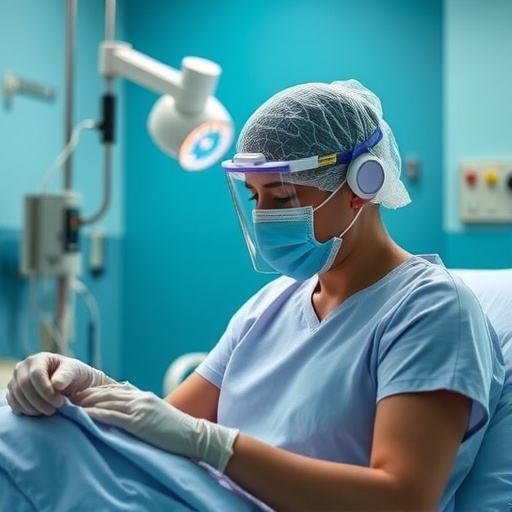
In the realm of neurocritical care, time is the most precious commodity. The brain, an extraordinarily sensitive organ, can suffer irreversible damage within minutes when deprived of adequate oxygen. Unlike other tissues that withstand hypoxia over longer durations, the brain demands rapid and precise interventions to avoid lasting harm. However, clinical experience has repeatedly revealed the limitations of conventional monitoring methods in intensive care units (ICUs). Even when standard parameters suggest stability, neuronal injury may quietly progress, leaving physicians grappling with the disparity between observable data and patient outcomes.
This paradoxical scenario troubled Dr. Carlos Nassif, an intensive care physician devoted to neurological patients. Despite strict adherence to existing protocols that monitor intracranial pressure (ICP), cerebral perfusion pressure (CPP), and systemic blood pressure, certain patients exhibited neurological decline. These findings indicated that current metrics might not fully capture the brain’s true physiological status. Driven to bridge this critical gap, Dr. Nassif embarked on a clinical study to evaluate a novel Brazilian technology designed to assess intracranial compliance and cerebral dynamics with unprecedented sensitivity.
The technology, pioneered by the Brazilian startup brain4care, utilizes a non-invasive sensor incorporated into a comfortable headband. Unlike traditional ICP monitoring, which requires surgical implantation of intracranial probes, this sensor detects subtle micro-movements of the skull bone synchronized with each heartbeat. These minute oscillations, once thought impossible to measure due to the skull’s presumed rigidity, are converted into signals that precisely reflect intracranial compliance—the skull’s ability to accommodate volume changes without deleterious pressure elevations. This breakthrough enables continuous, real-time assessment of brain mechanical properties without the inherent risks associated with invasive procedures.
Historically, neurocritical care has largely depended on ICP and CPP values calculated from mean arterial pressure and intracranial pressure differences. These parameters have guided therapeutic decisions for decades, based on the Monro-Kellie doctrine established in the 18th century. This doctrine posits that the cranial compartment is a fixed volume where any increase in brain tissue, blood, or cerebrospinal fluid demands compensatory reductions to prevent raised intracranial pressure. However, the rigid interpretation of this principle left unanswered nuances, such as individualized cerebral perfusion thresholds and dynamic compliance changes during critical illness.
brain4care’s sensor offers a transformative perspective, revealing that the skull is not an inert structure but instead exhibits micro-movements correlated with hemodynamic fluctuations. By analyzing waveform patterns generated from these movements, clinicians can discern whether the brain is in a protected or distressed state. This capability enables highly personalized hemodynamic management, recognizing that optimal cerebral perfusion pressure may vary significantly between patients depending on age, preexisting hypertension, injury severity, and recovery stage. For example, a blood pressure appropriate for one patient could exacerbate cerebral edema in another if applied without nuance.
In clinical trials conducted at Hospital 9 de Julho and Hospital das Clínicas in São Paulo, Dr. Nassif’s team compared the outcomes of patients managed traditionally against those monitored with brain4care’s compliance technology. The study included severely ill neurological patients, many requiring mechanical ventilation and vasopressors, thus providing a rigorous test of the technology’s clinical utility. The results were striking: patients monitored with the non-invasive compliance sensor experienced a dramatic reduction in mortality rates, dropping from 37.25% in the control group to just 5.88%. Additionally, these patients showed a higher rate of functional independence at discharge and significantly shorter ICU and hospital stays.
This improvement stems largely from the technology’s ability to detect cerebral distress before conventional ICP rises, permitting preemptive interventions rather than reactive treatments. Complementing this, the study highlighted that over 80% of patients had dangerously low cerebral oxygenation levels despite normal ICP and CPP readings. Such “silent” brain injury underscores the inadequacy of traditional parameters and the critical role of intracranial compliance monitoring in revealing hidden brain hypoxia.
From an economic standpoint, the technology promises substantial savings. Neurological ICU care is extraordinarily costly, with daily expenses ranging from BRL 13,000 to BRL 15,000 per patient. By shortening hospital stays, reducing readmission rates, and increasing the proportion of patients discharged directly home rather than to extended care facilities, brain4care’s device demonstrates potential to alleviate financial burdens on healthcare systems. This affordability is further enhanced by the device’s non-invasive nature, eliminating the need for surgical implantation, high-cost disposables, and specialized teams typically required for intracranial monitoring.
Beyond traumatic brain injuries, which the World Health Organization cites as a primary cause of death and disability worldwide, this technology could profoundly affect stroke management and other neurological emergencies. It also holds promise for broadening neurocritical care accessibility to hospitals with fewer specialized resources, thanks to its simplicity and safety profile. The potential expansion of its use includes monitoring cerebral perfusion aberrations in septic shock patients—a group often neglected concerning brain function despite frequently suffering subsequent neurologic decline.
The Brazilian initiative spearheaded by brain4care recalibrates long-standing neurological paradigms, underscoring the dynamic nature of the cranial compartment and the necessity for individualized, real-time brain monitoring techniques. This paradigm shift was heralded by Sergio Mascarenhas, whose foundational work disproved the notion of an entirely immobile skull and set the stage for this innovative technology. Combining cutting-edge physics with clinical insight, brain4care’s approach heralds a new era in neurocritical patient care marked by precision, accessibility, and profound impacts—both medically and economically.
As further studies expand the evidence base across diverse patient populations and hospital settings, the technology is poised to redefine standards of care in neurological ICUs globally. Dr. Nassif eloquently summarizes the endeavor’s ultimate mission: ensuring that patients not only survive severe brain injuries but return to meaningful, productive lives. This pioneering work not only places Brazil at the forefront of neurocritical innovation but also exemplifies how advanced medical technology can emerge from visionary local research, transforming care while remaining affordable and scalable.
Subject of Research: Intracranial compliance monitoring and neurocritical care management
Article Title: Impact of hemodynamic management guided by intracranial compliance on the outcome of critically ill patients – preliminary results and exploratory economic evaluation
News Publication Date: 30-Jan-2026
Web References: DOI link, FAPESP news
Image Credits: brain4care
Keywords: Brain injuries, Sensors, Hospitals, Public health
Tags: brain injury prevention in ICUbrain4care startupBrazilian medical technology advancementscerebral perfusion pressure assessmentcritical care patient outcomeshypoxia brain damage detectionintensive care neurological monitoringintracranial pressure monitoring technologyneuro ICU patient protectionneurocritical care innovationnon-invasive brain sensorsnon-invasive intracranial compliance monitoring