In recent years, the resurgence of measles infections in the United States has raised significant public health concerns. In 2025, the country witnessed over 2,000 reported cases across 43 states, marking the largest outbreak since measles was declared eradicated in the year 2000. Crucially, the majority of those affected were unvaccinated, spotlighting the persistent challenges posed by vaccine hesitancy. A comprehensive study conducted by researchers at Johns Hopkins University delves deeply into how media consumption patterns, particularly among followers of right-leaning digital outlets, correlate with vaccine hesitancy—a phenomenon that may be undermining public health efforts to control vaccine-preventable diseases.
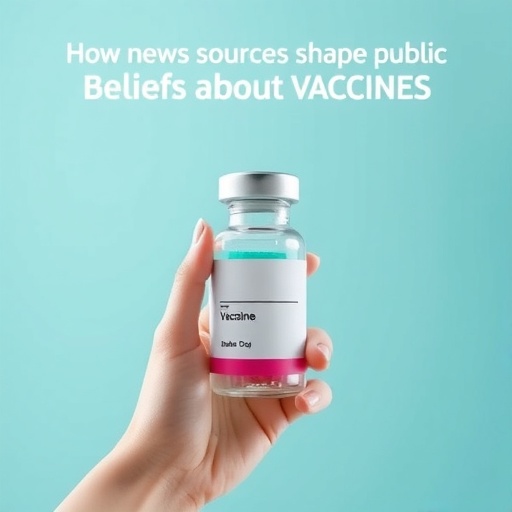
The study surveyed nearly 3,000 adults in 2025 to explore their media engagement patterns and their perceptions of the measles-mumps-rubella (MMR) vaccine. By analyzing respondents’ reported sources of information, political orientations, and attitudes toward vaccination, the research aimed to identify how modern digital media landscapes shape health beliefs. The findings revealed a noteworthy association: individuals who regularly consumed content from “new right” media outlets, such as Breitbart, Newsmax, and Zero Hedge, were more than twice as likely to exhibit vaccine hesitancy compared to those who did not engage with these channels. This suggests that the ideological slant of news sources plays a pivotal role in shaping public attitudes on vaccination.
Vaccine hesitancy remains a multifaceted issue influenced by various social, political, and informational factors. The study’s evidence underlines the critical impact of non-authoritative information sources. Adults hesitant about vaccines were more inclined to depend on alternative health providers, influential social media health figures, and newsletters offering unorthodox health perspectives, such as those from the Children’s Health Defense network. This reliance exposes individuals to misinformation or incomplete information, potentially exacerbating distrust in established vaccines like MMR.
A remarkable aspect of the study was the characterization of what researchers termed “selective media engagement.” Most respondents—approximately 87%—indicated regular news consumption across multiple platforms. However, those who endorsed vaccination tended to avoid or minimize their engagement with ideologically conservative “new right” digital news outlets and questionable health information providers. Conversely, vaccine-hesitant individuals demonstrated a pronounced preference for such sources, highlighting a media consumption gap that appears to reinforce their skepticism.
Further demographic analysis enriches the understanding of the vaccine-hesitant profile. The hesitant group skewed significantly younger, with 62% under the age of 44, and more likely to be parents, indicating potential implications for childhood vaccination rates. Additionally, these individuals were more likely to identify as racial minorities, come from lower-income households, and possess lower educational attainment. Politically, they leaned more conservative, with higher identification as Republicans or Independents, and exhibited greater affiliation with the Make America Healthy Again (MAHA) movement, suggesting intertwining cultural and political factors that influence health choices.
The findings also underscore the importance of the physician-patient relationship in ameliorating vaccine hesitancy. Engagement with medical professionals emerged as a strong protective factor against skepticism. Those who sought and trusted authoritative health information were less likely to question vaccine safety and efficacy. This insight points to the strategic significance of enhancing communication channels between healthcare providers and communities, especially in digital environments saturated with competing narratives.
Epidemiologically, the decline in MMR vaccine coverage—to 93% among school children—falls short of the 95% threshold necessary for herd immunity against measles. This shortfall creates vulnerabilities that enable outbreaks to persist and spread. Since the COVID-19 pandemic, vaccination rates have steadily declined, influenced by growing misinformation and politicization surrounding vaccines. The Johns Hopkins study elucidates these dynamics by linking media-driven information ecosystems with behavioral health outcomes.
Understanding how media consumption influences vaccine perceptions carries broader implications amid a polarized information landscape. The intersection of digital media proliferation and public health communication presents both challenges and opportunities. Strategies seeking to counteract vaccine misinformation must account not only for the content delivered but also for the trust dynamics and audience segmentation evident in contemporary information environments.
This research contributes a valuable data-driven perspective to the ongoing discourse on vaccine hesitancy. It challenges public health communicators to rethink outreach efforts, emphasizing tailored messaging that resonates across diverse ideological and demographic groups. As the measles outbreak continues, bridging information gaps becomes paramount to reinstating widespread vaccine confidence and safeguarding public health.
Future research directions may involve longitudinal studies to assess the evolution of media influence on vaccine attitudes over time, as well as interventional trials testing targeted communication strategies. Moreover, cross-disciplinary approaches that integrate systems science, epidemiology, and behavioral psychology could foster more nuanced frameworks to tackle vaccine hesitancy in complex social contexts.
In sum, the Johns Hopkins University study compellingly demonstrates that media preferences and consumption patterns are inextricably linked to vaccine attitudes. It calls attention to the digital battleground where health beliefs are formed and contests public health narratives, marking an urgent frontier for intervention amidst rising measles cases and falling vaccination rates nationwide.
Subject of Research: Media consumption patterns and their association with vaccine hesitancy regarding the measles-mumps-rubella (MMR) vaccine.
Article Title: “New Right Media Consumption Doubles Likelihood of Vaccine Hesitancy amid Rising Measles Cases: A Nationwide Survey”
News Publication Date: 2025
Web References:
Johns Hopkins Study Publication: https://www.sciencedirect.com/science/article/abs/pii/S0264410X26003762?dgcid=coauthor
US Measles Tracker: https://publichealth.jhu.edu/ivac/resources/us-measles-tracker
Coverage Decline Article: https://hub.jhu.edu/2025/06/03/united-states-measles-vaccination-rate-declines/
References:
Gardner L., Jamison A., Saiyed S., et al. (2025). Association Between Media Habits and Vaccine Hesitancy: Insights from a National Survey. Vaccine.
Keywords: Vaccine Hesitancy, Measles, MMR Vaccine, New Right Media, Media Studies, Public Health Communication, Vaccine Coverage, Alternative Health Information, Digital Media Influence, COVID-19 Pandemic Impact, Herd Immunity, Media Polarization
Tags: correlation between political orientation and vaccine acceptancedigital media consumption and health beliefsideological bias inimpact of right-leaning digital media on vaccination beliefsJohns Hopkins vaccine perception study 2025measles-mumps-rubella (MMR) vaccine public perceptionmedia influence on public health attitudesresurgence of measles in the United States 2025role of new right media in vaccine misinformationvaccine hesitancy and measles outbreaksvaccine-preventable disease control challenges