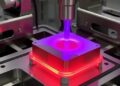
In a groundbreaking study that could revolutionize the management of food allergies, researchers at McGill University have unveiled a novel method using cold plasma technology to significantly reduce the allergenic potential of peanut proteins. This innovative approach promises not only to alleviate allergic reactions triggered by peanuts but also to enhance the functional properties of peanut proteins critical to food manufacturing, offering exciting possibilities for hypoallergenic food development.
Cold plasma, an ionically charged gas known to induce various chemical transformations, has been employed briefly to treat whole peanut proteins extracted from peanuts. Unlike previous treatments that focus on isolated allergenic components, this research emphasizes the entire peanut protein matrix, closely mirroring real-life consumption where individuals encounter a complex array of protein structures. The researchers observed that the treatment altered peanut protein structures, leading to a profound reduction in their capacity to bind with immune system antibodies, a key mechanism behind allergic reactions.
Peanut allergy represents one of the most pervasive and severe food allergies globally, largely due to the robustness and immunogenicity of peanut proteins. Traditional approaches aimed at reducing allergenicity, such as heating or irradiation, have had limited success and often compromise the sensory qualities of peanuts — notably taste, aroma, and appearance. The cold plasma technique circumvents these limitations by providing a non-thermal alternative that maintains the sensory and nutritional qualities of peanuts while diminishing their allergenic potential.
The study, meticulously led by Jin Wang during his doctoral research at McGill University and now a professor at Southeast University in China, demonstrated a nearly 70 percent decrease in the immunoreactivity of peanut proteins after a 25-minute cold plasma treatment. Immunoreactivity was measured via in vitro assays assessing the binding strength of immune antibodies to treated peanut proteins, serving as a surrogate marker for allergenic elicitation potential in humans.
An intriguing aspect of the research is the discovery that the cold plasma treatment predominantly increased nitrite levels in the peanut proteins, whereas levels of hydrogen peroxide, often implicated in protein modification in similar studies, remained unchanged. This suggests a previously underappreciated role for nitrites in mediating structural modifications that attenuate allergenic properties. Understanding these chemical modifications is crucial for optimizing the treatment process and tailoring it for broader applications beyond peanuts.
Moreover, beyond its potential to diminish allergenicity, the cold plasma treatment enhanced the digestibility of peanut proteins. The proteins became more readily broken down within simulated intestinal environments, potentially reducing the persistence of allergenic epitopes in the gastrointestinal tract. This dual effect—lowered immunoreactivity and increased digestibility—could be key to developing safer, more tolerable peanut-containing foods for allergic individuals.
The implications of these findings extend far beyond peanuts. The research team envisions applying this technology to a spectrum of other food allergens including eggs, hazelnuts, and potentially more. Given the diverse and complex nature of food allergen proteins, the ability to weaken allergenicity through targeted protein modifications without compromising food quality represents a paradigm shift in food allergen management.
A significant advantage of this approach lies in the feasibility of creating hypoallergenic peanut protein powders, which could be utilized as ingredients in a variety of food products. This opens avenues for the food industry to innovate and diversify product offerings for populations with peanut allergies, a demographic that traditionally faces severe dietary restrictions and health risks.
While the technology is still in the optimization phase, the researchers plan to delve deeper into the molecular mechanisms underpinning cold plasma–induced modifications. The role of reactive nitrogen species, especially nitrites, will be a key focus to enhance treatment efficacy and to ensure that the functional attributes of proteins crucial for food processing are preserved or improved.
This promising research aligns with global efforts to mitigate the public health impacts of food allergies, which affect millions worldwide and can lead to life-threatening anaphylactic reactions. The potential to reduce allergenicity through non-thermal, non-invasive methods offers a compelling alternative to existing treatment paradigms, including dietary avoidance and immunotherapy.
The study titled “Effect of cold plasma processing on the immunoreactivity, structure and functional properties of peanut protein,” was comprehensively documented in the Journal of Future Foods, highlighting its scientific rigor and innovative approach. Funding from prominent Chinese research foundations underscores the significance and international collaboration involved in this work.
As food allergies continue to impose social, economic, and healthcare burdens globally, technologies like cold plasma treatment bring hope for safer, more inclusive food options. Future research and industrial scaling may soon transform nuts and other allergenic foods from potential hazards to safer staples, fundamentally reshaping our relationship with these common allergens.
Subject of Research:
Not applicable
Article Title:
Effect of cold plasma processing on the immunoreactivity, structure and functional properties of peanut protein
News Publication Date:
1-Mar-2026
Web References:
DOI: 10.1016/j.jfutfo.2024.09.004
Keywords:
Peanut allergy, cold plasma, immunoreactivity, food allergens, protein modification, hypoallergenic food, nitrite chemistry, food science, food processing, non-thermal treatment, protein digestibility, allergenicity reduction
Tags: chemical modification of peanut proteinscold plasma treatment for peanut allergyfood allergy management innovationsfood manufacturing and allergen controlhypoallergenic peanut protein developmentimmune system antibody binding reductionimproving peanut protein functionalityMcGill University allergy researchnovel food processing technologiespeanut allergy global health impactpreserving sensory qualities in allergen reductionreducing peanut protein allergenicity