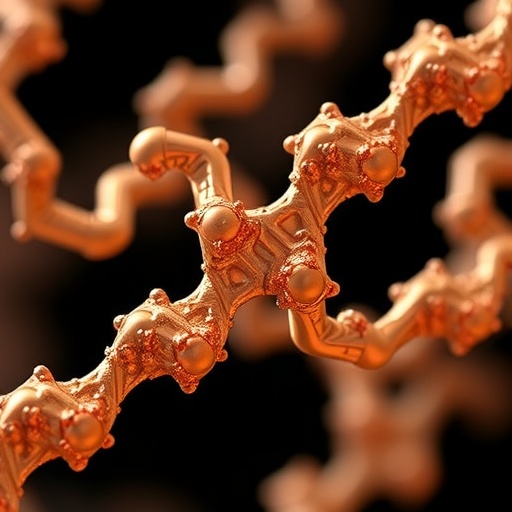
In a groundbreaking advancement at the intersection of structural biology and cutting-edge imaging technology, an international consortium of researchers has successfully elucidated atomic-resolution structures of the enzyme copper nitrite reductase (CuNiR) using state-of-the-art X-ray Free Electron Laser (XFEL) technology. This enzyme plays an indispensable role in the global nitrogen cycle, specifically catalyzing the reduction of nitrite ions into nitric oxide (NO) gas—a process fundamental for both environmental biochemistry and microbial metabolism.
The research, carried out through a synergistic collaboration between teams at the University of Liverpool, Japan’s University of Hyogo, and Argentina, harnessed the unparalleled brilliance and ultrafast pulse durations of XFEL beams generated at SACLA, the XFEL facility located in Japan. Unlike traditional synchrotron X-ray sources, XFELs produce femtosecond pulses with intensities that enable the capture of diffraction patterns before radiation damage can compromise molecular integrity. This property has allowed scientists, for the first time, to visualize protein structures with atomic precision free from artifacts induced by X-ray exposure.
Copper nitrite reductase is a metalloenzyme active in denitrification pathways integral to nitrogen cycling. By facilitating the electron-driven and proton-coupled conversion of nitrite into nitric oxide—a gaseous signaling molecule—CuNiR is pivotal in modulating nitrogen flux in ecosystems. Despite its biological prominence, the atomistic details of its catalytic mechanism have remained elusive for decades, largely due to the difficulty of capturing transient intermediates and dynamic protonation states. The current study confronts these challenges head-on by deploying XFEL-based crystallography alongside sophisticated computational refinement algorithms.
Central to their structural investigation is the resolution of a long-standing debate regarding CuNiR’s catalytic sequence—whether it follows a random sequential mechanism or a strictly ordered series of substrate and cofactor interactions. The crystallographic snapshots, captured at different stages of enzymatic turnover, unequivocally demonstrate an ordered mechanism. Data reveal a delicate choreography wherein electron transfer from the copper center, substrate binding, and proton donation occur in a coordinated and temporally gated fashion, thereby elucidating the enzyme’s remarkable efficiency and specificity.
Utilizing the high photon energies exceeding 13 keV, the XFEL pulses—of approximately ten femtoseconds duration—afforded diffraction data that were processed using the SHELXL refinement software. This program, renowned for its precision in small-molecule crystallography, was innovatively adapted for macromolecular data, enabling the researchers to refine electron density maps with unprecedented clarity. The integration of these tools marks a significant methodological leap, showcasing that atomic-level precision in protein structures, once only attainable through small-molecule crystallography, is now within reach via XFEL methods.
The implications of this work extend beyond enzymology, heralding a transformative era in biomolecular imaging where radiation damage-free snapshots can reveal ephemeral states critical to function. By capturing XFEL diffraction images before deleterious chemical transformations ensue, the team ensured that observed structures represent true physiological intermediates rather than post-irradiation artifacts. This fidelity is crucial for mechanistic studies of redox-active enzymes, where subtle changes in oxidation states and ligand geometries dictate biological outcomes.
Dr. Svetlana Antonyuk from the University of Liverpool emphasized the transformative potential of XFELs in structural biology, noting that the use of ultra-short, high-energy X-ray pulses “can be successfully harnessed to provide atomic resolution structures that are free from X-ray induced redox or chemical changes.” This capability is vital for accurately characterizing metalloproteins like CuNiR, where metal centers undergo delicate redox cycling during catalysis. The elimination of radiation-induced alterations paves the way for new insights into the enzymatic function under near-native conditions.
Professor Samar Hasnain highlighted the tribute to Professor George Sheldrick, acknowledging the revolutionary impact of the SHELXL refinement approach on macromolecular crystallography. Their work stands at a confluence of technological innovation and analytical rigor, as it is the first published study to apply the SHELXL method to XFEL-derived atomic resolution protein structures. This pioneering application signals a paradigm shift in how crystallographic data from large biomolecules can be processed, boosting both accuracy and interpretability.
The biological significance of copper nitrite reductase also ties into broader environmental considerations, particularly in understanding nitrogen turnover and its influence on greenhouse gas emissions and soil fertility. Nitric oxide generated by CuNiR functions as a crucial mediator in microbial ecosystems, influencing processes such as nitrification and denitrification that regulate nitrogen availability. Hence, molecular-level insights into CuNiR aid not only fundamental science but also environmental stewardship and potentially biotechnological applications aimed at managing nitrogen fluxes.
The study’s publication in the prestigious journal Nature Communications underscores the scientific community’s recognition of its importance. Through the precise visualization of enzymatic intermediate states, the authors offer a template for future investigations into other complex metalloenzymes and biomolecular machines. The amalgamation of advanced experimental modalities with computational refinement heralds an era where biomolecular dynamics can be dissected with atomic fidelity in real time.
In summary, the groundbreaking work by Antonyuk, Hasnain, Tosha, Yamamoto, and their colleagues exemplifies the frontiers of modern structural biology enabled by XFEL technology. Their atomic-resolution maps of copper nitrite reductase illuminate fundamental biochemical processes that have wide-reaching implications—from enzymatic catalysis to environmental nitrogen cycling. This research not only resolves longstanding mechanistic controversies but also sets a new benchmark for the application of femtosecond X-ray crystallography in the life sciences.
Subject of Research: Structural elucidation of copper nitrite reductase enzyme and its catalytic mechanism using advanced XFEL techniques.
Article Title: Atomic-Resolution Insights into Copper Nitrite Reductase Catalysis via XFEL Crystallography
Web References:
https://www.nature.com/articles/s41467-026-70261-1
References:
Published in Nature Communications.
Keywords
Copper nitrite reductase, XFEL, femtosecond X-rays, atomic resolution, enzyme catalysis, nitrogen cycle, metalloproteins, SHELXL refinement, biochemistry, structural biology.
Tags: atomic-resolution enzyme imagingcopper nitrite reductase enzyme structureenvironmental biochemistry of nitrogenfemtosecond X-ray diffractionmetalloenzyme catalytic mechanismmicrobial nitrogen metabolismnitrite reduction to nitric oxidenitrogen cycle enzymatic processesproton-coupled electron transfer enzymesSACLA XFEL facility researchX-ray Free Electron Laser technologyXFEL protein crystallography