Temperature Extremes and Nestling Vulnerability: New Insights from Barn Swallow Growth Patterns
In the ever-changing world of avian biology, understanding how environmental factors influence the early developmental stages of birds is crucial. A recent comprehensive study focused on barn swallow nestlings in Colorado sheds new light on how temperature fluctuations distinctly affect the growth of the most vulnerable baby birds. This research emphasizes that the youngest, smallest, and seemingly most neglected nestlings bear the brunt of extreme temperature ranges and variability, revealing nuanced developmental constraints that govern early life stage growth trajectories.
Birds, like many other animals, are ectotherms and experience direct physiological impacts from ambient temperature shifts. However, the degree to which temperature fluctuations influence the growth of nestlings depends heavily on their developmental stage and condition within the brood. The study scrutinized 113 nestlings, carefully analyzing their growth under varying thermal conditions. Notably, it found a stark differentiation in how temperature extremes impacted nestlings based on their size and level of parental attention, highlighting that small, less cared-for chicks faced significantly more pronounced growth impediments.
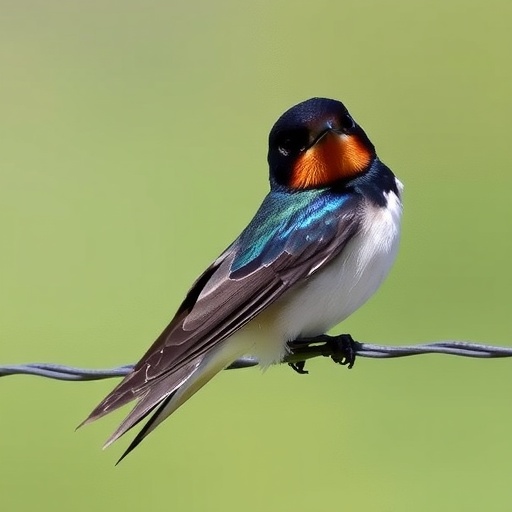
The barn swallow (Hirundo rustica) serves as an indispensable model organism for ornithologists and ecologists studying environmental effects on development. Its mud cup nests, often located in human-made structures, provide an excellent vantage point for examining how microclimate variations influence early life stages. Researchers harnessed detailed monitoring techniques to correlate nestling growth rates with ambient temperatures, revealing a multifaceted dynamic wherein developmental constraints amplify vulnerability to temperature stressors.
Central to the findings is the concept of developmental constraints—intrinsic biological limitations that affect how organisms grow in response to environmental pressures. The smallest nestlings, often outcompeted for food and parental care, displayed limited physiological resilience to thermal variability. These constraints manifest in reduced growth rates during periods of temperature extremes, suggesting that the interplay between environmental factors and internal growth mechanisms determines survival odds and fitness in early life.
One of the compelling aspects of this study is its demonstration that thermal impacts are not uniform across nestlings. While some cope effectively with changing temperatures, others suffer exacerbated growth delays under the same conditions. This disparity is likely rooted in energetic allocation priorities; vulnerable nestlings may have insufficient energy reserves to buffer thermal stress, leading to compromised development during critical growth phases. Consequently, these findings challenge the assumption that temperature effects on nestling growth are homogenous within broods.
Methodologically, the research employed longitudinal data collection across multiple nesting seasons, capturing fine-grained temperature measurements alongside nestling morphometrics. Using growth modeling techniques, the scientists disentangled the relative influence of temperature from other ecological variables such as food availability and parental behavior. This robust approach allowed for a precise characterization of temperature-dependent growth patterns and their interaction with nestling developmental stages.
The implications extend beyond barn swallow biology, offering valuable insights into how climate change-induced temperature volatility may disproportionately affect avian populations. As extreme weather patterns escalate globally, understanding species-specific vulnerabilities becomes critical for conservation strategies. The demonstrated susceptibility of the smallest and least advantaged chicks underscores the potential for shifting population dynamics driven by environmental stressors acting at the earliest life stages.
Parental care dynamics also emerge as a pivotal factor mediating temperature impacts. In barn swallows, parental feeding and brooding behaviors serve as buffers against harsh thermal environments. However, when parental investment is unevenly distributed, neglected nestlings endure compounded stress. This relationship highlights the complex interplay between biotic and abiotic factors shaping developmental outcomes and stresses the importance of behavioral ecology in climate resilience research.
Moreover, the structural characteristics of barn swallow mud cup nests contribute to the microclimatic conditions experienced by the nestlings. Nest architecture, orientation, and placement can modulate temperature exposure, influencing thermal buffering capacity. The study’s detailed attention to nest site features provides a holistic understanding of environmental pressures, integrating physical habitat parameters with biological responses in a real-world context.
From a physiological perspective, temperature influences crucial metabolic processes in nestlings, including energy expenditure, thermoregulation, and growth hormone activity. Fluctuating temperatures necessitate adaptive physiological responses, which can be energetically costly, further disadvantaging weaker chicks. Understanding these bioenergetic trade-offs enriches our comprehension of developmental plasticity and raises pertinent questions about the evolutionary pressures that shape early life stage adaptations.
This research, funded primarily by the U.S. National Science Foundation and conducted by a dedicated team at the University of California, Davis, represents a significant advance in ecological developmental biology. Its findings contribute to an expanding body of literature emphasizing the importance of fine-scale environmental heterogeneity in shaping organismal growth and survival. The study exemplifies the integration of field ecology, robust experimental design, and physiological analysis to unravel complex biological phenomena.
Ultimately, these insights highlight the critical need for ongoing monitoring and protective measures for vulnerable avian populations facing the dual threats of climate change and habitat alteration. By pinpointing the nestlings most at risk from temperature extremes, conservationists can better target interventions to mitigate developmental constraints and promote population resilience. This comprehensive understanding equips both scientists and policymakers with actionable knowledge to safeguard biodiversity in an era of rapid environmental change.
Subject of Research: Temperature impacts on nestling growth and developmental constraints in barn swallows.
Article Title: The effects of temperature on nestling growth in a songbird depend on developmental constraints.
News Publication Date: 22-Apr-2026.
Web References: DOI link – http://dx.doi.org/10.1371/journal.pone.0334815
Image Credits: Sage Madden, CC-BY 4.0
Keywords: barn swallow, nestling growth, temperature extremes, developmental constraints, climate change, avian biology, thermal variability, parental care, physiological resilience, ecological developmental biology
Tags: avian biology temperature sensitivitybarn swallow ecological researchbarn swallow nestling growthColorado bird development studydevelopmental constraints in nestlingsectothermic bird physiological responseseffects of temperature fluctuations on avian growthenvironmental stressors on bird developmentgrowth challenges in small nestlingsparental care variation in barn swallowstemperature extremes impact on birdsvulnerability of baby barn swallows