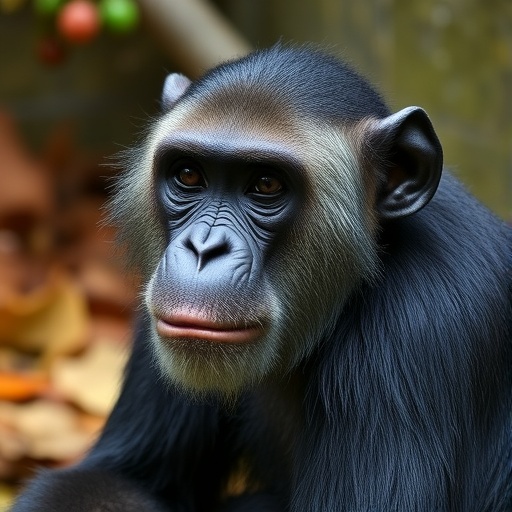
A groundbreaking initiative spearheaded by researchers from the University of Stirling in collaboration with the Max Planck Institute has culminated in the creation of the most comprehensive dataset ever compiled on great ape cognition. This endeavor promises to revolutionize our understanding of the evolutionary underpinnings of human intelligence by providing unprecedented access to a vast array of cognitive and behavioral data collected from great apes over nearly two decades.
The study of cognition in our closest evolutionary relatives—great apes such as chimpanzees, bonobos, gorillas, and orangutans—offers invaluable insights into the foundational mechanisms that shaped human cognitive evolution. Yet, previous research has been hampered by limited sample sizes and fragmented datasets, constraining the scope and depth of comparative analyses. Addressing these limitations, the newly unveiled EVApeCognition dataset amalgamates experimental data from over 260 studies conducted over an 18-year period, integrating findings from approximately 150 publications and involving more than 80 individual apes. This unprecedented scale provides a rich empirical basis for understanding cognitive development and variation in these species.
Led by Dr. Alejandro Sanchez-Amaro of the University of Stirling’s Faculty of Natural Sciences, the EVApeCognition project represents a monumental effort to standardize and consolidate disparate studies into a consistent, open-access resource. By harmonizing diverse methodologies and datasets, the project transcends typical small-scale cognitive experiments, enabling researchers to undertake robust meta-analyses and longitudinal studies. Dr. Sanchez-Amaro emphasizes that this dataset possesses immense potential for both scientific inquiry and education, spanning disciplines such as psychology, evolutionary biology, and anthropology.
The significance of EVApeCognition lies not only in its scale but also in its methodological rigor. The dataset incorporates carefully curated cognitive assessments encompassing various domains—including problem solving, social learning, memory, and communication—across multiple great ape species. Collected primarily at the Wolfgang Köhler Primate Research Centre, a long-standing hub for comparative cognition research established by the Max Planck Institute and Leipzig Zoo, the data reflects standardized experimental paradigms applied consistently over time, allowing for direct comparison and replication.
Great apes are members of the Hominidae family, sharing a close evolutionary lineage with humans. Chimpanzees and bonobos, in particular, diverged from a common ancestor with humans roughly six million years ago, rendering their cognitive capacities especially informative for reconstructing the evolutionary trajectory of human intelligence. The dataset offers a powerful lens into how cognitive abilities develop within and vary between individuals, shedding light on mechanisms that may parallel those in early human ancestors.
Dr. Daniel Haun, director at the Max Planck Institute for Evolutionary Anthropology and principal investigator of the project, underscores the dataset’s transformative potential. He notes that EVApeCognition facilitates the synthesis of smaller, fragmented studies into a unified framework, enabling researchers to ask broader, more integrative questions about cognition that were previously out of reach. The availability of such an extensive, open-access dataset also democratizes research, opening doors for multidisciplinary collaboration and innovation.
One of the paramount challenges EVApeCognition addresses is the typical scarcity of ape participants per study, which often restricts the statistical power and generalizability of findings. By pooling data across studies and species, the project mitigates these constraints, permitting analyses that can disentangle species-specific traits, developmental continuities, and individual differences. This also paves the way for exploring longitudinal patterns and the ontogeny of cognitive functions, addressing questions that single studies cannot resolve.
The process of compiling EVApeCognition involved meticulous data standardization and rigorous internal review protocols to ensure reliability and comparability. Collaborative contributions from over 100 co-authors worldwide attest to the dataset’s collaborative spirit and collective investment by the scientific community. This open-access repository exemplifies best practices in data sharing, transparency, and reproducibility—principles increasingly vital in contemporary scientific inquiry.
Importantly, EVApeCognition serves as a pedagogical tool as well, offering educators and students in psychology, biology, and related fields the opportunity to engage with authentic, large-scale data. The dataset’s breadth allows for diverse research projects, spanning from fundamental cognitive theory to applied conservation efforts. By fostering hands-on interaction with empirical data, EVApeCognition enhances training and inspires future generations of researchers.
The timing of the dataset’s release coincides with the 25th anniversary of the Wolfgang Köhler Primate Research Centre, highlighting a quarter-century legacy of pioneering primate cognition research. As such, EVApeCognition both consolidates historic work and charts a forward path, embodying a synthesis of tradition and innovation. It is a landmark contribution poised to influence comparative cognition, behavioral ecology, and evolutionary science for years to come.
The manuscript detailing this extensive dataset is published in the journal Scientific Data, signaling the research’s technical sophistication and robust data-focused approach. A dedicated GitHub repository accompanies the publication, allowing seamless access to the dataset for scientific reanalysis, new experimental design, and cross-institutional studies. The Max Planck Institute’s funding underscores the project’s high-profile institutional support and commitment to advancing knowledge on great ape cognition and by extension, human cognitive evolution.
By enabling the scientific community to rigorously explore cognitive traits across a wide sample of great apes, EVApeCognition promises to deepen our understanding of the roots of intelligence, social complexity, and learning in our closest relatives. This endeavor not only bridges gaps between fragmented studies but also invites integrative, interdisciplinary approaches that can elucidate the evolutionary forces shaping human minds. In essence, EVApeCognition stands as a monumental stride in decoding the mysteries of cognition from our shared ancestry to the present day.
Subject of Research: Animals
Article Title: EVApeCognition: An 18-Year Dataset of Great Ape Cognition
News Publication Date: 9-Apr-2026
Web References:
EVApeCognition Dataset on Zenodo: https://zenodo.org/records/18849382
Manuscript in Scientific Data: http://dx.doi.org/10.1038/s41597-026-07191-6
Project GitHub Repository: https://github.com/ccp-eva/EVApeCognition
Image Credits: MPI for Evolutionary Anthropology
Keywords: Developmental psychology, Psychological theory, Animal psychology, Animal instincts, Animal intelligence, Animal learning, Animal science
Tags: bonobo behavioral data analysischimpanzee cognitive studiescomparative cognition in primatesevolutionary underpinnings of human cognitiongorilla intelligence researchgreat ape cognition datasethuman intelligence evolution researchinterdisciplinary primate research collaborationlarge-scale primate cognition datasetopen-access ape cognition dataorangutan cognitive developmentstandardized cognitive data in great apes