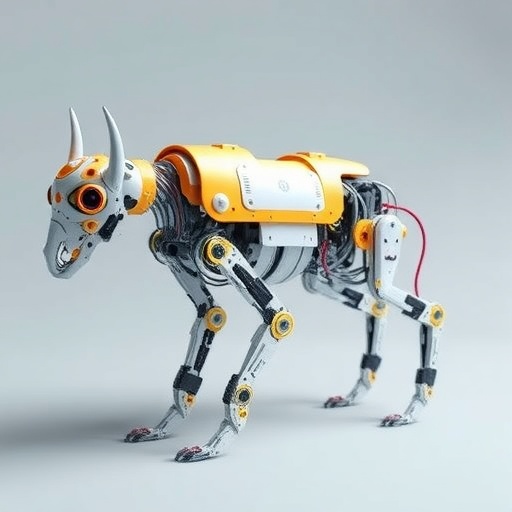
In recent years, the frontier of robotics and bioengineering has witnessed an extraordinary fusion of living organisms and machine intelligence, heralding a new era of cyborg animals that are revolutionizing mobility and control in complex environments. Traditional robots, despite their leaps in artificial intelligence and mechanical versatility, still lag behind living creatures when it comes to adaptability, endurance, and autonomous decision-making in unstructured, dynamic settings. Cyborg animals—entities integrating biological systems with electromechanical components—bridge this gap by leveraging the innate capabilities of animals while embedding external, programmable stimulation to direct their behavior precisely. This burgeoning field, formally established in 1997 following pioneering experiments controlling cockroach locomotion via electrical impulses, has steadily expanded from insect and rodent models into a broad spectrum crossing vertebrate and invertebrate taxa.
The research landscape reveals a bifurcation in methodologies contingent on animal classification. Vertebrates such as rats, pigeons, fish, and reptiles are predominantly manipulated using brain-computer interface (BCI) technology. Rats have emerged as the flagship model for clinical translation of BCI advancements, providing a robust platform for decoding and influencing neural circuits. In the case of pigeons, researchers have succeeded in engineering precise aerial navigation commands through targeted brain stimulation, opening pathways for controlled flight applications. Similarly, aquatic vertebrates like fish have been adapted with custom electronic controls for underwater exploration missions, where robotic alternatives often falter due to energy constraints and hydrodynamic complexities.
Invertebrate models, especially those from the arthropod group—beetles, cockroaches, moths, and locusts—capitalize on direct electrical stimulation of muscles and sensory receptors. This approach is particularly advantageous given the simplicity of their neuromuscular systems and diminutive scale, enabling control without undue invasiveness or weight penalty. The dual principal control paradigms governing cyborg animal behavior are thus delineated: high-level cognitive and behavioral modulation via BCI in complex vertebrates and low-level, fine-tuned muscle-receptor stimulation in small invertebrates. These primary methods are frequently supplemented by alternative sensory stimuli, including visual, chemical, thermal, and optogenetic cues, amplifying the versatility and responsiveness of cyborgs under various operational conditions.
A pivotal technological breakthrough fueling this domain is the development of ultra-miniaturized, low-power electronic systems designed as “backpacks” that serve as the central command units for cyborg animals. Tailored for specific locomotor environments—terrestrial, aerial, or aquatic—these devices can weigh as little as 0.42 grams in models based on moths, balancing minimal impact on biological function with maximal control fidelity. Innovations in biocompatible microelectrode materials have enhanced longevity and stability in neural interfaces, while onboard sensors for situational awareness and autonomous energy harvesting mechanisms ensure prolonged autonomous operation. This fusion of hardware sophistication facilitates intricate navigation algorithms that have evolved from rudimentary single-animal closed-loop systems to advanced swarm intelligence frameworks, harnessing artificial intelligence and reinforcement learning for collaborative maneuvers in maze-like and obstructed terrains.
The real-world implementation of cyborg animal technology has already reached a landmark achievement. In 2025, a coordinated group of ten cyborg cockroaches were deployed in a disaster relief operation following an earthquake in Myanmar, marking the first practical application of such systems in a critical humanitarian context. Their unparalleled ability to penetrate debris-laden, unstable environments where traditional robots struggle underscores their transformative potential. Beyond disaster response, the scope of cyborg animals is expanding ambitiously into environmental monitoring, brain-machine interfaces aimed at human-machine symbiosis, and integrated unmanned system collaborations. Future horizons envisage their use in high-precision agricultural management, hazardous site reconnaissance, and nuanced ecological surveys, potentially redefining how humans interact with and influence natural ecosystems.
Nevertheless, substantial scientific and ethical challenges persist. Biological variability among animals results in inconsistent control efficacies, complicating efforts to standardize command protocols. The long-term biocompatibility and stability of implanted electrodes pose ongoing hurdles, as chronic implantation can provoke immune responses or mechanical degradation. Additionally, hardware limitations including payload capacity and energy endurance constrain operational scope and duration. Ethically, the nascent field stresses the imperative to rigorously adhere to the 3Rs principle—replacement, reduction, and refinement—in animal research. Establishing a unified, global ethical framework is not merely advisory but essential, to judiciously balance rapid technological progress with humane treatment and responsibilities toward living organisms.
This integrative research, led by scientists including Yue Ma, Chuang Zhang, Fei Nie, Hengshen Qin, Qi Zhang, Yiwei Zhang, Lianchao Yang, and Lianqing Liu, provides a critical synthesis of multidisciplinary advances spanning neuroengineering, robotics, and animal physiology. Supported by numerous prestigious grants such as those from the National Natural Science Foundation of China, the work delineates a roadmap for future investigations and translational applications. The comprehensive review published in Cyborg and Bionic Systems (2026) emphasizes not only technical achievements but also the societal and regulatory dimensions shaping the evolution of cyborg animal systems.
Delving deeper, the brain-computer interface techniques employed in vertebrate cyborg models exploit precise electrical stimulation of neural regions governing complex behaviors like navigation, locomotion, and sensory processing. This modality facilitates bidirectional communication between electronic controllers and the animal’s brain, enabling not just command execution but adaptive learning processes. Conversely, muscle and receptor stimulation in invertebrates relies on stimulating neuromuscular junctions or sensory inputs that produce controlled physical responses with minimal delay, essential for swift maneuvering in cluttered environments. The supplementary use of optogenetics—a method employing light to control neurons genetically modified to be light-sensitive—adds a layer of specificity and temporal precision previously unattainable, opening vast possibilities for non-invasive control regimes.
The evolution of control algorithms has been equally remarkable. Initial approaches employed simplistic feedback loops tailored for individual animals, whereas current strategies integrate swarm intelligence paradigms inspired by collective animal behavior. Leveraging reinforcement learning frameworks, these algorithms enable autonomous decision-making and dynamic adaptation within groups, optimizing pathfinding, obstacle avoidance, and task coordination without constant human intervention. Such advances not only boost operational efficiency but also reduce the cognitive load on human operators, underscoring the practical viability of deploying cyborg animal teams in real-world scenarios.
Miniaturization and power management represent critical engineering challenges deftly addressed by this multidisciplinary research. The electronic backpack systems have been meticulously engineered to reduce weight and volume without sacrificing processing power or communication range. State-of-the-art energy harvesting subsystems convert ambient environmental energy—such as solar or kinetic motion—into usable electrical power, thus extending mission endurance. Additionally, the integration of situational awareness sensors enables the cyborg animal to detect and respond to environmental cues autonomously, increasing safety and mission success rates in unpredictable terrains.
Looking ahead, the expansion of cyborg animal applications is poised to reshape multiple sectors. In environmental monitoring, cyborg insects equipped with chemical and visual sensors could provide continuous, real-time data on pollution, biohazards, or climate variables in areas inaccessible to conventional drones. Agricultural applications envision precision pollination assistance or pest control using cyborg swarms, dramatically reducing chemical pesticide use. Furthermore, the potential for brain-controlled human-machine interfaces hints at future assistive technologies for disability management or augmented human capabilities, where the boundary between biological organisms and machines progressively blurs.
Despite these promising trajectories, the scientific community remains vigilant regarding the welfare of cyborg animals and the ecological impact of integrating machine control into living systems. Responsible stewardship entails not only technological refinement but also comprehensive ethical scrutiny, public engagement, and transparent regulatory oversight. The establishment of international standards and collaborative frameworks will be pivotal in safeguarding both scientific integrity and animal welfare as this domain matures.
In summary, the interdisciplinary field of cyborg animals stands at an exciting juncture where biological intelligence synergizes with cutting-edge electromechanical control, producing unprecedented capabilities in mobility, navigation, and environmental interaction. The pioneering research spearheaded by leading Chinese laboratories stands as a testament to the potential of combining neural engineering, robotics, and artificial intelligence. As these integrated systems transition from laboratory proof-of-concept to real-world utility, they promise to redefine the boundaries of robotics, animal science, and human-machine collaboration, heralding a future where hybrid biological-electromechanical agents become indispensable assets across diverse applications.
Subject of Research: Integration and control of biological animals with electromechanical systems to create cyborg organisms for enhanced mobility and autonomous operations.
Article Title: Construction, Control, and Application of Cyborg Animal Composed of Biological and Electromechanical Systems
News Publication Date: March 26, 2026
Web References: DOI: 10.34133/cbsystems.0486
Image Credits: Lianqing Liu, State Key Laboratory of Robotics and Intelligent Systems, Shenyang Institute of Automation, Chinese Academy of Science.
Keywords: Cyborg animals, brain-computer interface, electrical stimulation, biocompatible microelectrodes, robotic swarms, navigation algorithms, disaster relief robotics, biohybrid systems, electromechanical control, animal locomotion, miniaturized electronics, ethical regulation
Tags: advanced mobility in dynamic environmentsautonomous decision-making in cyborg organismsbioengineering electromechanical integrationbiological and machine system fusionbrain-computer interface in vertebratesclinical translation of BCI technologycyborg animals in roboticselectromechanical augmentation for animalsinsect and rodent cyborg modelsneural control of animal behaviorprogrammable stimulation for animal movementtargeted brain stimulation in pigeons