In a groundbreaking advancement poised to reshape the packaging industry, scientists at Virginia Tech have introduced a novel approach to bioplastic film production that combines environmental responsibility with industrial viability. Facing a global challenge where roughly 30 percent of plastics—though engineered to endure indefinitely—are discarded after mere moments of use, this team has pioneered a water-based multilayer bioplastic manufacturing method designed to elevate performance while circumventing conventional production pitfalls.
At the heart of this innovation lies a strategic departure from solvent-laden, heat-intensive processes that have traditionally hampered scalability and sustainability in bioplastic fabrication. The research collective, housed within Virginia Tech’s Department of Sustainable Biomaterials, devised a water-based spray coating system that fabricates multilayer films from polyhydroxyalkanoate (PHA) and a plant-derived polymer, hydroxypropyl methylcellulose (HPMC). This environmentally benign method aligns production speeds with established industrial workflows, signaling a promising bridge between eco-friendly materials and commercial feasibility.
Professor Young-Teck Kim, a leading figure in sustainable biomaterials, emphasizes the critical convergence of scalability and non-toxicity inherent to this method. He articulates a vision where such processes become seamlessly integrable into existing manufacturing paradigms, thereby facilitating a systemic shift away from petroleum-derived plastics without compromising product integrity. This initial iteration of the technique demonstrates formidable potential to supplant conventional plastics, broadening the practical applications of biodegradable materials across packaging sectors.
A key consideration driving the research is the environmental fate of bioplastics, given that many current variants require specialized industrial composting facilities for degradation. Should these materials enter natural ecosystems without appropriate processing, they risk mimicking the persistence problems of traditional plastics. To overcome this, the team leveraged PHA, a bacterial polyester well-known for its ability to biodegrade in diverse environments including soil, freshwater, and marine conditions. Unlike polylactic acid (PLA) and other common alternatives, PHA also decomposes under home-composting conditions, dramatically enhancing end-of-life sustainability.
This study, recently published in the journal Food Packaging and Shelf Life, was a multidisciplinary effort bridging sustainable biomaterials, food science, and biological systems engineering. Collaborators Haibo Huang and Zhiwu “Drew” Wang contributed insights critical to optimizing the interface between material properties and food preservation requirements. The team’s accomplishment is underscored by a provisional patent protecting the intellectual innovations realized through this research.
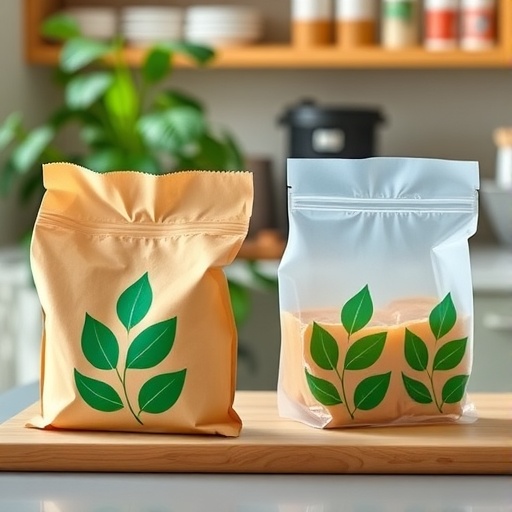
The multilayer films created using this water-based spray coating process exhibit enhanced mechanical strength and superior barrier capabilities against oxygen and moisture ingress. These improvements are particularly significant in food and consumer packaging, where product shelf life and freshness are paramount. By combining PHA’s biodegradability with the structural attributes of HPMC, the films demonstrate improved interlayer adhesion and barrier function—qualities that single-material bioplastics often fail to deliver individually.
Traditional manufacturing techniques for multilayer bioplastics often rely on organic solvents or thermal lamination, approaches that raise concerns around worker safety, environmental emissions, and energy consumption. The introduction of a water-based system circumvents these issues, providing a non-toxic, energy-efficient alternative that maintains the rapid production rates demanded by commercial packaging lines. This compatibility with existing industrial speeds is essential for ensuring broad adoption.
“The complexity of integrating dissimilar polymers in multilayer films typically results in weak bonding or material incompatibility, limiting performance,” Kim explains. The novel spraying technique, however, facilitates uniform coating deposition and intimate contact between layers, thus enhancing structural cohesion and overall integrity. Such processability improvements are pivotal in transitioning bioplastic packaging from lab-scale prototypes to mass production.
This multilayer strategy not only addresses performance gaps but also capitalizes on the complementary properties of PHA and HPMC. For instance, PHA provides biodegradability and intrinsic hydrophobicity, while HPMC contributes excellent oxygen barrier characteristics and film-forming capabilities. The synergy achieved through layering materials mitigates the limitations inherent in single-material options, offering a balanced solution tailored to real-world packaging challenges.
Beyond the environmental and technical merits, this research has significant implications for the circular economy and the reduction of plastic pollution. By facilitating the replacement of petroleum-based plastics with functional bioplastics processed in a sustainable manner, the work aligns directly with global efforts to diminish plastic waste accumulation in ecosystems. Moreover, the adoption of water-based manufacturing techniques can reduce the carbon footprint of packaging production, accentuating the environmental benefits.
Looking forward, the research team envisions iterative enhancements to optimize film functionality further and broaden the applications beyond food packaging into pharmaceuticals, cosmetics, and other consumer goods sectors. Engagement with industry stakeholders is underway, aiming to refine scalability, cost-effectiveness, and regulatory compliance. The findings mark a promising leap toward mainstreaming biodegradable, high-performance packaging materials that harmonize ecological stewardship with economic practicality.
This innovative water-based multilayer bioplastic fabrication method heralds a pivotal shift towards sustainable manufacturing in materials engineering. It offers a tangible pathway to mitigate the environmental impacts associated with single-use plastics, advancing the quest for packaging solutions that are both environmentally sound and industrially robust. Virginia Tech’s breakthrough stands as a testament to the power of interdisciplinary collaboration in tackling one of the 21st century’s most pressing environmental challenges.
Subject of Research: Development and scalable manufacturing of multilayer bioplastic films combining PHA and HPMC via water-based spray coating for sustainable packaging applications.
Article Title: Development of bioplastic multilayer films fabricated with PHA and HPMC using a water-based spray coating process
Web References:
Original Study DOI – Food Packaging and Shelf Life
Image Credits: Photo by Jim Stroup for Virginia Tech
Keywords
Biodegradable plastics, bioplastics, polyhydroxyalkanoate (PHA), hydroxypropyl methylcellulose (HPMC), sustainable biomaterials, multilayer films, water-based manufacturing, food packaging, environmental sustainability, polymer engineering, manufacturing industry, compostability.
Tags: commercial scalability of bioplasticseco-friendly compostable packaginghydroxypropyl methylcellulose (HPMC) biopolymerindustrially viable biodegradable packagingnon-toxic bioplastic production methodspolyhydroxyalkanoate (PHA) packagingscalable bioplastic film productionsolvent-free bioplastic fabricationsustainable biomaterials innovationsustainable packaging industry advancementsVirginia Tech sustainable materials researchwater-based multilayer bioplastic manufacturing