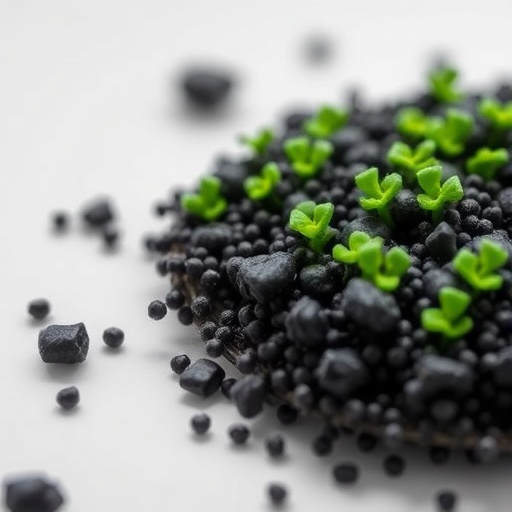
In a major leap toward sustainable energy solutions, researchers have unveiled a groundbreaking method that transforms microalgae into high-value fuel chemicals with unprecedented efficiency and environmental cleanliness. This new approach could potentially revolutionize the renewable energy landscape by addressing long-standing challenges associated with biomass conversion.
Microalgae have long been hailed as a highly promising feedstock for biofuel production due to their rapid growth rates, exceptional carbon dioxide sequestration capabilities, and non-competition with arable land dedicated to food crops. Despite these advantages, the conversion of microalgae into biofuels has been hindered by the inherent complexity of their biochemical composition. Traditional bio-oil derived from algae is laden with oxygen and nitrogen-containing compounds, which compromise the fuel’s stability, energy density, and overall quality while exacerbating pollutant emissions during combustion.
The study, conducted by an international team of scientists, introduces a sophisticated composite catalyst, merging the adsorptive and porous characteristics of biochar with the catalytic prowess of the zeolite HZSM-5. By coating biochar with HZSM-5, they created a hybrid material that significantly elevates the production of aromatic hydrocarbons such as benzene, toluene, and xylene, which are crucial components in high-performance fuels and chemical feedstocks.
A foundational aspect of this research was the implementation of a pretreatment technique known as wet torrefaction. This mild thermal-chemical process removes a considerable portion of oxygen and nitrogen from the microalgal biomass prior to subsequent pyrolytic conversion. By enhancing the feedstock’s chemical makeup, wet torrefaction facilitates more selective and efficient catalytic breakdown during pyrolysis, leading to an enriched yield of desired aromatic compounds while curtailing undesirable byproducts.
Catalytic pyrolysis, the core conversion technology used here, involves thermally decomposing biomass in the absence of oxygen, breaking complex organic molecules into smaller fragments. When applied to wet-torrefied microalgae with the newly designed HZSM-5 coated biochar catalyst, the researchers observed a striking enhancement in chemical selectivity. The processed bio-oil contained up to 96 percent aromatic hydrocarbons, an optimization that starkly contrasts with non-catalytic conditions where oxygen and nitrogen compounds dominate, often exceeding 80 percent.
One of the significant hurdles in biomass catalytic conversion is catalyst deactivation, primarily caused by carbonaceous deposits that block active sites and pores in conventional zeolite catalysts. Interestingly, the biochar component in this composite catalyst acts as a preliminary reactor and adsorptive medium, facilitating the pre-cracking of large molecular fragments. This function effectively mitigates the formation of carbon buildup within the zeolite’s microporous structure, prolonging the catalyst’s operational lifespan and ensuring consistent performance over multiple reaction cycles with minimal deactivation.
To delve deeper into the fundamental mechanisms underpinning this process, the researchers employed a suite of advanced analytical techniques alongside model compounds that emulate the key biochemical classes found in microalgae: proteins, lipids, and carbohydrates. Through these investigations, they were able to map the progressive elimination of oxygenated and nitrogenous functional groups, illustrating how these moieties undergo catalytic transformations culminating in simplified hydrocarbons that subsequently cyclize and aromatize within the zeolite framework.
The synergy between biochar and HZSM-5 zeolite lies in their complementary functionalities. Biochar’s porous structure and surface chemistry facilitate efficient adsorption and initial thermal cracking, generating intermediates ideally suited for further transformation. Concurrently, HZSM-5 provides strong acidic sites that catalyze deoxygenation, denitrogenation, and the crucial aromatization reactions that produce stable, energy-dense aromatic hydrocarbons, thereby elevating the quality of the biofuel significantly beyond what conventional methods achieve.
This research not only advances material engineering through the crafting of an innovative hybrid catalyst but also enriches the scientific understanding of biomass-to-fuel conversion. By integrating detailed mechanistic insights with practical catalyst design, it lays the groundwork for developing cleaner, more efficient, and scalable biofuel technologies capable of mitigating the environmental impacts of fossil fuel dependency.
As global energy consumption continues its upward trajectory amid growing climate concerns, innovations such as this offer a beacon of hope. Sustainable conversion of abundant, renewable biomass like microalgae into clean, high-value fuels has the potential to reshape energy paradigms, supporting global efforts toward carbon neutrality and greener industrial processes.
Beyond biofuel production, the implications of this catalyst design extend to broader chemical manufacturing sectors where selective transformation of complex organic feedstocks is critical. The durability and high selectivity achieved through this composite approach may inspire similar strategies in other catalytic applications, marking a significant stride in heterogeneous catalysis.
Ultimately, this study exemplifies how interdisciplinary collaboration—merging catalysis science, materials engineering, and environmental technology—can address global energy challenges with innovative solutions. It underscores the importance of fundamental research combined with applied engineering, bringing society closer to a sustainable energy future powered by microalgae and smart catalyst technologies.
Subject of Research: Composite catalyst development for enhancing aromatic hydrocarbon production from microalgae via catalytic pyrolysis.
Article Title: In-depth into the mechanism of aromatic production from catalytic pyrolysis of wet-torrefied microalgae with HZSM-5 coated biochar.
News Publication Date: 17-Apr-2026.
Web References:
10.1007/s42773-026-00612-0
References:
Hu, J., Wang, Y., Jiang, H. et al. In-depth into the mechanism of aromatic production from catalytic pyrolysis of wet-torrefied microalgae with HZSM-5 coated biochar. Biochar 8, 91 (2026).
Image Credits:
Jinye Hu, Yunpu Wang, Haiwei Jiang, Jiabo Wu, Ting Luo, Qi Wang, Yuhang Hu, Kaisong Hu, Wenguang Zhou & Liangliang Fan.
Keywords
Catalytic pyrolysis, microalgae, biochar, HZSM-5 zeolite, aromatic hydrocarbons, wet torrefaction, biomass conversion, biofuels, catalyst deactivation, deoxygenation, denitrogenation, sustainable energy.
Tags: advanced catalytic biomass upgradingaromatic hydrocarbon synthesis from algaebio-oil quality improvementbiochar catalyst for fuel synthesisbiomass pretreatment methodscarbon dioxide sequestration with microalgaecleaner aromatic synthesis processeshigh-value fuel chemicals from algaemicroalgae biofuel productionrenewable energy from microalgaesustainable biofuel technologieszeolite HZSM-5 in biomass conversion