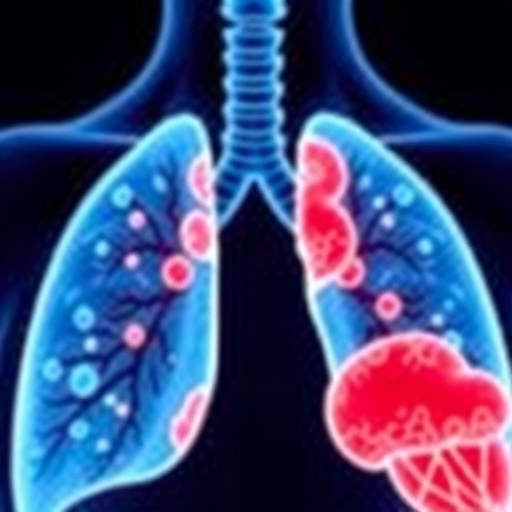
In a groundbreaking development that could redefine therapeutic strategies for one of the deadliest forms of cancer, a team of researchers has identified ELMO2 as a critical vulnerability in mesenchymal-like and drug-resistant non-small cell lung cancer (NSCLC). This discovery sheds new light on the biological underpinnings of treatment resistance, a notorious hurdle in oncology, and opens avenues for the development of targeted interventions capable of overcoming this resistance. The implications of this study reach far beyond the laboratory, offering a beacon of hope for patients who have exhausted conventional treatment options.
Non-small cell lung cancer, which accounts for approximately 85% of all lung cancer diagnoses, remains a formidable challenge due to its heterogeneity and adaptability. Often diagnosed at advanced stages, NSCLC patients frequently develop resistance to standard chemotherapeutics and targeted therapies. This resistance is particularly pronounced in tumors exhibiting mesenchymal-like characteristics, a phenotype associated with increased invasiveness, metastatic potential, and poor prognosis. The elucidation of molecular targets specific to this mesenchymal transition is crucial for devising effective treatments that can circumvent or reverse resistance mechanisms.
The research team, led by Li, M., Xue, Y., Chang, Y., and colleagues, undertook an extensive molecular profiling initiative to characterize the landscape of drug resistance in mesenchymal-like NSCLC cells. By employing integrated genomic and proteomic analyses, they pinpointed ELMO2, a member of the engulfment and cell motility protein family, as a linchpin in maintaining the mesenchymal and drug-resistant phenotype. This identification was not merely correlative but mechanistically substantiated, highlighting ELMO2’s role in orchestrating cytoskeletal dynamics, cell motility, and intracellular signaling pathways that collectively foster aggressive tumor behavior.
ELMO2’s involvement in the Rho family GTPase signaling cascade places it at a strategic intersection of cellular processes central to cancer progression. By modulating actin cytoskeleton remodeling and cell migration, ELMO2 facilitates tumor cell dissemination and metastasis. Moreover, its interaction with Dock family proteins activates Rac1 GTPase, a critical regulator of oxidative stress responses and apoptosis evasion. The researchers demonstrated that heightened ELMO2 expression correlates strongly with augmented Rac1 activity, thus equipping NSCLC cells with enhanced survival capabilities under therapeutic assault.
To interrogate ELMO2’s role as a therapeutic target, the investigators employed cutting-edge CRISPR-Cas9 gene editing technology to generate ELMO2 knockouts in various NSCLC cell models exhibiting mesenchymal traits. These genetically modified cells displayed markedly increased sensitivity to a spectrum of chemotherapeutic agents and tyrosine kinase inhibitors, underscoring ELMO2’s contribution to multidrug resistance. Complementary RNA interference experiments further validated these findings, showing significant downregulation of mesenchymal markers and reversion towards an epithelial phenotype upon ELMO2 suppression.
In addition to in vitro studies, in vivo experiments utilizing xenograft mouse models substantiated the potential of ELMO2 inhibition as a therapeutic strategy. Tumors deficient in ELMO2 exhibited dramatically reduced growth kinetics and metastatic spread, emphasizing the protein’s indispensable role in tumor maintenance and progression. Importantly, the administration of novel small-molecule inhibitors designed to disrupt ELMO2-Dock2 interactions resulted in tumor regression, corroborating the feasibility of pharmacological targeting.
The implications of these findings are profound when considering the clinical landscape of NSCLC management. Current therapeutic modalities often fail to address the plasticity and adaptability of cancer cells transitioning into a mesenchymal state, rendering many patients refractory to treatment. Targeting ELMO2 circumvents these challenges by dismantling a core regulatory node essential for sustaining mesenchymal characteristics and resistance pathways. This strategy promises to enhance treatment efficacy and delay or prevent relapse in patients harboring this aggressive tumor subtype.
Furthermore, the study advances our understanding of the epithelial-to-mesenchymal transition (EMT), a complex biological process intricately linked to cancer invasion and therapy resistance. By delineating ELMO2’s pivotal position within EMT regulatory networks, the research provides a molecular framework for future studies aimed at dissecting the interplay between cell motility, signal transduction, and survival mechanisms in NSCLC. This knowledge could catalyze the development of combination therapies that simultaneously inhibit EMT drivers and conventional oncogenic pathways.
Beyond the immediate therapeutic applications, the discovery of ELMO2’s role in NSCLC resistance invites exploration into its relevance across other malignancies exhibiting mesenchymal and drug-resistant phenotypes. Given the conserved functions of ELMO family proteins in cytoskeletal regulation and cell dynamics, there is a plausible rationale for extending these findings to cancers such as pancreatic adenocarcinoma, triple-negative breast cancer, and glioblastoma, where treatment resistance remains a significant obstacle.
The investigative team also highlights the potential diagnostic utility of ELMO2 expression as a biomarker for identifying NSCLC patients at high risk of developing drug resistance. Incorporation of ELMO2 status into clinical decision-making could tailor therapeutic approaches and prompt early intervention with ELMO2-targeted agents. This personalized medicine perspective aligns with the broader movement toward precision oncology, wherein molecular signatures guide treatment choices and monitoring strategies.
Technologically, this study exemplifies the convergence of high-throughput omics, genome editing, and advanced molecular characterization techniques to unravel cancer biology intricacies. The methodological rigor and multi-dimensional approach underscore the importance of integrating diverse datasets to generate actionable insights. Moreover, the success in translating molecular insights into preclinical therapeutic models exemplifies a robust pipeline for future drug discovery endeavors.
As this research continues to unfold, challenges remain regarding the optimization of ELMO2 inhibitors for clinical use, including pharmacokinetics, drug delivery, and potential off-target effects. Nonetheless, the promising preclinical results fuel optimism for rapid progression into clinical trials. Collaboration between academic institutions, pharmaceutical companies, and clinical centers will be pivotal in advancing these agents from bench to bedside.
In conclusion, the identification of ELMO2 as a therapeutic vulnerability represents a seminal advancement in the quest to conquer drug-resistant non-small cell lung cancer. This study not only elucidates a crucial molecular driver of resistance and metastasis but also offers a tangible target for innovative treatments poised to improve patient outcomes dramatically. As research efforts escalate, the oncology community anticipates that ELMO2-targeting strategies will emerge as a cornerstone in the battle against one of humanity’s most formidable cancers.
Subject of Research:
Article Title:
Article References:
Li, M., Xue, Y., Chang, Y. et al. ELMO2 is a therapeutic vulnerability in mesenchymal-like and drug-resistant non-small cell lung cancer. Nat Commun (2026). https://doi.org/10.1038/s41467-026-72062-y
Image Credits: AI Generated
DOI: 10.1038/s41467-026-72062-y
Keywords: Non-small cell lung cancer, ELMO2, drug resistance, mesenchymal phenotype, epithelial-mesenchymal transition, targeted therapy, Rac1 GTPase, CRISPR-Cas9, molecular oncology
Tags: advanced stage NSCLC challengesbiological mechanisms of lung cancer resistanceELMO2 in drug-resistant lung cancermesenchymal-like non-small cell lung cancermetastatic potential in lung cancermolecular profiling in lung cancer researchmolecular targets in mesenchymal transitionovercoming chemotherapy resistance in lung cancerprognosis and treatment of mesenchymal NSCLCtargeted therapies for NSCLCtherapeutic interventions for drug-resistant tumorstreatment strategies for resistant NSCLC