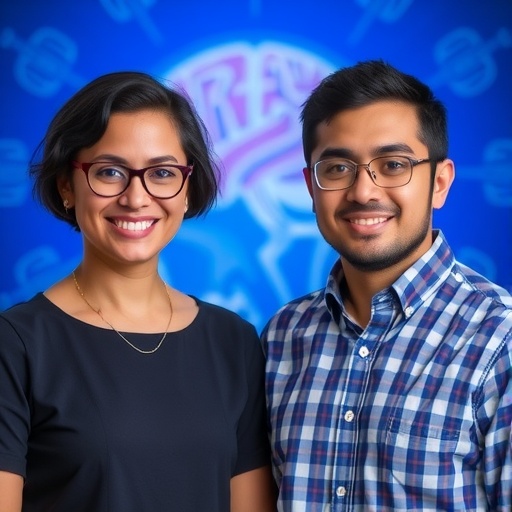
In an inspiring advancement for neuroscience and cardiovascular research, the 2026 Ralph L. Sacco Scholarships for Brain Health have been awarded to two emerging scientists driving the frontier of brain and heart health interplay. Supported collaboratively by the American Academy of Neurology (AAN) and the American Heart Association (AHA), each recipient will receive $150,000 over two years to pursue groundbreaking research aimed at unraveling the complexities of brain health. This prestigious award, now in its third consecutive year, honors the enduring legacy of Dr. Ralph L. Sacco, a pioneering neurologist who uniquely led both organizations and whose work profoundly advanced our understanding of the heart-brain connection before his passing in 2023.
This joint initiative by the AAN and AHA represents a sophisticated convergence of neurology and cardiovascular science, focusing on preventive strategies that address the intertwined function of these vital systems. Dr. Sacco’s career was emblematic of translational research that bridges clinical neurology and vascular health, emphasizing the critical role of cardiovascular factors in neurological outcomes. These scholarships aim to perpetuate this vision by supporting promising investigators who explore innovative mechanisms of brain health preservation and disease prevention.
Sarah Kettlety, Ph.D., a postdoctoral researcher affiliated with Kennedy Krieger Institute and Johns Hopkins University, will investigate the nuanced autonomic nervous system responses in children recovering from concussions. Her research probes the cardiac autonomic regulation during exercise post-injury by analyzing heart rate variability patterns, a physiological biomarker reflecting the interplay between sympathetic and parasympathetic nervous systems. Understanding these patterns could illuminate why certain pediatric concussion patients experience prolonged symptoms, potentially revealing autonomic dysregulation as a prognostic indicator. By identifying such biomarkers, Kettlety aims to refine recovery stratification, enabling clinicians to personalize rehabilitation protocols and optimize outcomes for injured young patients.
Parallel to this, Cali McEntee, Ph.D., conducting her research at the University of Michigan Medical School, delves into the biochemical crosstalk between musculoskeletal activity and cerebral resilience. Her focus on ‘exerkines’—exercise-induced signaling molecules secreted by muscles and adipose tissue—explores their neuroprotective properties and role in cognitive maintenance during aging. These small peptides and metabolites traverse systemic circulation and may activate neuroplasticity pathways, mitigate neuroinflammation, and support synaptic integrity. By characterizing the specific exerkines that mediate cognitive benefits, McEntee’s work could pioneer novel therapeutic avenues mimicking exercise effects for populations unable to engage in physical activity due to comorbidities.
The significance of these projects lies not only in their potential clinical translation but also in their contribution to a growing body of neuroscientific evidence elucidating the physiological basis of brain health. Stroke, dementia, and neurodegenerative diseases pose substantial burdens globally, often linked to vascular risk factors and lifestyle behaviors. The integration of neurocardiology insights, as championed by the Sacco Scholars, promises enhanced preventive and rehabilitative strategies addressing these challenges through cross-disciplinary research leveraging cardiovascular and neurological principles.
The vibrant collaboration facilitated by the AAN and AHA exemplifies the strategic alignment of expert domains dedicated to brain health. This partnership acknowledges that the brain’s vitality is profoundly influenced by systemic health factors such as vascular function, metabolic homeostasis, and immune responses, which can be modulated through behavioral interventions and targeted therapies. Furthermore, endorsing early-stage researchers seeking to unravel such complex biological systems signifies a sustained commitment to innovation and discovery.
As Dr. Stacey E. Rosen from Northwell Health articulates, the cognitive and physical facets of the heart-brain axis are crucial dimensions necessitating robust evidence bases that can guide preventive medicine. This scholarship initiative embodies this ethos by empowering researchers like Kettlety and McEntee to extend Dr. Sacco’s transformative work — paving pathways to interventions that not only treat but also preempt neurological decline through modifiable risk factors and mechanistic understanding.
Beyond the immediate research goals, the Sacco Scholars program cultivates a community of scientific inquiry where mentorship, interdisciplinary collaboration, and fostering novel methodologies converge. This milieu nurtures the next generation of neuroscientists who will carry forward the intricate exploration of neurovascular and neuroimmune dynamics shaping brain function across the lifespan.
Through meticulous investigation of autonomic nervous system dysregulation post-concussion, Kettlety’s research leverages advanced cardiac monitoring and statistical modeling to parse out distinct heart rate response phenotypes. Such biomarkers have the potential to revolutionize pediatric concussion management by enabling predictive diagnostics and tailored rehabilitation regimens that accommodate individual variability in nervous system recovery trajectories.
McEntee’s exploration of exerkines harnesses cutting-edge proteomics and metabolomics tools to identify critical molecular candidates involved in exercise-induced neuroprotection. By mapping these pathways, her work aspires to lay the groundwork for pharmacological agents that mimic exercise benefits, thus addressing cognitive decline in sedentary or medically limited populations—a burgeoning public health priority.
Leaders from both organizations emphasize how innovation in brain health research funding accelerates progress toward preventive neurology and comprehensive care approaches integrating cardiovascular science. Mary E. Post of the AAN and Nancy Brown of the AHA underscore Dr. Sacco’s mentorship legacy and dedication to brain health advocacy, highlighting the importance of sustained investment in researchers unlocking the heart-brain connection’s mysteries.
Starting their funded projects in mid-2026, Kettlety and McEntee’s investigative endeavors encapsulate a visionary advance in neuroscience: the translation of complex physiological insights into impactful clinical tools that enhance brain longevity and function. Their undertakings promise to bridge gaps in current understanding and spark transformative approaches to brain health maintenance in diverse populations.
As scientific interest surges around the intricate dialogue between cardiovascular dynamics and neurological outcomes, the Ralph L. Sacco Scholarships for Brain Health stand as a testament to the enduring value of interdisciplinary research, illustrious mentorship, and dedicated funding that propels the neuroscience community toward a future where brain health is optimized for all.
Subject of Research: Brain health and heart-brain connection; autonomic nervous system in pediatric concussion; exercise-induced molecular signals (exerkines) and their effects on brain aging and cognitive function.
Article Title: Emerging Neuroscientists Awarded Prestigious 2026 Ralph L. Sacco Scholarships to Advance Brain Health Research
News Publication Date: April 17, 2026
Web References:
American Academy of Neurology: https://www.aan.com
American Heart Association: https://www.heart.org/en/healthy-living/brain-health
Release multimedia and additional details: https://newsroom.heart.org/news/two-scientists-to-receive-2026-ralph-l-sacco-scholarships-for-brain-health?preview=178eda0597f4d313e26f43579bfe3501
Keywords: Brain health, Ralph L. Sacco Scholarships, American Academy of Neurology, American Heart Association, concussion, autonomic nervous system, heart rate variability, exerkines, exercise, cognitive aging, neuroprotection, biomarker research.
Tags: American Academy of Neurology awards 2026American Heart Association neuroscience collaborationbrain and heart health interplay researchbrain health preservation mechanismscardiovascular factors in neurological outcomesemerging scientists in brain health researchlegacy of Dr. Ralph L. Sacco in neurologyneuroscience and cardiovascular research fundingpostdoctoral research in brain and heart healthpreventive strategies for brain healthRalph L. Sacco Scholarships for Brain Healthtranslational research in neurology and vascular health