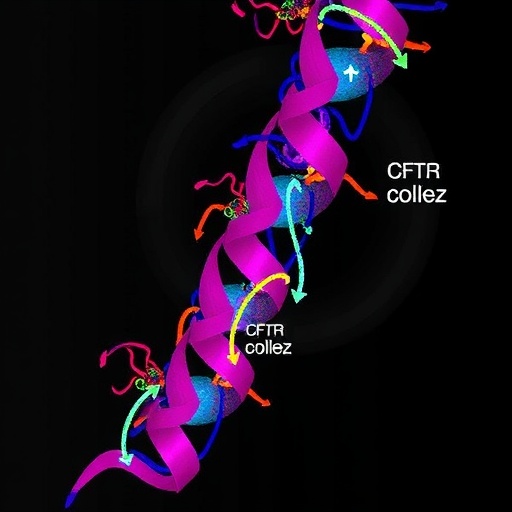
In a groundbreaking advancement poised to reshape therapeutic approaches to cystic fibrosis (CF), researchers have engineered a novel cell-permeable nanobody that effectively restores the function of the dysfunctional F508del mutant cystic fibrosis transmembrane conductance regulator (CFTR) protein. This pioneering study marks a paradigm shift, highlighting a biologically compact and efficient tool capable of penetrating cell membranes and rescuing the activity of the most prevalent CF-causing mutation, traditionally challenging to correct with existing modalities.
Cystic fibrosis, a debilitating genetic disorder, arises primarily due to mutations in the CFTR gene, with the F508del mutation responsible for approximately 70% of cases globally. This specific mutation results in misfolding and premature degradation of the CFTR protein, impairing chloride ion transport across epithelial cell membranes and leading to viscous mucus accumulation in multiple organs. Although pharmacological correctors and potentiators have improved patient outcomes, persistent limitations such as partial efficacy and off-target effects emphasize the urgent need for innovative modalities that can directly rectify the defective protein at a molecular level.
Addressing this challenge, the team led by Franz, Rubil, and Balázs concentrated on the development of a nanobody specifically designed to penetrate cellular barriers and interact directly with the F508del-CFTR protein. Nanobodies, derived from the unique single-domain antibodies found in camelids, possess exceptional stability, specificity, and a small size that facilitates intracellular delivery—a feature exploited expertly in this study. By leveraging these properties, the researchers constructed a nanobody variant with enhanced cell permeability, enabling it to reach the cytoplasmic environment where defective CFTR proteins reside.
The meticulous engineering process involved systematic optimization of the nanobody’s physicochemical properties to balance solubility, stability, and membrane translocation efficiency. The team employed advanced biotechnological methods including phage display libraries and molecular dynamics simulations to refine the nanobody’s binding affinities and conformational resilience. This rigorous approach ensured that the nanobody maintained its structural integrity while engaging the aberrant CFTR protein preferentially, thus providing a precision medicine approach targeting the root cause of the disease.
Functional assays demonstrated that treatment with the cell-permeable nanobody resulted in a significant restoration of chloride transport activity in epithelial cells expressing the F508del-CFTR mutation. Notably, the nanobody facilitated proper folding and trafficking of the CFTR protein to the plasma membrane, counteracting the deleterious effects of the mutation that typically promote protein misfolding and degradation within the endoplasmic reticulum. These findings were corroborated using electrophysiological measurements, which revealed normalization of ion channel conductance—a direct indicator of functional rescue.
Importantly, the nanobody’s efficacy extended beyond in vitro cell culture systems. Experimental validation in sophisticated tissue models derived from patient cells yielded promising results, underscoring its potential translational value. The nanobody demonstrated excellent biocompatibility and minimal cytotoxicity, suggesting a favorable safety profile that could expedite its development towards clinical application. These characteristics set it apart from many traditional small molecules or gene-editing strategies that grapple with delivery or off-target complications.
The implications of this study stretch far beyond the confines of cystic fibrosis therapy. The concept of deploying cell-permeable nanobodies to stabilize and restore function to misfolded membrane proteins introduces an innovative class of intracellular biologics with broad applicability across numerous diseases rooted in protein misfolding and trafficking defects. The modularity of nanobody design ensures adaptability, allowing tailored approaches against diverse pathological targets in oncology, neurodegeneration, and rare genetic disorders.
Furthermore, the research highlights the critical importance of integrating multidisciplinary expertise—from structural biology and protein engineering to cellular physiology and therapeutic delivery—in tackling complex diseases at their molecular origins. By showcasing the successful marriage of these fields, the study paves the way for a new era of precision biotechnology capable of addressing previously intractable protein abnormalities with unprecedented specificity and efficacy.
The technological leap provided by the cell-permeable nanobody also raises intriguing prospects regarding drug administration modalities. Unlike conventional treatments requiring frequent dosing or invasive delivery methods, nanobodies’ stability and cellular uptake characteristics may facilitate innovative systemic or localized delivery strategies, improving patient compliance and therapeutic outcomes. Ongoing studies are anticipated to explore optimal routes of administration including inhalation, intravenous injection, or topical application, expanding the therapeutic horizon further.
Moreover, the modular platform developed by Franz and colleagues embodies a versatile template for rapid generation of intracellular targeting agents. This capability is especially critical in the context of rare mutations or personalized medicine, where bespoke molecules could be synthesized swiftly to match individual patient genetics. Such agility represents a critical step in the evolution of next-generation therapeutics aiming to move beyond one-size-fits-all paradigms towards tailored molecular interventions.
Crucially, the study also addresses some longstanding challenges inherent in nanobody therapeutics, including avoidance of immunogenicity and preservation of function within the reducing intracellular milieu. The researchers’ strategic use of sequence modifications and chemical stabilization techniques maximized therapeutic durability and minimized immune responses, ensuring repeated dosing potential necessary for chronic conditions like cystic fibrosis.
As the field moves towards clinical translation, several challenges remain, including large-scale manufacturing, regulatory validation, and comprehensive in vivo efficacy and safety profiling. However, the robust foundational data provided by this investigation offer a compelling blueprint and source of inspiration for future development. Collaborative effort across academia, industry, and patient advocacy groups will be instrumental in advancing these promising candidate molecules from bench to bedside.
In conclusion, the creation of a cell-permeable nanobody capable of restoring F508del-CFTR activity represents a landmark achievement in the pursuit of effective cystic fibrosis treatments. By directly targeting the molecular dysfunction underlying the disease, this innovation has the potential to improve quality of life and longevity for millions worldwide. Beyond cystic fibrosis, this approach heralds a new frontier in intracellular biologics and personalized molecular medicine, underscoring the transformative power of scientific ingenuity in solving intractable human diseases.
Subject of Research: Development of a cell-permeable nanobody to restore function of the F508del mutant cystic fibrosis transmembrane conductance regulator (CFTR) protein.
Article Title: A cell-permeable nanobody to restore F508del cystic fibrosis transmembrane conductance regulator activity.
Article References:
Franz, L., Rubil, T., Balázs, A. et al. A cell-permeable nanobody to restore F508del cystic fibrosis transmembrane conductance regulator activity. Nat Chem Biol (2026). https://doi.org/10.1038/s41589-026-02199-w
Image Credits: AI Generated
DOI: https://doi.org/10.1038/s41589-026-02199-w
Tags: advanced cystic fibrosis therapeuticscell-permeable nanobody designchloride ion transport restorationcystic fibrosis transmembrane conductance regulator correctionF508del CFTR mutation restorationgenetic mutation targeted therapyinnovative CFTR protein rescue techniquesmolecular treatment for CFnanobody penetration of cell membranesnanobody therapy for cystic fibrosisnanobody-based protein repairprotein misfolding in cystic fibrosis