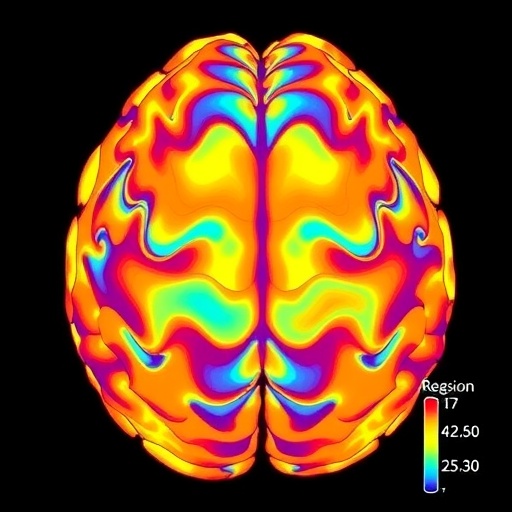
In a groundbreaking advance that could reshape our understanding of parasitic infections in the brain, a team of researchers has unveiled a spatial transcriptomic atlas illuminating the complex landscape of murine neurotoxocariasis. This cutting-edge study, published in Nature Communications in 2026 by Zou, Liu, Chen, and colleagues, marks a paradigm shift by mapping comprehensive region-specific host responses and pinpointing the mechanisms of brain dysfunction caused by this elusive parasite.
Neurotoxocariasis, an infection caused by the larval stage of Toxocara canis, a common roundworm found in dogs, has long puzzled neuroscientists and infectious disease experts. Despite its recognized role in neurological impairments, the elusive parasite’s precise impact on diverse brain regions remained poorly understood. Until now, dissection of the intricate molecular and cellular interactions driving the pathophysiology was hindered by technical limitations in localized gene expression analysis. The arrival of spatial transcriptomics technology has allowed the authors to overcome these obstacles, offering unprecedented resolution at the interface of molecular neuroscience and infectious diseases.
By employing spatial transcriptomics—a method that couples high-throughput RNA sequencing with spatial context within tissue slices—the researchers charted region-specific transcriptional signatures in the brains of mice experimentally infected with Toxocara. This approach not only reveals global changes in gene expression but also dissects the complex microenvironment surrounding the parasite, deciphering unique inflammatory and neurodegenerative pathways activated in discrete anatomical loci. Such a high-definition map of host responses elucidates how localized disruptions in neuronal and glial function collectively contribute to the neurological sequelae observed in neurotoxocariasis.
Central to their findings is the identification of a heterogeneous immune landscape that diverges markedly between brain regions. The hippocampus, cerebral cortex, and thalamus exhibited distinct patterns of immune cell infiltration and cytokine expression, highlighting that the host’s defensive response is finely tuned to regional microanatomical differences. Notably, inflammatory mediators such as interferons and interleukins showed elevated expression in specific brain areas, correlating with localized neuronal stress and synaptic dysfunction. This spatially resolved immune activation underscores the complex dialogue between invading parasites and the brain’s resident immune milieu.
The spatial atlas also unveiled a profound dysregulation in key neurobiological pathways that govern synaptic transmission, axonal guidance, and neuroplasticity. Genes critical for maintaining neuronal homeostasis were downregulated in parasitized regions, implicating parasite-driven interference with fundamental brain processes. Concurrently, markers of neuroinflammation and oxidative stress were upregulated, suggesting a multifaceted cascade leading to progressive neuronal damage. These insights delineate a potential molecular basis for the cognitive deficits and behavioral abnormalities frequently associated with neurotoxocariasis.
A particularly striking revelation was the parasite’s ability to induce region-specific alteration in microglial function. Microglia, the brain’s sentinel immune cells, exhibited phenotypic heterogeneity depending on their anatomical niche, oscillating between pro-inflammatory and neuroprotective states. This functional plasticity appears to modulate tissue damage and repair, influencing whether parasitic presence culminates in lasting neurodegeneration or partial recovery. Understanding this dynamic microglial landscape opens new therapeutic avenues targeting immune modulation tailored to brain regions most vulnerable to infection.
Furthermore, the authors highlight the utility of spatial transcriptomics as a transformative tool beyond infectious diseases. By charting molecular atlases within their native histological context, this technology offers immense potential to dissect complex brain disorders characterized by spatial heterogeneity, including neurodegenerative diseases, psychiatric conditions, and trauma-induced pathologies. The present study thus serves as a proof-of-concept that integrative spatial genomics can unlock the intricate architecture of brain responses to diverse insults.
Importantly, the study’s murine model recapitulates key features of human neurotoxocariasis, reinforcing the translational relevance of these findings. The parallels in inflammatory pathways and neuronal dysfunction open the door to biomarker discovery for early diagnosis and monitoring of disease progression. Future efforts may leverage these region-specific molecular signatures to develop targeted interventions that mitigate brain injury while preserving critical neurological functions.
Beyond providing fundamental insights into parasite-host interactions in the brain, this research underscores a broader narrative about the complexity of neuroimmune crosstalk. The spatial heterogeneity of immune responses reflects an evolutionary balance where the brain must defend itself against pathogens without compromising delicate neural networks. Decoding this balance at cellular and molecular scales is essential for designing therapies that recalibrate immunity while preserving brain health.
The authors also reveal that some brain regions appear more resilient to parasitic disruption, potentially due to innate differences in cellular composition or metabolic activity. These variations may explain the clinical heterogeneity observed in neurotoxocariasis patients, where some exhibit severe neurological impairments while others remain asymptomatic or recover more fully. Understanding the molecular underpinnings of these disparities could further refine personalized treatment strategies.
Another fascinating dimension unveiled by the atlas is the perturbation of neurovascular units, the essential structures that mediate blood-brain barrier function and cerebral blood flow. Altered expression of genes involved in vascular integrity and endothelial cell signaling suggests that Toxocara infection compromises these barriers, facilitating inflammatory cell infiltration and exacerbating neural inflammation. This vascular dysfunction might contribute to the progression of neuropathology by amplifying exposure to peripheral immune factors and metabolites.
This extensive spatial transcriptomic dataset also lays a foundation for future multi-omics integration, combining proteomics, metabolomics, and epigenomics to generate a holistic view of neurotoxocariasis pathogenesis. Such integrative approaches could unravel the cascade from parasite invasion to systemic responses and long-term brain remodeling. The comprehensive atlas presented by Zou et al. thus stands as a cornerstone for ongoing efforts to map brain disease with unparalleled precision.
Intriguingly, the spatial resolution afforded by this study also allows for the investigation of intracellular heterogeneity within brain regions. Variations in gene expression among neighboring cells suggest that even tightly clustered neuronal populations respond heterogeneously to parasitic insult. This microheterogeneity could have profound implications for understanding neuronal vulnerability and resilience, highlighting the necessity of single-cell approaches combined with spatial context.
While the study focuses on Toxocara canis in a murine host, the implications extend to other parasitic and infectious agents capable of invading the central nervous system. The principles delineated here—region-specific immune responses, neurovascular compromise, and synaptic dysfunction—likely represent universal themes applicable to neuroinfections at large. By pioneering this spatial approach, Zou and colleagues have set a new standard for dissecting infectious diseases of the brain.
In sum, this seminal work offers a vivid molecular cartography of neurotoxocariasis that redefines our understanding of how parasites orchestrate complex, spatially distinct disruptions in the brain. The integration of spatial transcriptomics with classical neurobiology heralds a new era in brain infection research—one that promises to unlock novel diagnostic and therapeutic strategies through the power of spatially resolved molecular insight. As the field advances, such atlases will be instrumental in decoding the enigmatic interplay between host and pathogen within the intricate architecture of the central nervous system.
Subject of Research:
Neurotoxocariasis and host brain responses at a spatial transcriptomic level in a murine model.
Article Title:
Spatial transcriptomic atlas of murine neurotoxocariasis reveals region-specific host responses and dysfunction in the brain.
Article References:
Zou, M., Liu, S., Chen, Y. et al. Spatial transcriptomic atlas of murine neurotoxocariasis reveals region-specific host responses and dysfunction in the brain. Nat Commun (2026). https://doi.org/10.1038/s41467-026-72114-3
Image Credits:
AI Generated
Tags: brain atlas neurotoxocariasisbrain dysfunction mechanisms parasitic infectionhigh-throughput RNA sequencing brain studymolecular neuroscience of parasitic infectionsmurine model of neurotoxocariasisneuroinflammation in parasitic diseasesparasitic roundworm neurological effectsregion-specific host responsesspatial gene expression analysisspatial transcriptomics in brain infectionsToxocara canis brain impacttranscriptomic signatures in brain regions