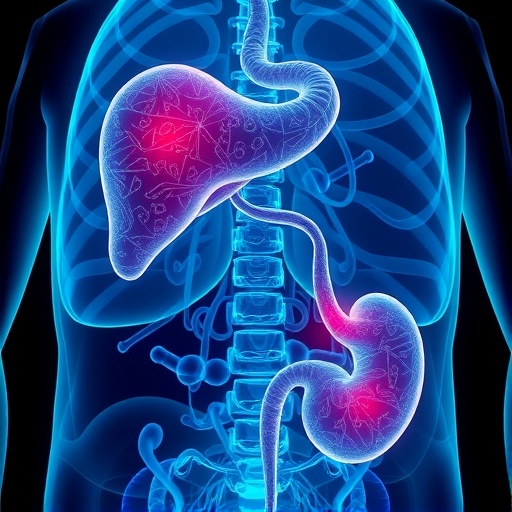
In a groundbreaking revelation poised to reshape the landscape of gallbladder cancer therapeutics, a team of scientists led by Chen Zy., Wang My., and Ma B. has uncovered a pivotal mechanism by which the enzyme NAT10 fosters cancer progression. Published in Cell Death Discovery in 2026, their study elucidates the molecular underpinnings linking NAT10 activity to aberrant cholesterol metabolism within gallbladder cancer cells, specifically highlighting its role in modulating PCSK9 mRNA acetylation. This discovery opens a promising frontier for targeted interventions against one of the most aggressive and hard-to-treat malignancies.
Gallbladder cancer has long been notorious for its silent progression and dismal prognosis. The disease is frequently diagnosed at advanced stages, contributing to poor survival rates. Despite advances in surgery and chemotherapy, effective targeted treatments remain elusive due to an incomplete understanding of the molecular drivers that underpin tumor growth and metastasis. The present study addresses this gap by focusing on the enzyme N-acetyltransferase 10 (NAT10), known for its epigenetic regulatory capacities, and its newly identified influence on lipid metabolic pathways critical to tumor biology.
NAT10 is a multifunctional acetyltransferase that modifies RNA molecules by adding acetyl groups, a process known as acetylation. RNA modifications have recently emerged as influential regulators of gene expression, impacting RNA stability, translation efficiency, and cellular localization. By altering the epitranscriptomic landscape, NAT10 exerts control over the expression of genes instrumental in cell proliferation and metabolism. The current research shows that NAT10 mediates its oncogenic effects by targeting PCSK9 mRNA, a key player in cholesterol homeostasis.
PCSK9 (proprotein convertase subtilisin/kexin type 9) is a critical regulator of cholesterol levels in the bloodstream, primarily through its modulation of LDL receptor degradation. In normal physiology, PCSK9 ensures balance by controlling cholesterol uptake in hepatic cells. However, this study reveals that aberrant acetylation of PCSK9 mRNA by NAT10 in gallbladder cancer cells leads to dysregulated cholesterol metabolism, creating a tumor-favorable environment. Elevated intracellular cholesterol supports membrane synthesis, energy production, and the formation of signaling molecules, all essential for rapid cancer cell proliferation.
Methodologically, the researchers employed a combination of transcriptomic analyses, acetyl-RNA immunoprecipitation sequencing, and functional assays in gallbladder cancer cell lines and patient-derived xenograft models. They demonstrated that NAT10 enzymatically acetylates PCSK9 mRNA at specific sites, significantly enhancing the stability and translation of PCSK9 transcripts. This post-transcriptional modification results in elevated PCSK9 protein levels, which in turn disrupts cholesterol feedback mechanisms, amplifying lipid accumulation within cancer cells.
Furthermore, knockdown experiments targeting NAT10 led to a marked decrease in PCSK9 expression, concomitantly reducing intracellular cholesterol and impairing tumor cell growth and survival. These findings were corroborated by in vivo tumor growth assessments showing that NAT10 suppression slowed tumor progression and enhanced sensitivity to cholesterol-lowering drugs. This correlation underscores the therapeutic potential of NAT10 inhibitors both as standalone agents and in combination with existing treatments.
The implications of these findings extend beyond mere molecular mechanisms. Cholesterol metabolism has recently been recognized as a critical determinant in cancer biology, influencing membrane fluidity, signal transduction pathways, and immune evasion. By connecting NAT10’s RNA acetylation activity to metabolic reprogramming, the study positions altered lipid metabolism as an actionable hallmark of gallbladder cancer, offering new avenues for biomarker development and precision medicine.
This research also sheds light on the intricate crosstalk between epitranscriptomic modifications and metabolic pathways in cancer. While epigenetic alterations at the DNA level have long been appreciated in oncology, the emerging field of epitranscriptomics highlights the significance of RNA-level modifications in regulating tumor biology. NAT10’s role in modifying mRNA stability and translation efficiency reveals how cancer cells exploit these processes to their advantage, promoting aggressive phenotypes through metabolic adaptation.
The study’s significance is further accentuated by the clinical challenge posed by gallbladder cancer, which accounts for a disproportionate number of biliary tract malignancies worldwide. Its rapidly increasing incidence, particularly in regions such as South Asia and Latin America, necessitates urgent development of novel therapeutics. Targeting the NAT10-PCSK9 axis offers a strategy that could complement existing approaches, potentially overcoming treatment resistance and limiting metastatic spread through metabolic intervention.
Beyond therapeutic applications, the identification of NAT10-mediated PCSK9 acetylation as a driver of cholesterol dysregulation provides a framework for developing diagnostic tools. Detection of NAT10 activity or acetylated PCSK9 mRNA in patient samples could serve as predictive biomarkers for disease progression or treatment responsiveness. Such assays may enable more personalized patient management, optimizing therapy regimens based on molecular profiles.
Future studies stemming from this work might explore the broader landscape of RNA modifications contributing to metabolic rewiring in gallbladder and other cancers. Given NAT10’s ability to acetylate diverse RNA substrates, it is plausible that additional mRNA targets exist which synergistically cooperate to facilitate malignancy. Unraveling these complexities will deepen our understanding of the cancer epitranscriptome and its intersection with metabolism.
Importantly, the translational potential of this research hinges on the development of selective NAT10 inhibitors that are both efficacious and safe. Early-stage molecules targeting NAT10 have demonstrated promise in preclinical models, but optimization and clinical validation remain necessary. Combining these agents with cholesterol-lowering drugs or immune checkpoint inhibitors could yield multi-faceted treatment regimens that disrupt tumor vitality and improve patient outcomes.
The integration of metabolic and epitranscriptomic insights exemplified by this study represents a paradigm shift in cancer research. By highlighting the dynamic regulation of cancer metabolism via RNA modifications, these findings empower a holistic approach to understanding tumor progression. The NAT10-PCSK9 axis not only depicts a novel mechanistic pathway but also serves as a beacon for innovative cancer therapy development centered on metabolic vulnerabilities.
In summary, the discovery that NAT10 promotes gallbladder cancer progression through acetylation of PCSK9 mRNA and consequent cholesterol metabolism remodeling is a landmark advance. It underscores the importance of epitranscriptomic modifications in mediating metabolic adaptations critical for malignancies. With gallbladder cancer notoriously difficult to treat, targeting this axis provides a fresh therapeutic paradigm filled with promise for improving patient survival and quality of life.
As research continues to unravel the complexity of cancer epitranscriptomics and its metabolic consequences, clinical translation of these findings could herald a new era where manipulation of RNA modifications becomes a cornerstone of oncology. The work of Chen and colleagues thus not only advances scientific knowledge but also fuels hope for more effective treatments against one of the deadliest biliary cancers.
Subject of Research: NAT10 enzyme’s role in gallbladder cancer progression through RNA acetylation affecting cholesterol metabolism.
Article Title: NAT10 promotes gallbladder cancer progression by remodeling cholesterol metabolism via PCSK9 mRNA acetylation.
Article References:
Chen, Zy., Wang, My., Ma, B. et al. NAT10 promotes gallbladder cancer progression by remodeling cholesterol metabolism via PCSK9 mRNA acetylation. Cell Death Discov. (2026). https://doi.org/10.1038/s41420-026-03104-z
Image Credits: AI Generated
DOI: https://doi.org/10.1038/s41420-026-03104-z
Tags: cholesterol metabolism in cancer progressionepigenetic regulation in tumor growthgallbladder cancer metastasis mechanismslipid metabolism in malignanciesmolecular drivers of gallbladder cancerNAT10 as a therapeutic targetNAT10 enzyme in gallbladder cancernovel cancer treatment strategiesPCSK9 mRNA acetylationRNA acetylation and cancerRNA modifications in cancer biologytargeted therapies for gallbladder cancer